Artie walked last night on Glee. He even danced on two feet.
I knew it was coming.
In an episode entitled Dream On (with Neal Patrick Harris guest starring), Artie went through all kinds of changes about the possibility of curing his spinal cord injury. He tried to get up on crutches to walk and fell. He researched treatments and wound up in the counselor's office, where his hopes were greeted with the fact that it's research and years away.
What Artie took away from that is he decided to sing rather than dance in a Glee number, saying that his partner deserved better and that anyone could dance better than him except Finn. That may be true, but it's not because he's using a wheelchair. It's because he doesn't know how to dance in a wheelchair.
First of all, it's difficult for me to wrap my brain around a nondisabled actor playing a disabled guy in a wheelchair who gets out of the wheelchair in a dream sequence to pretend he's nondisabled - because that's his dream. Say what?
The problem with all this is that children and teens, who still buy into the fantasy of the entertainment world, are watching Glee in large numbers. Meanwhile, kids I love are being excluded in real life from class trips and social and educational opportunities, mainly because of how society thinks about disability. Just think about the messages sent in last night's episode:
You can't walk, so you can't dance.
You can't walk, so you can sit over there and wait while I get you a pretzel upstairs.
You can't walk, so sit in one spot and hold this for me.
And then:
I can't walk, so get another partner.
I can't walk, so I can't dance, I'll just sing.
I can't walk, so I can't realize my dream.
Message after message of what Artie, the kid in a wheelchair, can't do. No wonder kids with disabilities are still excluded from opportunities. It's not because of their wheelchairs or because they can't walk far enough- it's because of how we think about disability. How teachers, educators and peers think about it. How they themselves are taught to think about it.
Maybe we advocates need to start breaking into song to show that to "dream on" only about walking or being nondisabled is a silly ableist fantasy.
And to let people know that we can do what they can, in a different way - and sometimes we can do even more.

Showing posts with label PWD and media. Show all posts
Showing posts with label PWD and media. Show all posts
Wednesday, May 19, 2010
Thursday, February 25, 2010
Photo shows model not "confined to wheelchair"; caption says otherwise
Shannon Murray, a model who is also a wheelchair user, is the first disabled model used in a High Street retailer's ad campaign, according to the Daily Mail.
The model is hoping that the kinds of images used will challenge preconceptions and assumptions, but ironically the caption under a photo showing Shannon Murray out of her wheelchair, laying on the ground with her feet up on the seat of her ultralightweight wheelchair, contains the still often used description "confined to a wheelchair".
It's also ironic that the article explaining it continues to use this kind of language, beginning with:
Debenhams is set to become the first High Street retailer to use a disabled model in its advertising campaigns.
Shannon Murray, who is confined to a wheelchair, took part in a photo shoot for the department store last week.
Read more: http://www.dailymail.co.uk/femail/article-1253699/Wheelchair-user-set-disabled-model-star-major-High-Street-campaign-Debenhams.html#ixzz0gZ05JZ4l
The model is hoping that the kinds of images used will challenge preconceptions and assumptions, but ironically the caption under a photo showing Shannon Murray out of her wheelchair, laying on the ground with her feet up on the seat of her ultralightweight wheelchair, contains the still often used description "confined to a wheelchair".
It's also ironic that the article explaining it continues to use this kind of language, beginning with:
Debenhams is set to become the first High Street retailer to use a disabled model in its advertising campaigns.
Shannon Murray, who is confined to a wheelchair, took part in a photo shoot for the department store last week.
Read more: http://www.dailymail.co.uk/femail/article-1253699/Wheelchair-user-set-disabled-model-star-major-High-Street-campaign-Debenhams.html#ixzz0gZ05JZ4l
Monday, November 16, 2009
The Washington Post Glee reader poll
Imagine my chagrin as I read a piece in the Washington post about why disability advocates are cringing about the failure to cast disabled actors in disabled roles, when I came to the end to a poll that contained the inherent assumption that hiring a disabled actor meant - get this- sacrificing quality of performance.
The readers' choices in the poll are about whether Glee should be given a "pass" for not having hired a disabled actor. The Yes answer reads that hiring someone with a disability would have "sent a vital message and signaled support for the disability community"
Wow. How touchy feely. How- charity-model-like.
The No answer reads : It's more important that the role be so expertly played that nobody even stops to wonder about whether the actor who plays it uses a wheelchair in real life.
To date, 85% voted no and 15% voted yes out of 39 votes.
Notice, however, how the answer "No" builds in the assumption (yet again) that there isn't a disabled actor who could play it so expertly. It implies sacrificing a quality in the performance if a disabled actor was hired. There's also this "one of us" implication in there about no one stopping to wonder whether the actor who plays it really uses a wheelchair in real life.
On the other hand, the 'Yes' answer implies that hiring a disabled actor would be just for politically correct reasons.
This wording discounts the achievements of those of us with disabilities who are out there succeeding and, in some cases, doing things better than able bodied counterparts. This whole discussion ignores the huge unemployment figures for the disability community.
It doesn't mention that job interviews for wheelchair using friends of mine are still scheduled in non accessible buildings. It doesn't mention that headhunters refuse to represent some disabled people with experience. None of the reasons why disability advocates protest hiring an able bodied actor to play a disabled role are mentioned, such as the fact that there are wheelchair using actors who could do the role better and do it right. We are nowhere near accurately portraying a disabled character in Hollywood because it reflects our societal mores and it is still a society that excludes people with disabilities.
The real irony of all this? McHale, the actor who plays Artie, can't dance in a wheelchair even though the role calls for dancing as well as singing. He's their "expert".
The readers' choices in the poll are about whether Glee should be given a "pass" for not having hired a disabled actor. The Yes answer reads that hiring someone with a disability would have "sent a vital message and signaled support for the disability community"
Wow. How touchy feely. How- charity-model-like.
The No answer reads : It's more important that the role be so expertly played that nobody even stops to wonder about whether the actor who plays it uses a wheelchair in real life.
To date, 85% voted no and 15% voted yes out of 39 votes.
Notice, however, how the answer "No" builds in the assumption (yet again) that there isn't a disabled actor who could play it so expertly. It implies sacrificing a quality in the performance if a disabled actor was hired. There's also this "one of us" implication in there about no one stopping to wonder whether the actor who plays it really uses a wheelchair in real life.
On the other hand, the 'Yes' answer implies that hiring a disabled actor would be just for politically correct reasons.
This wording discounts the achievements of those of us with disabilities who are out there succeeding and, in some cases, doing things better than able bodied counterparts. This whole discussion ignores the huge unemployment figures for the disability community.
It doesn't mention that job interviews for wheelchair using friends of mine are still scheduled in non accessible buildings. It doesn't mention that headhunters refuse to represent some disabled people with experience. None of the reasons why disability advocates protest hiring an able bodied actor to play a disabled role are mentioned, such as the fact that there are wheelchair using actors who could do the role better and do it right. We are nowhere near accurately portraying a disabled character in Hollywood because it reflects our societal mores and it is still a society that excludes people with disabilities.
The real irony of all this? McHale, the actor who plays Artie, can't dance in a wheelchair even though the role calls for dancing as well as singing. He's their "expert".
Friday, November 13, 2009
Glee wheelchair episode: not gleeful
Glee decided to put on a show in an attempt to fix the ongoing dilemma they created by casting a nondisabled actor in a wheelchair role (Artie). Their reasoning? They tried, they really tried, but could not find even one talented really disabled actor who could sing and dance. Hmm. Maybe the able bodied actor they hired instead can sing a bit, but he sure can't dance in a wheelchair - but more to that point later.
In this episode, to show that they are sensitive to disability issues, Glee put all the other able bodied cast members in wheelchairs too. Not very original, but maybe they thought doing it en masse would have a good visual effect. It didn't work except to compound their error. But from their ableist point of view- hey why not? The rest of the cast is no more disabled than Artie.
But on to the dancing, which, personally I'd rather forget. If you haven't seen it, I suggest you avoid it at all costs, because images of able bodied people rolling around ramps on a stage looking as if they're afraid of falling off will remain seared in your mind forever. (I wonder if anyone has considered the liability implications of putting inexperienced actors in wheelchairs on ramps on a stage. Probably not. Another good reason to hire actors who really do use a wheelchair.)
I refuse to put a video up here because I've seen real wheelchair dancing. Actually I've seen better wheelchair dancing at wheelchair tennis tournament banquets by an 11 year old kid. Probably because he uses a wheelchair every day.
I'm no dancer, so let's bring in a professional one. According to Wheelchair Dancer, the choreography sucks.
And then there's the sad fact of the "dancing;" the choreography sucks. The one potentially interesting move that McHale supposedly "does" is a cut -- he wheelies on one rear wheel. The rest is notable only for the way that it shows that able-bodied, non-wheelchair-using folk really do think of chairs as bicycles you move with your arms. There's absolutely no body-chair integration at all. They think of sitting in a chair as being only about not being able to move their legs (and in Artie's case as being about having his hips and legs twisted to one side). That mistaken understanding leads to some very weird looking people in chairs. On chairs would be a better phrase for it. The fake paralysis of their legs somehow wends its way up their bodies so that they are really only able to push with their elbows (no wonder they have sore arms!).
Sigh. If only they had asked a wheelchair dancer or choreographer for help or - here's a thought- used real wheelchair dancers! I hate it when able bodied people just don't ask for help before pretending to be disabled. Things always get screwed up that way.
All I can say is that Glee is in a fine mess now. The real problem with this show, as with the rest of Hollywood, is that it keeps insisting on portraying an able bodied version of characters with disabilities. Writing an episode on sensitivity toward a character who doesn't really have a disability to convince those of us who really have disabilities that the show is enlightened just isn't going to work. Nor did the subplot of a girl with a stutter confessing she really doesn't have a stutter help. It's all very confusing and gave me a headache.
Here's what I suggest. Since the show decided a sing-off was fair between two characters, why not bring in a wheelchair user to sing and dance against Artie?
Then we might see some real wheelchair dancing, like this.
In this episode, to show that they are sensitive to disability issues, Glee put all the other able bodied cast members in wheelchairs too. Not very original, but maybe they thought doing it en masse would have a good visual effect. It didn't work except to compound their error. But from their ableist point of view- hey why not? The rest of the cast is no more disabled than Artie.
But on to the dancing, which, personally I'd rather forget. If you haven't seen it, I suggest you avoid it at all costs, because images of able bodied people rolling around ramps on a stage looking as if they're afraid of falling off will remain seared in your mind forever. (I wonder if anyone has considered the liability implications of putting inexperienced actors in wheelchairs on ramps on a stage. Probably not. Another good reason to hire actors who really do use a wheelchair.)
I refuse to put a video up here because I've seen real wheelchair dancing. Actually I've seen better wheelchair dancing at wheelchair tennis tournament banquets by an 11 year old kid. Probably because he uses a wheelchair every day.
I'm no dancer, so let's bring in a professional one. According to Wheelchair Dancer, the choreography sucks.
And then there's the sad fact of the "dancing;" the choreography sucks. The one potentially interesting move that McHale supposedly "does" is a cut -- he wheelies on one rear wheel. The rest is notable only for the way that it shows that able-bodied, non-wheelchair-using folk really do think of chairs as bicycles you move with your arms. There's absolutely no body-chair integration at all. They think of sitting in a chair as being only about not being able to move their legs (and in Artie's case as being about having his hips and legs twisted to one side). That mistaken understanding leads to some very weird looking people in chairs. On chairs would be a better phrase for it. The fake paralysis of their legs somehow wends its way up their bodies so that they are really only able to push with their elbows (no wonder they have sore arms!).
Sigh. If only they had asked a wheelchair dancer or choreographer for help or - here's a thought- used real wheelchair dancers! I hate it when able bodied people just don't ask for help before pretending to be disabled. Things always get screwed up that way.
All I can say is that Glee is in a fine mess now. The real problem with this show, as with the rest of Hollywood, is that it keeps insisting on portraying an able bodied version of characters with disabilities. Writing an episode on sensitivity toward a character who doesn't really have a disability to convince those of us who really have disabilities that the show is enlightened just isn't going to work. Nor did the subplot of a girl with a stutter confessing she really doesn't have a stutter help. It's all very confusing and gave me a headache.
Here's what I suggest. Since the show decided a sing-off was fair between two characters, why not bring in a wheelchair user to sing and dance against Artie?
Then we might see some real wheelchair dancing, like this.
Tuesday, February 10, 2009
VP Biden to visit Special Olympics World Winter Games
VP Joe Biden will visit the Special Olympics World Winter Games this Thursday.
Although details haven't been released, he is expected to attend events and visit with some athletes.
Biden also will speak about the Obama administration's "commitment to advance the concerns of the disability community," an e-mail said.
For information about the games, visit their site here.
Sadly, US media is missing from coverage of the Games which are being held in Idaho, according to an article posted by PatriciaEBauer.
Although details haven't been released, he is expected to attend events and visit with some athletes.
Biden also will speak about the Obama administration's "commitment to advance the concerns of the disability community," an e-mail said.
For information about the games, visit their site here.
Sadly, US media is missing from coverage of the Games which are being held in Idaho, according to an article posted by PatriciaEBauer.
Friday, September 5, 2008
Creating a mainstream, accessible, inclusive media platform for people with disabilities
I applaud diversity in media, as demonstrated in this piece about political pundits.
I'd also like to mention that [with]tv is working to set up a mainstream, accessible, inclusive media platform for people with disabilities.
[with]tv's founder has written a post recently for the consideration of the disability community - and everyone else. You can read the rest over there....
with]tv means to get the message out to everyone in the right way. We begin broadcasting as a mainstream, accessible, inclusive media platform for people with disabilities. Having a hard time imagining what I envision? OK. How is this? Go home and watch TV for one week, 168 hours. Now imagine that of all the people you saw on TV more than 20%+ were people with disabilities. Now imagine that for all the people behind the camera 20%+ in all departments and at all levels of the company!
I'd also like to mention that [with]tv is working to set up a mainstream, accessible, inclusive media platform for people with disabilities.
[with]tv's founder has written a post recently for the consideration of the disability community - and everyone else. You can read the rest over there....
with]tv means to get the message out to everyone in the right way. We begin broadcasting as a mainstream, accessible, inclusive media platform for people with disabilities. Having a hard time imagining what I envision? OK. How is this? Go home and watch TV for one week, 168 hours. Now imagine that of all the people you saw on TV more than 20%+ were people with disabilities. Now imagine that for all the people behind the camera 20%+ in all departments and at all levels of the company!
Imagine that all the commercials you see are close captioned, narrated for the blind and have actors with disabilities as principals, background actors and voice over talent.
Imagine that many, but not all, story lines were concerned with issues directly related to our lifestyle. Now imagine that all this content was not only entertaining for ALL viewers but along with all commercials was close captioned and narrated for the blind. Imagine that in addition to news, weather, sports and information shows we were creating drama, comedy, variety, reality shows and that all the major producers in the industry were creating shows for us too. Now imagine this content is available on your TV, computer, cell phone, and all over the world in other languages. That is what would give us what we want. That is what we envision at [with]tv. That is what we intend to do, not to ask others to do part of for us.
....
Now we need advertisers, corporate sponsors, media company mentors and we need investors. We have everything else. We need YOU and others just like you.
Monday, May 5, 2008
Why my wheelchair is not my purgatory
I awoke this morning to an MSNBC article about the efforts of one man to walk again after acquiring a spinal cord injury.
The article began with the words "It was only a chair, but it became his purgatory".
Make no mistake about this: I applaud the efforts and hard work of the individual in question. That's not at issue here, of course.
But to write an article saying that this man could have no life until he walked again is inaccurate. To write that a wheelchair is someone's purgatory (not a quote from the interviewed person) needs to be addressed. Why?
Because more damage is done to the perception of disability over bowls of Cheerio due to media coverage than anywhere else. Not only that, but this article ignores several facts that are well known in the spinal cord community.
There are scams out there for healing/cures. Read the message boards and see. (Not everyone gets into reputable treatment programs.) The problem is that believing that life is over after a spinal cord injury can drive people to do irresponsible things medically. Not all treatments are regulated, especially overseas. And not everyone can benefit from what's out there. The editor's note for this article reads:
Editor's note: Paralysis after a spinal cord injury brings wrenching decisions: Do you accept it as permanent and adapt, or do you refuse to resign yourself? It's not black and white, although some may feel more comfortable thinking about spinal cord injury that way - if you ain't walking, you ain't tried hard enough. C'mon. I wish reporters would read some medical stuff, because each spinal cord injury is unique. So what works for one person may not work for another and treatment varies. And there are many people who have worked as hard as this guy did and still are not walking.
I'd like to address another myth in this article: not all people with disabilities are miserable like this guy was.
The chair stood for all that was lost: A promising career, a vigorous life spent fishing the lakes of North Carolina, future plans conjured when things were perfect — plans that seemed impossible now.
Okay let's explore this. I know people in wheelchairs who fish on lakes. I've played tennis from a wheelchair, work and consider my life productive and meaningful. From a wheelchair. There's a whole world of people in wheelchairs out there who are living their life. It's ridiculous to present living with a spinal cord injury as a death sentence in this day and age.
I want to present the other side of this, because the article is just so full of inaccuracies. I don't know if it's because the reporter just interviewed this one man and knows nothing else about people with spinal cord injuries, or if the reporter really believes this life is over if you can't walk nonsense. I respect that some people feel that way, but it is dysfunctional to refuse to adapt and stay in bed, for example.
Apparently, it's a series of articles, so more to come. Hold onto your bowl of cheerios- and read a blog written by a person with a spinal cord injury instead of a mainstream news article written by a reporter without any perspective on the subject - except one person's- and writes as if he speaks for all of us.
Purgatory. For goodness' sake.
Again- nothing to take away from the efforts of this guy who managed to walk again or the people who helped him. But many of the assumptions that run rampant through this piece are wrong.
The article began with the words "It was only a chair, but it became his purgatory".
Make no mistake about this: I applaud the efforts and hard work of the individual in question. That's not at issue here, of course.
But to write an article saying that this man could have no life until he walked again is inaccurate. To write that a wheelchair is someone's purgatory (not a quote from the interviewed person) needs to be addressed. Why?
Because more damage is done to the perception of disability over bowls of Cheerio due to media coverage than anywhere else. Not only that, but this article ignores several facts that are well known in the spinal cord community.
There are scams out there for healing/cures. Read the message boards and see. (Not everyone gets into reputable treatment programs.) The problem is that believing that life is over after a spinal cord injury can drive people to do irresponsible things medically. Not all treatments are regulated, especially overseas. And not everyone can benefit from what's out there. The editor's note for this article reads:
Editor's note: Paralysis after a spinal cord injury brings wrenching decisions: Do you accept it as permanent and adapt, or do you refuse to resign yourself? It's not black and white, although some may feel more comfortable thinking about spinal cord injury that way - if you ain't walking, you ain't tried hard enough. C'mon. I wish reporters would read some medical stuff, because each spinal cord injury is unique. So what works for one person may not work for another and treatment varies. And there are many people who have worked as hard as this guy did and still are not walking.
I'd like to address another myth in this article: not all people with disabilities are miserable like this guy was.
The chair stood for all that was lost: A promising career, a vigorous life spent fishing the lakes of North Carolina, future plans conjured when things were perfect — plans that seemed impossible now.
Okay let's explore this. I know people in wheelchairs who fish on lakes. I've played tennis from a wheelchair, work and consider my life productive and meaningful. From a wheelchair. There's a whole world of people in wheelchairs out there who are living their life. It's ridiculous to present living with a spinal cord injury as a death sentence in this day and age.
I want to present the other side of this, because the article is just so full of inaccuracies. I don't know if it's because the reporter just interviewed this one man and knows nothing else about people with spinal cord injuries, or if the reporter really believes this life is over if you can't walk nonsense. I respect that some people feel that way, but it is dysfunctional to refuse to adapt and stay in bed, for example.
Apparently, it's a series of articles, so more to come. Hold onto your bowl of cheerios- and read a blog written by a person with a spinal cord injury instead of a mainstream news article written by a reporter without any perspective on the subject - except one person's- and writes as if he speaks for all of us.
Purgatory. For goodness' sake.
Again- nothing to take away from the efforts of this guy who managed to walk again or the people who helped him. But many of the assumptions that run rampant through this piece are wrong.
Saturday, April 26, 2008
How's Your News?- coming to MTV
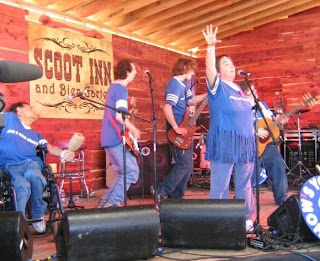
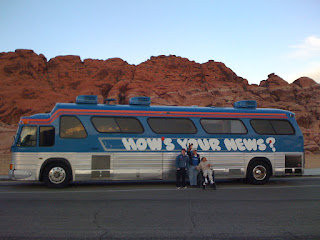
How's Your News began back in 1994 at Camp Jabberwocky, a summer camp for adults with physical disabilities where a film director worked with campers, resulting in news shows produced at the camp. This led to a film called "How's Your News?" featuring five of the campers who took a road trip across America. And THAT led to 2004 coverage of the elections, featuring interviews with Howard Dean, Hillary Clinton, John McCain, Larry King and many more. Which led to more videos.
And now How's Your News is coming to MTV. Oh, did I mention they are a band? Yup. In fact, they are traveling in the Big Blue Bus across America as I blog (in New Orleans at present) and performing. You can read about their adventures at their blog. And you can read their bios here.
Exciting things like deliberately crashing their bus (oh don't worry, all safe) and meeting John Stamos and interviewing him. It's all over at their blog so go say hi to them and check out their travel photos and more information about their upcoming show. And you can also join in their enthusiasm and spread the word about their show by getting How's Your News stickers, T shirts and copies of their DVD's.
One of the shirts reads: Free the Media. Election coverage by people with disabilities? Very cool.
[visual description: Photo at left: Members of How's Your News cast are seated in front of a full size silver and blue bus with lettering across it that reads "How's Your News?;
Photo at right: The band members are shown performing in the Scoot Inn: Three male members play guitar toward the back of the stage, wearing blue How's Your News shirts, the lead female singer Susan is in the front and Larry, the percussionist, plays from his wheelchair. The other members are Jeremy, Sean, Ronnie, and Bobby. ]
Tuesday, April 1, 2008
"Old" media
No, it's not an April fool's joke. Reports of cuts at the top levels, including anchors, of a Chicago TV station are the latest fallouts due to changing economics and the way news is disseminated. And, although it may be more visible to the public than cuts at traditional newspapers in the print media, it all stems from the same reasons.
As noted in this article, changes are happening to what is now considered "old" media, the more traditional ways of getting news, such as TV news and print newspapers. The LA Times and other papers have made dramatic cuts as well.
With the growth of the internet, the availability of video clips, podcasts and TV on demand, people view news differently and on their own schedule, putting a "fixed" live TV format in jeopardy.
The good news? It opens the field for less traditional coverage and may open a market for those seeking to "start up" news services in more innovative ways. And that is good news for all of us in the end who are seeking fresh approaches to issues and new points of view.
Like [with]tv.
To learn more about media reform and other related issues, click here.
h/t Blog[with]tv
As noted in this article, changes are happening to what is now considered "old" media, the more traditional ways of getting news, such as TV news and print newspapers. The LA Times and other papers have made dramatic cuts as well.
With the growth of the internet, the availability of video clips, podcasts and TV on demand, people view news differently and on their own schedule, putting a "fixed" live TV format in jeopardy.
The good news? It opens the field for less traditional coverage and may open a market for those seeking to "start up" news services in more innovative ways. And that is good news for all of us in the end who are seeking fresh approaches to issues and new points of view.
Like [with]tv.
To learn more about media reform and other related issues, click here.
h/t Blog[with]tv
Friday, March 28, 2008
The personal cost of access
This morning FoxNews.com ran as its top video, a story about making city hall accessible in San Francisco and entitled it "Access or Excess".
Other bloggers have covered this story, but what struck me is how this story fails to give equal play to the fact that those of us with disabilities who need access in our homes face extraordinarily high costs as well - and how these issues are not being addressed in the media although these situations happen every day of the week.
Historically, we are not so far from the days when it was assumed that people with disabilities should remain institutionalized or at home, shut away from the world. This kind of thinking often attaches a label of "entitlement" to a request for accommodations. This is quickly followed by the often exaggerated fear about the cost of accommodations.
And what gets lost in all of this is that the cost of accommodations can be brought down by changing other laws that raise the cost, that have nothing to do with installing a ramp, per se. This story talks about how that may work for a city, but let's talk about how laws that may work in other instances but don't work for people with disabilities trying to get accommodations in their homes wreak havoc and result in "excess". Let me give you an example.
When I needed a ramp, the laws required that I obtain a variance. I was told I could put up a 'temporary ramp' to allow myself to get out of my house to work, but that would have to be taken down after I obtained the variance. As an individual, these laws required me to pay for the following:
1. An engineer and architect and a lawyer for the variance hearing to draw up paperwork, plans, blueprints, etc. and to appear at the hearing. There had to be a hearing where neighbors could object to the ramp which they luckily did not. Neighbors and people within a certain area had to be notified about the construction.
2. The cost of materials for two ramps (temporary and permanent), cost of labor for two ramps and lost time from work due to the delay in obtaining not only the variance but when the temporary ramp had to be replaced (when I couldn't get in/out).
Thousands and thousands of dollars which I had no way to recoup. I had people who helped me out, forcing me to rely on their charity because of the enormous cost although I was working. And the delays because of the procedures involved cost me wages, further compromising my ability to pay.
Now no one would argue that we should do away with variances. The need to get one protects neighbors. However, applying variance law to an individual who is in a wheelchair and trying to get out of his/her house, as you can see, created chaos. There was no streamlined procedure available to reduce the costs, no way to speed up the process so I could avoid having to build two ramps.
So when I see the headline "Access or Excess", I am more likely to think that it is not the fact that access is required that's the problem, but that laws and requirements have not been adjusted in conjunction with the Americans with Disabilities Act so that, overall, the cost factor can be kept at a reasonable level. This, to me, is a more pressing issue, since I know that every day someone in a wheelchair sits at their front door needing to get outside without the resources to jump through the hoops our current procedures entail.
Isn't it a waste of money for individuals to have to spend that much money too? And how does one measure the cost of the delays involved? I'm not sure, even years after I went through all of that, that you can measure it. But I will tell you, it's excessive.
[If you haven't already, go on over and read the list of where the money for the project in San Francisco is slated to go (scroll down a bit over there). Perhaps it will become clear that building the ramp itself is not really what's expensive.]
Saturday, March 22, 2008
A Different Perspective
Also over at Blog[with]tv, a new radio show is announced.
From the press release and Blog[with]tv:
From the press release and Blog[with]tv:
On March 31, 2008 a one-hour, weekly Internet Talk Radio Program entitled A Different Perspective will premier on Webtalkradio.
A Different Perspective will be hosted by Howard Renensland, CEO of [with]tv: "a television channel of, by, and for people with disabilities...and everyone else" and PWdBC, a 501 c 3 dedicated to training people with a disability for careers in film and television.
To quote Mr. Renensland, “My experience of the past 23 years raising and advocating for my daughter with disabilities has convinced me that the single most debilitating factor limiting people with disabilities is not their disability, but rather their image as portrayed in mainstream media and the factors that contribute to that stereotypical image. [with]tv will alter this situation by fully employing people with disabilities in a mainstream media company where they, people with disabilities, will control the medium and the message.”
A Different Perspective will present an entertaining discussion of current issues from the perspective of people with disabilities. Howard will, with the assistance of guests and [with]tv volunteer reporters from the disability community, provide this perspective intended for all listeners – not just those with a disability. The ongoing progress of [with]tv, PWdBC, and the work of the volunteers turning this vision into a reality will be discussed as well
Inquiries regarding advertising and corporate sponsorship are welcome. A volunteer staff is seeking audio commercial placement along with advertising and corporate sponsors for A Different Perspective, [with]tv, and PWdBC.
More information can be found over at Blog[with]tv.Wednesday, March 5, 2008
xAble: disability community online
xAble is a site for the disability community which allows interactive media sharing. Check out articles ranging from wheelchair sports to comedian Josh Blue, from musician Justin Hines to Ms. Wheelchair America. There's power soccer, quad rugby and demolition derbies, travel tips and highlights from blogs, news on disability issues ranging from politics to housing and (whew we're not done yet!) forums, event information as well as audio and video sharing.
It's a very exciting site - go enjoy.
h/t media dis&dat
It's a very exciting site - go enjoy.
h/t media dis&dat


Wednesday, February 13, 2008
If there was a camera there
When I found the piece in the news about Brian, another quadriplegic, being dumped out of his wheelchair by a deputy to "check" his disability, my stomach sickened. I warned Meredith when I saw her that I'd posted a video and what it showed. And then I told her that the news coverage, as hard as it is to see, is a positive step in bringing this kind of behavior out into the light.
I, too, have been confronted by people physically over the decade I've been in a wheelchair. Part of it came from being a quadriplegic in a manual chair. I often had people say to me "Oh you can't be a quadriplegic. Christopher Reeve is one and he's totally paralyzed." Many folks don't understand the variations in spinal cord injuries. (Even in this article, it says that Brian is a quadriplegic, but still able to drive. )
Some quads can look like paraplegics to people if they don't understand the disability. Once I had bones in both wrists broken because a man assisting me "lost patience" with how slowly I "chose to move" and pulled away my wheelchair. I fell onto the ground landing on my wrists. On another occasion a woman pushed food into my face to see if I would "knock off pretending I couldn't lift my arms". And many times I've had change thrown at my face by impatient clerks who think I'm deliberately moving slowly. (And, yes, I've been dumped out of my wheelchair too. )
This kind of physical stuff happens. There isn't always a camera. And let me tell you, this woman deputy's words are classic and her behavior is classic, arrogantly proclaiming "I don't believe what you say about your disability - let's see". I've been questioned incessantly over the years about my disability, but there are these folks who cross the line and become physical. It's sickening to watch and my heart goes out to Brian. No one should be treated like this.
But the point is it's happening out there. Turning our heads away doesn't make it go away. It's time to speak up about it, bring it out into the light of day for what it is.
Because, before anyone assumes that a low level quad isn't really a quad, let me tell you that hand/arm impairments do affect one's ability to get around and do things in our quick paced world and, I suppose if it comes to that, to defending ourselves. Having paralysis in all four limbs renders one more vulnerable. Period. I'm not going to suggest anyone duct tape their hands or spend a day in a wheelchair because that just doesn't do it in my opinion. But I've lived with it for over a decade and I know what it's like to go out into an uneducated world and deal with people who are judging what I can/can't do and take out their ideas on me.
My friends, it sucks. It doesn't always reach this level of behavior, but it sucks. I wish people would educate themselves about disabilities and ask questions if they don't understand. Most of the injuries I've received over the years have been as a result of peoples' impatience on this very issue. And even though their behavior doesn't reach the level shown in this video, it can still cause injuries.
Watching how the media picked up this video and article and how it spread is a positive sign that we are making strides, that this kind of behavior is abhorrent to most people and that those who choose to engage in it face discipline or criminal charges.
What happened to Brian is an assault to him. And to all of us. Not just people with disabilities, but to each and every one of us. It's about not being treated with human decency.
"She certainly wasn't treating me like a human being," Sterner said. "When I saw that one deputy laugh that's when my blood started to boil. That's ridiculous to have that happen to me, then have somebody having a good time laughing about it."
I, too, have been confronted by people physically over the decade I've been in a wheelchair. Part of it came from being a quadriplegic in a manual chair. I often had people say to me "Oh you can't be a quadriplegic. Christopher Reeve is one and he's totally paralyzed." Many folks don't understand the variations in spinal cord injuries. (Even in this article, it says that Brian is a quadriplegic, but still able to drive. )
Some quads can look like paraplegics to people if they don't understand the disability. Once I had bones in both wrists broken because a man assisting me "lost patience" with how slowly I "chose to move" and pulled away my wheelchair. I fell onto the ground landing on my wrists. On another occasion a woman pushed food into my face to see if I would "knock off pretending I couldn't lift my arms". And many times I've had change thrown at my face by impatient clerks who think I'm deliberately moving slowly. (And, yes, I've been dumped out of my wheelchair too. )
This kind of physical stuff happens. There isn't always a camera. And let me tell you, this woman deputy's words are classic and her behavior is classic, arrogantly proclaiming "I don't believe what you say about your disability - let's see". I've been questioned incessantly over the years about my disability, but there are these folks who cross the line and become physical. It's sickening to watch and my heart goes out to Brian. No one should be treated like this.
But the point is it's happening out there. Turning our heads away doesn't make it go away. It's time to speak up about it, bring it out into the light of day for what it is.
Because, before anyone assumes that a low level quad isn't really a quad, let me tell you that hand/arm impairments do affect one's ability to get around and do things in our quick paced world and, I suppose if it comes to that, to defending ourselves. Having paralysis in all four limbs renders one more vulnerable. Period. I'm not going to suggest anyone duct tape their hands or spend a day in a wheelchair because that just doesn't do it in my opinion. But I've lived with it for over a decade and I know what it's like to go out into an uneducated world and deal with people who are judging what I can/can't do and take out their ideas on me.
My friends, it sucks. It doesn't always reach this level of behavior, but it sucks. I wish people would educate themselves about disabilities and ask questions if they don't understand. Most of the injuries I've received over the years have been as a result of peoples' impatience on this very issue. And even though their behavior doesn't reach the level shown in this video, it can still cause injuries.
Watching how the media picked up this video and article and how it spread is a positive sign that we are making strides, that this kind of behavior is abhorrent to most people and that those who choose to engage in it face discipline or criminal charges.
What happened to Brian is an assault to him. And to all of us. Not just people with disabilities, but to each and every one of us. It's about not being treated with human decency.
"She certainly wasn't treating me like a human being," Sterner said. "When I saw that one deputy laugh that's when my blood started to boil. That's ridiculous to have that happen to me, then have somebody having a good time laughing about it."
Tuesday, February 12, 2008
Survey on Media and PWD
Over at the [with]tv blog, readers are being asked to take a survey on the subject of media and people with disabilities. I'm inviting my readers to participate.
Anna, who authors the survey, writes:
My name is Anna Pakman and I am a first year MBA student at Columbia Business School. I am conducting a survey as primary research for my paper on Media Consumption & People with Disabilities for my Consumer Behavior class. I would appreciate it if you could take a few minutes of your time to answer some questions about your consumption of television, film, Internet, and radio programming. As you probably know, the Nielsen ratings track media consumption for just about every population EXCEPT our community so the only way I can get this data is through your assistance. All individual survey responses are anonymous and will be kept strictly confidential.
Click on the above link to go read more about it. If you would like a direct link to participate, click here.
Anna, who authors the survey, writes:
My name is Anna Pakman and I am a first year MBA student at Columbia Business School. I am conducting a survey as primary research for my paper on Media Consumption & People with Disabilities for my Consumer Behavior class. I would appreciate it if you could take a few minutes of your time to answer some questions about your consumption of television, film, Internet, and radio programming. As you probably know, the Nielsen ratings track media consumption for just about every population EXCEPT our community so the only way I can get this data is through your assistance. All individual survey responses are anonymous and will be kept strictly confidential.
Click on the above link to go read more about it. If you would like a direct link to participate, click here.
Wednesday, December 19, 2007
Naughty or Nice Headlines: You decide

With Jay Leno off the air, his feature Headlines has been missing. So I've decided to run a post this holiday season on my blog highlighting headlines from articles featuring disability issues, just to see whether people think they're naughty or nice - to get the perspective of those of us with disabilities as well as everyone else. (One nice thing about blogs is our access to putting our own point of view out there, something traditional media doesn't allow.) So grab your hot cocoa, put on those Christmas carols and read on and let's see what people really think.
Let's start off with this headline: Amputee boy walks again: 'My life is back '
No life without walking? Hmmm. Is that what he really said? The article talks about injuries sustained by kids in Iraq and does raise awareness of their need for medical equipment, so the content of the article has merit. But here's more of his quote: "My life is back, a new life. I was in Iraq, and I lost my life." What do you think? Were his words taken out of context for the headline? Naughty or nice?

How about this story I got over at Disapedia: Disabled students tackle daily challenges. It's about university students in Africa, who have to crawl around inaccessible campuses (and are subsequently 'late to classes'), drop out of schools without accessible campus housing, have no lifts on transit to commute to school and where male students with disabilities have not received, despite numerous requests, the simple installation of a sit down toilet in the mens' rest room. I guess we'd all agree that's a pretty obvious naughty headline for such a story, characterizing crawling around on dirty, wet floors in an attempt to get an education as tackling a "daily challenge". How about "dehumanizing conditions" instead of daily challenges? But up to you - naughty or nice?
Here's one story we can all agree on - a paraplegic man's wheelchair was stolen while he shopped in an electric cart at Walmart's. He thought the greeter was keeping an eye on his wheelchair. The thief was caught on surveillance tape, but in the meantime, the wheelchair user has no chair. Walmart claims no liability, stating that the greeter's job was simply to greet people. I guess he better hope the police find his wheelchair.
Here's one story we can all agree on - a paraplegic man's wheelchair was stolen while he shopped in an electric cart at Walmart's. He thought the greeter was keeping an eye on his wheelchair. The thief was caught on surveillance tape, but in the meantime, the wheelchair user has no chair. Walmart claims no liability, stating that the greeter's job was simply to greet people. I guess he better hope the police find his wheelchair.
Let me know if you've seen any headlines about disability issues that strike you as suitable for a naughty or nice vote. Because Santa's on his way!
And, thanks to Lawrence Carter-Long for this link to an article about responsible journalism when reporting on injuries, discussing the recent case of Kevin Everett. As he put it "Get to commenting!"
[visual description: A big black lump of coal is shown.]
Wednesday, October 17, 2007
Media Access Awards 2007
"Since 1978 the California Governor's Committee on Employment of People with Disabilities has been honoring the entertainment
and media industries with the Media Access Awards
Recipients are honored for their efforts in promoting:
Awareness of the Disability Experience
Accurate Character Portrayals
Innovative Themes
Accessibility
Increased Employment in the Industry
Non-traditional Casting
Depiction of the Diverse American Scene"
-via their website
Actor Jim Troesh received the Michael Landon Award at the 2007 Media Access Awards, held at the Globe Theater at Universal Studios on October 14, 2007, in Universal City, California. Jim, who starred in Highway to Heaven, advocates for people with disabilities. He also directs and stars in The Hollywood Quad videos, available for viewing on YouTube, and is working on a pilot for a TV series on the Hollywood Quad. He also wrote the recent theatrical release about a black Jesus, "Color of the Cross." (You can visit Jim's site by clicking above.)
Congratulations, Jim!
and media industries with the Media Access Awards
Recipients are honored for their efforts in promoting:
Awareness of the Disability Experience
Accurate Character Portrayals
Innovative Themes
Accessibility
Increased Employment in the Industry
Non-traditional Casting
Depiction of the Diverse American Scene"
-via their website
Actor Jim Troesh received the Michael Landon Award at the 2007 Media Access Awards, held at the Globe Theater at Universal Studios on October 14, 2007, in Universal City, California. Jim, who starred in Highway to Heaven, advocates for people with disabilities. He also directs and stars in The Hollywood Quad videos, available for viewing on YouTube, and is working on a pilot for a TV series on the Hollywood Quad. He also wrote the recent theatrical release about a black Jesus, "Color of the Cross." (You can visit Jim's site by clicking above.)
Congratulations, Jim!
Tuesday, October 9, 2007
China's attitude shifts toward disabled
According to this CNN article, China, who is hosting the Special Olympics this year, is experiencing a shift in attitudes toward those with intellectual/cognitive disabilities - at least in major cities. It is credited in part toward media coverage of one of the Olympians who has become a spokeswoman. The country has also spent millions in promoting the Special Olympics, including a media blitz that includes billboards and videos.
"Natalie Williams, a 21-year-old Special Olympics basketball player from Kentucky, says she's never really been treated like a true athletic star. But that was before she came to the Games in China, which has undergone a major change in its treatment of the mentally disabled.
"They are able to accept special needs people in a way that maybe some other countries do not," Williams says.
Last week, organizers rolled out the red carpet for athletes arriving at the Special Olympics in Shanghai, China. Never before in the 39-year history of the Special Olympics has there been such an extravagant, star-studded opening ceremony. And everywhere in this city, there are billboards with the smiling faces of the mentally disabled promoting the Games."
Via CNN
To read the rest of this article and to view videos associated with it, click above.
"Natalie Williams, a 21-year-old Special Olympics basketball player from Kentucky, says she's never really been treated like a true athletic star. But that was before she came to the Games in China, which has undergone a major change in its treatment of the mentally disabled.
"They are able to accept special needs people in a way that maybe some other countries do not," Williams says.
Last week, organizers rolled out the red carpet for athletes arriving at the Special Olympics in Shanghai, China. Never before in the 39-year history of the Special Olympics has there been such an extravagant, star-studded opening ceremony. And everywhere in this city, there are billboards with the smiling faces of the mentally disabled promoting the Games."
Via CNN
To read the rest of this article and to view videos associated with it, click above.
Tuesday, September 18, 2007
Things reporters have to say - or write
"The snake you just saw Matt holding isn't the one that bit him. He no longer owns that one." via CNN broadcast
Sometimes at the end of a video clip on one of the 24 hour news station, the news announcer stops, looks at the prompter and then, with some resignation, reads inane words like this to the audience - with a straight face. Usually. Once in a while, he or she can't pull it off and simply chuckles or points out how inane the words are.
I sometimes wonder if there are frustrated writers behind the scenes who have their fun by wording things this way and then watching the newscasters deal with it.
But the news in and of itself creates constant awkward, very human situations. No matter what the story is, there remains not only the potential and risk of getting the facts across wrong but in a biased or offensive way - or both. There's always the message - and the meta message, as they say.
When I studied communcations at Rutgers as an undergrad, it was a new field and our studies of the media were drawn from other disciplines, like sociology and political science. Although I didn't enter the communications field, I'm fascinated by the variables that affect our viewing as well as the dissemination of news. And, although the methods used now are much more sophisticated than when I studied the field, how much does the human factor enter into what a reporter, well, reports - or says - about a story?
What comes to mind is one reporter who stood outside a hotel during Hurricane Katrina, watching as bits of the roof - and trees - flew by where he stood, rain soaked in a poncho. Others were holding onto him at times so he wouldn't join the debris blowing down the road. The situation seemed to create one in which his experience of the hurricane was like a resident's. But it took one interview with a true victim who lost his home in the aftermath to realize how staged this presentation, no matter how dramatic, was.
The same is true when reporters report on issues about disability. I just read a story from wsbtv.com carried on CNN about a possible suspect in a murder who has no arms. He was referred to as the armless man about half a dozen times and I pictured the reporter pondering how to refer to him and finally settling on "the armless man". Mentioning it once is quite different than having it not only in the headline but as the only description of the suspect. The metamessage? I suppose it may seem to some that I'm picking on the reporter until you stop and consider what the purpose was to constantly refer to him as "the armless man", choosing a term that not only defines him as "less" but as different and, in a way, representative of his disability.
We are all the sum of our parts and none of us who are disabled are just disabled. I'm not just a quad. I'm also Irish American, a female, and Catholic. I could probably list a dozen other classes I fall into, but the point is that when reporters report only about the disability, that one dimensional view in and of itself is reminiscent of the "staring" phenomenon. Oops - armless. Wow. And it stops there. This is dehumanizing because it implies that all we are is our disability.
Like the reporter standing outside to report on a hurricane, those reporting on stories about disabled people need to be careful to remember that the lenses of their camera or the words they type are about people as well as events. They reflect social mores and their own beliefs.
And they can look as ridiculous as the newscaster telling us that the snake the man is holding is not the one who bit him.
Sometimes at the end of a video clip on one of the 24 hour news station, the news announcer stops, looks at the prompter and then, with some resignation, reads inane words like this to the audience - with a straight face. Usually. Once in a while, he or she can't pull it off and simply chuckles or points out how inane the words are.
I sometimes wonder if there are frustrated writers behind the scenes who have their fun by wording things this way and then watching the newscasters deal with it.
But the news in and of itself creates constant awkward, very human situations. No matter what the story is, there remains not only the potential and risk of getting the facts across wrong but in a biased or offensive way - or both. There's always the message - and the meta message, as they say.
When I studied communcations at Rutgers as an undergrad, it was a new field and our studies of the media were drawn from other disciplines, like sociology and political science. Although I didn't enter the communications field, I'm fascinated by the variables that affect our viewing as well as the dissemination of news. And, although the methods used now are much more sophisticated than when I studied the field, how much does the human factor enter into what a reporter, well, reports - or says - about a story?
What comes to mind is one reporter who stood outside a hotel during Hurricane Katrina, watching as bits of the roof - and trees - flew by where he stood, rain soaked in a poncho. Others were holding onto him at times so he wouldn't join the debris blowing down the road. The situation seemed to create one in which his experience of the hurricane was like a resident's. But it took one interview with a true victim who lost his home in the aftermath to realize how staged this presentation, no matter how dramatic, was.
The same is true when reporters report on issues about disability. I just read a story from wsbtv.com carried on CNN about a possible suspect in a murder who has no arms. He was referred to as the armless man about half a dozen times and I pictured the reporter pondering how to refer to him and finally settling on "the armless man". Mentioning it once is quite different than having it not only in the headline but as the only description of the suspect. The metamessage? I suppose it may seem to some that I'm picking on the reporter until you stop and consider what the purpose was to constantly refer to him as "the armless man", choosing a term that not only defines him as "less" but as different and, in a way, representative of his disability.
We are all the sum of our parts and none of us who are disabled are just disabled. I'm not just a quad. I'm also Irish American, a female, and Catholic. I could probably list a dozen other classes I fall into, but the point is that when reporters report only about the disability, that one dimensional view in and of itself is reminiscent of the "staring" phenomenon. Oops - armless. Wow. And it stops there. This is dehumanizing because it implies that all we are is our disability.
Like the reporter standing outside to report on a hurricane, those reporting on stories about disabled people need to be careful to remember that the lenses of their camera or the words they type are about people as well as events. They reflect social mores and their own beliefs.
And they can look as ridiculous as the newscaster telling us that the snake the man is holding is not the one who bit him.
Sunday, September 2, 2007
[with]tv blog
When I heard that the [with]tv blog was looking for input from people interested in the topic of disability on their blog, I signed up right away. Why?
Because I often blog about the inaccurate and sometimes damaging portrayal of people with disabilities in the media. This coverage, unfortunately, sometimes perpetuates the myths that exist about us. And [with]tv is an opportunity to help change that.
So what is [with]tv? "[with]tv is an exciting new project: a start-up corporation devoted to providing television and Internet programming of, by, and for people with disabilities."- via website at www.with-tv.com.
What's most exciting about this project is that it's an opportunity for all of us with disabilities to be heard - to put our voices out there and speak for ourselves about what our lives are like, to get coverage of the issues that affect us most and to have access to media without facing barriers that sometimes exist - such as having to balance being the object of an inspirational story.
I remember years ago being interviewed for an article about wheelchair tennis by a local paper. I explained to the woman what my day job was and the everyday activities I did. Yet the gist of the article was about how brave I was because I made a joke about how I no longer had to buy sneakers as frequently because the treads lasted longer. (Well it's true but not the point I wanted to emphasize!) Yet I fared better than my friend who was filmed at a tournament simply rolling in circles, his tennis racquet down by his side, because the TV cameraman didn't bother to understand the sport of wheelchair tennis and thought that clip was as good as any other.
And there's been worse - coverage that makes that incident look like small potatoes. For examples,feel free to check out my labels below "media coverage".
Just think - a place where we can express how we feel about the new TV show "Bionic Woman" and how the portrayal of that impinges on amputees or where we can go when we're running an event that requires coverage - but can't get it from other TV stations or papers. I can think of dozens of times I was running activities where coverage like that would have tripled (or more) the attendance, the interest and increased community awareness.
So click above and check out recent DVD reviews (like about the movie The Lookout which has a disability theme) or Connie Kuusisto's (the Blog Master of [with]tv) take on the MDA Telethon or Scott Rain's column on disability and travel. And remember that your input is important too so let me repeat the invitation that's posted over at Planet of the Blind by Connie:
"Dear Friends,
As a volunteer working with the folks at [with]tv I have recently been honored with the title “blog master”. In that capacity I am writing to disability bloggers I know and respect to ask for support. I (we) are hoping you would be willing to either write a post, submit a post you’ve already written, or even join us as a “columnist” and submit posts whenever the mood strikes.
Posts can be submitted to my attention at articles@with-tv.com. The blog can be found at http://withtv.blogspot.com/. It is a work in progress and I (we) sure would appreciate your support. While you’re there, please sign the Guest Book and let us know what you think. We’re working hard to spread the word. Anything you can do to help would surely give us a boost!
Thank you,
Connie Kuusisto
Blog Master, [with]tv
P.S. A person need not be a blogger to submit articles to [with]tv or to sign the Guest Book. Anyone interested in the topic of disability is encouraged to participate." via Planet of the Blind
Join us.
Because I often blog about the inaccurate and sometimes damaging portrayal of people with disabilities in the media. This coverage, unfortunately, sometimes perpetuates the myths that exist about us. And [with]tv is an opportunity to help change that.
So what is [with]tv? "[with]tv is an exciting new project: a start-up corporation devoted to providing television and Internet programming of, by, and for people with disabilities."- via website at www.with-tv.com.
What's most exciting about this project is that it's an opportunity for all of us with disabilities to be heard - to put our voices out there and speak for ourselves about what our lives are like, to get coverage of the issues that affect us most and to have access to media without facing barriers that sometimes exist - such as having to balance being the object of an inspirational story.
I remember years ago being interviewed for an article about wheelchair tennis by a local paper. I explained to the woman what my day job was and the everyday activities I did. Yet the gist of the article was about how brave I was because I made a joke about how I no longer had to buy sneakers as frequently because the treads lasted longer. (Well it's true but not the point I wanted to emphasize!) Yet I fared better than my friend who was filmed at a tournament simply rolling in circles, his tennis racquet down by his side, because the TV cameraman didn't bother to understand the sport of wheelchair tennis and thought that clip was as good as any other.
And there's been worse - coverage that makes that incident look like small potatoes. For examples,feel free to check out my labels below "media coverage".
Just think - a place where we can express how we feel about the new TV show "Bionic Woman" and how the portrayal of that impinges on amputees or where we can go when we're running an event that requires coverage - but can't get it from other TV stations or papers. I can think of dozens of times I was running activities where coverage like that would have tripled (or more) the attendance, the interest and increased community awareness.
So click above and check out recent DVD reviews (like about the movie The Lookout which has a disability theme) or Connie Kuusisto's (the Blog Master of [with]tv) take on the MDA Telethon or Scott Rain's column on disability and travel. And remember that your input is important too so let me repeat the invitation that's posted over at Planet of the Blind by Connie:
"Dear Friends,
As a volunteer working with the folks at [with]tv I have recently been honored with the title “blog master”. In that capacity I am writing to disability bloggers I know and respect to ask for support. I (we) are hoping you would be willing to either write a post, submit a post you’ve already written, or even join us as a “columnist” and submit posts whenever the mood strikes.
Posts can be submitted to my attention at articles@with-tv.com. The blog can be found at http://withtv.blogspot.com/. It is a work in progress and I (we) sure would appreciate your support. While you’re there, please sign the Guest Book and let us know what you think. We’re working hard to spread the word. Anything you can do to help would surely give us a boost!
Thank you,
Connie Kuusisto
Blog Master, [with]tv
P.S. A person need not be a blogger to submit articles to [with]tv or to sign the Guest Book. Anyone interested in the topic of disability is encouraged to participate." via Planet of the Blind
Join us.
Wednesday, June 27, 2007
[with]tv
Over at Planet of the Blind, Connie is posting about this exciting project. She writes:
"Steve and I want to do what we can to help spread the word about this "television channel of, by, and for people with disabilities...and everyone else" currently under development. We have no doubt that once YOU spend just a few minutes researching [with]tv links you will be eager to do the same. This is a project just exploding with potential and we, as in all of us, have an opportunity to play a role in its development and success. "
Check this out.
"Steve and I want to do what we can to help spread the word about this "television channel of, by, and for people with disabilities...and everyone else" currently under development. We have no doubt that once YOU spend just a few minutes researching [with]tv links you will be eager to do the same. This is a project just exploding with potential and we, as in all of us, have an opportunity to play a role in its development and success. "
Check this out.
Subscribe to:
Comments (Atom)