I will be leaving/updating links when I can in the list below. And if you've seen a great article or post online, please leave a link in the comments.... I'll be back to blogging as soon as I can.
November is National Home Health Care month
Worst nursing homes outed by US govt
DisStudies Temple U blog roundup
Elizabeth starts a short story series over at Screw Bronze
VA/DOD start pilot program for smoother transition to disability benefits for vets
food banks face critical shortages- donations down, need up at holidays
Disabled parking sting is on at malls
Wretched Great Movie - not inspirational, this movie!
DeafHope addressing the needs of Deaf women who experience domestic violence/abuse
The Belonging Initiative - great blog about issues of belonging as they relate to the disability community
Caption Contest over at Ironic Catholic

Thursday, November 29, 2007
Tuesday, November 27, 2007
Going to take...
a blogging break to deal with some deadlines offline - in my "first life"! I'll be moderating and posting comments when/as I can.
Thinking your way around
People with paralysis may soon be able to shop, socialize and walk around the virtual world in Second Life simply by thinking.
"In a recent demonstration, Junichi Ushiba, an associate professor at Keio University and head of the project, showed how electrodes attached to the scalp can pick up the electrical changes associated with brain activity.
The data can be interpreted by a computer, allowing a user to manipulate his or her on-line persona, or avatar, around the streets of Second Life without using a keyboard or mouse." - via reuters.com
*
Grocery stores. ADA mediation. Speaking of thinking your way around, check out this recent roundup of the latest ADA mediation results released by the Department of Justice in October 2007l
" In New York, a person who uses a wheelchair complained that a grocery store consistently allowed nondisabled individuals to use the accessible parking spaces. The store agreed to monitor use of the spaces and, in the future, to tow unauthorized vehicles at the owner’s expense if they do not respond to a public address announcement that they move the vehicle.
In Texas, a person who uses a wheelchair complained that a grocery store did not have signage for its accessible parking. The manager installed the appropriate signage and agreed to train his employees to reserve the spaces for authorized users.
In Oregon, a person who uses a wheelchair complained that the checkout aisles of a supermarket were inaccessible and the cash register designated as accessible did not always have a cashier present. The complainant also alleged that food stamp card readers could not be used by people who use wheelchairs without exposing their password to the cashier and other customers. The supermarket widened one cash register aisle to provide access and also changed the height of the cash register counter to make it easily reachable for people who use wheelchairs. To make the card reader accessible for both people who use wheelchairs and other customers, the supermarket installed a temporary portable reader at the accessible register and placed a shield over the reader for password protection. In addition, the supermarket adopted a policy of keeping the accessible register open at all times.
In Georgia, a person who uses a wheelchair complained that the check-out aisles of a grocery store were not accessible and that store employees refused to assist him when he was unable to use the check-out aisle. The grocery store made all check-out aisles accessible, and the complainant agreed to participate in quarterly staff meetings to provide disability sensitivity training to employees.
In California, a person who uses a wheelchair complained that a local grocery store’s accessible checkout aisle was not staffed and no other checkouts were accessible. The store made all checkout aisles accessible and added an ADA component to personnel training. The complainant will work with the grocery store to provide input and information on serving customers with disabilities.
In Maine, a person who uses a wheelchair complained that a path used by customers between two competing supermarkets was inaccessible because of curb construction, broken pavement, and a physical barrier. Both supermarkets agreed to remove the barriers and to construct an accessible path of travel between the two supermarkets."
-via Dept of Justice site
ADA mediation is a voluntary program used to resolve complaints. According to the DOJ, 78% of complaints submitted to the process are successfully resolved.
The Disability Rights Online News, published on the DOJ website, contains other recent ADA decisions and news about accessibility issues.
"In a recent demonstration, Junichi Ushiba, an associate professor at Keio University and head of the project, showed how electrodes attached to the scalp can pick up the electrical changes associated with brain activity.
The data can be interpreted by a computer, allowing a user to manipulate his or her on-line persona, or avatar, around the streets of Second Life without using a keyboard or mouse." - via reuters.com
*
Grocery stores. ADA mediation. Speaking of thinking your way around, check out this recent roundup of the latest ADA mediation results released by the Department of Justice in October 2007l
" In New York, a person who uses a wheelchair complained that a grocery store consistently allowed nondisabled individuals to use the accessible parking spaces. The store agreed to monitor use of the spaces and, in the future, to tow unauthorized vehicles at the owner’s expense if they do not respond to a public address announcement that they move the vehicle.
In Texas, a person who uses a wheelchair complained that a grocery store did not have signage for its accessible parking. The manager installed the appropriate signage and agreed to train his employees to reserve the spaces for authorized users.
In Oregon, a person who uses a wheelchair complained that the checkout aisles of a supermarket were inaccessible and the cash register designated as accessible did not always have a cashier present. The complainant also alleged that food stamp card readers could not be used by people who use wheelchairs without exposing their password to the cashier and other customers. The supermarket widened one cash register aisle to provide access and also changed the height of the cash register counter to make it easily reachable for people who use wheelchairs. To make the card reader accessible for both people who use wheelchairs and other customers, the supermarket installed a temporary portable reader at the accessible register and placed a shield over the reader for password protection. In addition, the supermarket adopted a policy of keeping the accessible register open at all times.
In Georgia, a person who uses a wheelchair complained that the check-out aisles of a grocery store were not accessible and that store employees refused to assist him when he was unable to use the check-out aisle. The grocery store made all check-out aisles accessible, and the complainant agreed to participate in quarterly staff meetings to provide disability sensitivity training to employees.
In California, a person who uses a wheelchair complained that a local grocery store’s accessible checkout aisle was not staffed and no other checkouts were accessible. The store made all checkout aisles accessible and added an ADA component to personnel training. The complainant will work with the grocery store to provide input and information on serving customers with disabilities.
In Maine, a person who uses a wheelchair complained that a path used by customers between two competing supermarkets was inaccessible because of curb construction, broken pavement, and a physical barrier. Both supermarkets agreed to remove the barriers and to construct an accessible path of travel between the two supermarkets."
-via Dept of Justice site
ADA mediation is a voluntary program used to resolve complaints. According to the DOJ, 78% of complaints submitted to the process are successfully resolved.
The Disability Rights Online News, published on the DOJ website, contains other recent ADA decisions and news about accessibility issues.
Monday, November 26, 2007
Buddy and the Beast
My cat Buddy has had his limits tried ever since I started testing mobility devices out. I've gone through a series of wheelchairs trying to determine what will work best. Because my home has narrow hallways and one of Buddy's favorite places to crash out is the hall, this has really tested his ability to adapt.
But he is a cat. I was impressed with how he gave me exactly enough room to get by with each wheelchair. On the other hand, I found myself looking down, trying to judge where I was so I didn't hit the wall or him as he calmly blinked at me. It was like having a feline traffic cop waving a paw at me, saying "Go on - lots of room."
And then I got a demo chair that I dubbed The Beast. It's not called that because it's huge - because in the realm of power chairs it's not. I called it that because it climbs over almost any obstacle. This chair just doesn't take no for an answer.
The Beast got Buddy's attention. It was the first chair he felt intimidated by. I saw him circling around it when I wasn't in it, sniffing it, putting a paw on the wheels and even meowing at it. It was as if he knew he'd met a contender. House cat meets the Lion King. When I entered the hallway with the Beast, Buddy moved. When I entered a room, he stood up and watched the chair without removing his gaze. I was astounded.
I'll never know what happened that caused a different reaction in Buddy to the Beast. He's always been around wheelchairs and I've never seen him afraid of one before or even wary of one.
A few days later I went into the kitchen in another wheelchair. There was Buddy - curled up, sleeping in the Beast. I rolled over, leaned down and said "Everything okay?"
He rolled over on his back and extended his paw toward the joystick, trying to get it to work. I sighed.
Yes, everything was back to normal in Buddy's world. Somehow he conquered the Beast and discovered it was just another wheelchair.
Speaking of cats and wheelchairs, enjoy this piece entitled Tom and Jerry by the Disabled Avant Garde
About this piece:
"A Collaborative work by the Disabled Avant-Garde (artists Katherine Araniello and Aaron Williamson)
Tom and Jerry: in this piece the DAG's frequent use of 'blue screen' filming and technology reaches its apogee in a cartoonish, slapstick homage to their 'cat-and-mouse' heroes. Traditionally, cartoons and animation are considered to be very accessible to disabled people. Here, the DAG perform an hilarious chase through their 'mama's' house, bumping into cartoon furniture and whacking each other with pots and pans. The anthropomorphism that is an integral factor in the appeal of cartoon characters once again takes on new resonance through the 'filter' of disability. Compare this knockabout, no-holds-barred romp with the careful tiptoeing around disabled people in real life, wrapping them in cotton wool and avoiding causing any offence."
But he is a cat. I was impressed with how he gave me exactly enough room to get by with each wheelchair. On the other hand, I found myself looking down, trying to judge where I was so I didn't hit the wall or him as he calmly blinked at me. It was like having a feline traffic cop waving a paw at me, saying "Go on - lots of room."
And then I got a demo chair that I dubbed The Beast. It's not called that because it's huge - because in the realm of power chairs it's not. I called it that because it climbs over almost any obstacle. This chair just doesn't take no for an answer.
The Beast got Buddy's attention. It was the first chair he felt intimidated by. I saw him circling around it when I wasn't in it, sniffing it, putting a paw on the wheels and even meowing at it. It was as if he knew he'd met a contender. House cat meets the Lion King. When I entered the hallway with the Beast, Buddy moved. When I entered a room, he stood up and watched the chair without removing his gaze. I was astounded.
I'll never know what happened that caused a different reaction in Buddy to the Beast. He's always been around wheelchairs and I've never seen him afraid of one before or even wary of one.
A few days later I went into the kitchen in another wheelchair. There was Buddy - curled up, sleeping in the Beast. I rolled over, leaned down and said "Everything okay?"
He rolled over on his back and extended his paw toward the joystick, trying to get it to work. I sighed.
Yes, everything was back to normal in Buddy's world. Somehow he conquered the Beast and discovered it was just another wheelchair.
Speaking of cats and wheelchairs, enjoy this piece entitled Tom and Jerry by the Disabled Avant Garde
About this piece:
"A Collaborative work by the Disabled Avant-Garde (artists Katherine Araniello and Aaron Williamson)
Tom and Jerry: in this piece the DAG's frequent use of 'blue screen' filming and technology reaches its apogee in a cartoonish, slapstick homage to their 'cat-and-mouse' heroes. Traditionally, cartoons and animation are considered to be very accessible to disabled people. Here, the DAG perform an hilarious chase through their 'mama's' house, bumping into cartoon furniture and whacking each other with pots and pans. The anthropomorphism that is an integral factor in the appeal of cartoon characters once again takes on new resonance through the 'filter' of disability. Compare this knockabout, no-holds-barred romp with the careful tiptoeing around disabled people in real life, wrapping them in cotton wool and avoiding causing any offence."
Sunday, November 25, 2007
On the busiest travel day of the year....
...I'm sitting here thinking about mobility advocacy.
We need it. I'm not sure I've heard it called that per se so let me define what I'm talking about.
Broadly stated, we need advocacy so that more people with disabilities can have the mobility we need to live independent lives. This includes universal design and implementation of the ADA and access laws so that we have physical access to our environments and communities- and travel. We also need to advocate for better mobility equipment that is more cost-efficient. People are falling through the cracks - and that's not okay.
I understand that manufacturers of wheelchairs and other mobility devices have set their prices based on years of an established system. However, in light of insurance denials, manufacturers need to find ways to bring the prices down so that people can afford equipment. Since baby boomers are coming of age, we need to advocate to work this situation to our advantage. More consumers should equal lower prices - and perhaps more of an interest in developing products for private pay customers - or reluctant insurers. This is in the best interest of all parties. In all fairness, I know that manufacturers are aware of this situation and some are already developing lower cost wheelchairs. Others are in the process of doing it.
No one here is a bad guy because we're all in the process of change. But let's talk about insurers. Insurers need to consider being more flexible. Rather than offer a consumer a useless 30 pound wheelchair when he/she needs an ultralight wheelchair, why not offer the consumer partial payment toward the item? This would encourage people to shop around and get better prices and save money. I can understand insurers balking at paying the cost of some of these items and yet insurance is an empty promise if claims are 100% denied on the products we need. It's not operating in good faith to do that because people need these products to work, get out in their communities and live independent lives.
Along these same lines, we also have to make sure that the products offered don't sacrifice our ability to get out of our houses and Medicare and other insurers don't assume products that limit us that way fulfill their obligation to us as claimants. Some wheelchairs only work effectively in the home. These products are not a solution and in fact are dangerous. Why? Because they appear to satisfy our needs but fall far short. Like car owners, wheelchair users need regulations to ensure we get the products we need and the performance we want.
So as I sit and watch pictures of airports full of travelers, I smile. They may complain that it's too busy and traveling is a pain. But mobility is precious. And as glad as many will be to get back home, they sure wouldn't choose to be stuck in their living room.
And none of our brothers and sisters in the disability community should have to face that either.
We need it. I'm not sure I've heard it called that per se so let me define what I'm talking about.
Broadly stated, we need advocacy so that more people with disabilities can have the mobility we need to live independent lives. This includes universal design and implementation of the ADA and access laws so that we have physical access to our environments and communities- and travel. We also need to advocate for better mobility equipment that is more cost-efficient. People are falling through the cracks - and that's not okay.
I understand that manufacturers of wheelchairs and other mobility devices have set their prices based on years of an established system. However, in light of insurance denials, manufacturers need to find ways to bring the prices down so that people can afford equipment. Since baby boomers are coming of age, we need to advocate to work this situation to our advantage. More consumers should equal lower prices - and perhaps more of an interest in developing products for private pay customers - or reluctant insurers. This is in the best interest of all parties. In all fairness, I know that manufacturers are aware of this situation and some are already developing lower cost wheelchairs. Others are in the process of doing it.
No one here is a bad guy because we're all in the process of change. But let's talk about insurers. Insurers need to consider being more flexible. Rather than offer a consumer a useless 30 pound wheelchair when he/she needs an ultralight wheelchair, why not offer the consumer partial payment toward the item? This would encourage people to shop around and get better prices and save money. I can understand insurers balking at paying the cost of some of these items and yet insurance is an empty promise if claims are 100% denied on the products we need. It's not operating in good faith to do that because people need these products to work, get out in their communities and live independent lives.
Along these same lines, we also have to make sure that the products offered don't sacrifice our ability to get out of our houses and Medicare and other insurers don't assume products that limit us that way fulfill their obligation to us as claimants. Some wheelchairs only work effectively in the home. These products are not a solution and in fact are dangerous. Why? Because they appear to satisfy our needs but fall far short. Like car owners, wheelchair users need regulations to ensure we get the products we need and the performance we want.
So as I sit and watch pictures of airports full of travelers, I smile. They may complain that it's too busy and traveling is a pain. But mobility is precious. And as glad as many will be to get back home, they sure wouldn't choose to be stuck in their living room.
And none of our brothers and sisters in the disability community should have to face that either.
Saturday, November 24, 2007
Upcoming NCPD events
· January 12, 2008, Congregational Inclusion from the Liturgical Table to the Parish Picnic Table, Naperville, IL
· January 18-23, 2008 National Catholic Office for the Deaf (NCOD) Pastoral Week, "See I Make all Things New"
· January 20-22, 2008 "Welcome and Included", National Catholic Educational Association (NCEA) SPECIAL NEEDS CONFERENCE FOR K-12 EDUCATORS San Francisco, CA.
via NJCIM list serv
For a list of disability ministries in the parish nearest to you, click here.
· January 18-23, 2008 National Catholic Office for the Deaf (NCOD) Pastoral Week, "See I Make all Things New"
· January 20-22, 2008 "Welcome and Included", National Catholic Educational Association (NCEA) SPECIAL NEEDS CONFERENCE FOR K-12 EDUCATORS San Francisco, CA.
via NJCIM list serv
For a list of disability ministries in the parish nearest to you, click here.
Perils for Pedestrians: Sidewalks and the ADA
Episode 138 of Perils for Pedestrian covers a subject dear to my heart as a wheelchair user: sidewalks.
John Wetmore sent a synopsis of this episode and its air times. I've embedded a video above.
"Tuesday, November 27, The Universityhouse Channel will show Episode 138 of "Perils For Pedestrians" -- "The ADA and Sidewalks".
Contents of Episode 138 (2007):
--The Coordinator of Research at the US Access Board explains how the Americans With Disabilities Act applies to sidewalks.
--A lawyer in Barden v. Sacramento discusses the lawsuit, which determined that sidewalks are a government program covered by the ADA.
--A plaintiff in Barden v. Sacramento describes the negotiations that led to the settlement.
DISH Network Channel 9411 -- The Universityhouse Channel
Tuesday -- 9:30 PM Eastern, 6:30 Pacific
For other related issues, please click the label below.
Friday, November 23, 2007
Keeping the gimps out of sight - or - get out of the pool

In the UK, swimmers drove injured Iraq vets from a swimming pool with jeers because they feared their appearance might scare children.
"The unpleasant scenes broke out at Leatherhead Leisure Centre in Surrey as the servicemen, from Headley Court Military Hospital, were starting a weekly swimming therapy session."
This happens for people with disabilities. It's not usually in the paper.
Often it's more subtle, as in the ever popular image of the parent yanking his/her child by his/her arm away from a disabled person.
I call it "keeping the gimps out of sight".
It's an interesting form of exclusion when it happens. Since disability is a part of life, I'm not sure what it accomplishes to deal with it this way rather than educate kids when they see it. We don't do that with other life experiences, do we? Imagine if parents handled everything like that - whisking children away instead of teaching them.
I understand that fear is behind it and we can analyze why people do it - but it's good to see in this article that people are questioning it. Mostly it's because these particular gimps gave up their limbs, etc. for their country.
"The incident has led to widespread condemnation. Admiral Lord Boyce, a former head of the Armed Forces, said the women should be "named and shamed".
He said: "These people are beneath contempt and everything should be done to get their names and publish them in the press.
"It is contemptible that people who have given their limbs for their country should be so abused when they are trying to get fit again."
It would be nice if the quotes read that it's not right to subscribe to keeping any gimp out of sight. Being treated as if I frighten small children has never been the highlight of any of my days. It certainly would be nice to see it read like this: "It is contemptible that people with disabilities should be so abused."
Sigh. Kids deal with things so much better when parents' fears don't interfere.
[visual description: Prince Charles greets other injured troops using wheelchairs.}
Black Friday - and supporting [with]tv
Support [with]tv by shopping Amazon black Friday deals today.
"While we don’t have a cold, dark parking lot for you to line up in, we do have a bunch of great deals to help you get your holiday shopping done for less. Be sure to check back here on the day after Thanksgiving to see our Black Friday 2007 specials. This year we’ve created a Black Friday page for holiday shoppers at www.amazon.com/blackfriday. Amazon.com will be offering hourly deals from 6am to 6pm PST along with thousands of products on sale for a limited time. Also, customers will get gift wrapping for $.99 per item."
Click the link above to read the post on the [with]tv blog and read about [with]tv's mission. Or go straight over to Amazon to shop.
"While we don’t have a cold, dark parking lot for you to line up in, we do have a bunch of great deals to help you get your holiday shopping done for less. Be sure to check back here on the day after Thanksgiving to see our Black Friday 2007 specials. This year we’ve created a Black Friday page for holiday shoppers at www.amazon.com/blackfriday. Amazon.com will be offering hourly deals from 6am to 6pm PST along with thousands of products on sale for a limited time. Also, customers will get gift wrapping for $.99 per item."
Click the link above to read the post on the [with]tv blog and read about [with]tv's mission. Or go straight over to Amazon to shop.
Thursday, November 22, 2007
3,500,000 turkeys -and a dream
In 1996, two youngsters, siblings Betsy and Dan, started Turkeys4America to provide turkeys for families in need. Since then, these young people have served 3,500,000 turkeys!
When interviewed recently, older brother Dan, a college sophomore, looked back on over ten years of doing this service work. Betsy, now a senior in high school, spoke about how she hopes some day families won't have to go to food pantries for holiday dinner fixings- and of her dream to end hunger.
+
A recent article appeals to us on behalf of wounded troops returning from the war, citing language from 1920 speaking of the need to support returning vets.
""Appeal for Wounded Men," proclaimed the New York Times headline. "An appeal to citizens to open their homes on Thanksgiving Day to the 15,000 wounded soldiers in the city was sent out yesterday.... 'Many of the disabled men feel the people have forgotten them.'"
That same need exists today with many vets struggling to readjust to life back home as John Whitehead's piece points out. Sadly, in the column on the right side of the piece, is an article about how the military is asking vets to return bonus monies if they weren't able to finish their full tour -pointing out some of the issues these vets face at the home front. Check out how a 4 year old amputee's presence at Walter Reed hospital helps out vets recovering from injuries - the video came out a bit choppy although I put it up a few times - but is well worth watching.
+
This local article talks about running a soup kitchen on Thanksgiving and how the director always seems to find that she has enough food! She encourages local residents to bring by food donations on the holiday since their addition might be just what the soup kitchen needs. And one volunteer found he was too late to sign up at the annual Father Fred Thanksgiving dinner - but when he did get to serve,knew he'd want to do it again.
+
Officials at a Texas jail arrange for a traditional Thanksgiving dinner to be catered for inmates. One official says that many of the inmates miss family at the holiday and they try to address this by making an effort to have a traditional meal. Please keep those in jail in your prayers this holiday, especially those who have no visitors. Also keep those who work in prison ministry in your prayers to sustain them through this challenging work.
+
Getting through the holidays after losing a loved one isn't easy. This article offers some helpful tips.
+
18 year old Logan from the US visited Africa and met some of the orphans there. As a result, he wrote a letter about Thanksgiving in our country and his reflections on his visit..
"And I can’t tell you how much we take for granted our homes here in America. We live in an older farmhouse that we have fixed up. I used to look down on our home but I have come to realize that it really is a mansion. There are so many people there who don’t have a place to call a home and many of those who do, live in a small mud hut. I visited a widow who had ten children and lived in a mud hut that was around ten feet by eight feet. Some of her children had to sleep at the neighbor’s house because of lack of room. Seeing how this family lives really makes me realize how rich I am. I wish everyone could go to Africa and see how these people live so they could see how much they have to be thankful for."

+
For children, making a Thanksgiving tree is a wonderful way for them to write down what they're thankful for. This can be particularly helpful if your family is facing a stressful time or you'd like to emphasize the meaning of the holiday to children.
+
FDR's words ring through history in this editorial as we celebrate Thanksgiving.
+

Thanksgiving is a time to recognize the blessings in our own lives. It's also a good time to honor the sacrifices others make for us by reflecting on what we can do for others. As this piece points out, we can't be grateful for what we don't pay attention to!
I hope everyone has a wonderful Thanksgiving!
{visual description: Eighteen year old Logan is pictured with his adopted African brothers and sisters. Logan spent six months volunteering in Africa to work with orphans from the AIDS crisis.}
[visual description: Troops serving in Iraq are served the traditional Thanksgiving meal.}
When interviewed recently, older brother Dan, a college sophomore, looked back on over ten years of doing this service work. Betsy, now a senior in high school, spoke about how she hopes some day families won't have to go to food pantries for holiday dinner fixings- and of her dream to end hunger.
+
A recent article appeals to us on behalf of wounded troops returning from the war, citing language from 1920 speaking of the need to support returning vets.
""Appeal for Wounded Men," proclaimed the New York Times headline. "An appeal to citizens to open their homes on Thanksgiving Day to the 15,000 wounded soldiers in the city was sent out yesterday.... 'Many of the disabled men feel the people have forgotten them.'"
That same need exists today with many vets struggling to readjust to life back home as John Whitehead's piece points out. Sadly, in the column on the right side of the piece, is an article about how the military is asking vets to return bonus monies if they weren't able to finish their full tour -pointing out some of the issues these vets face at the home front. Check out how a 4 year old amputee's presence at Walter Reed hospital helps out vets recovering from injuries - the video came out a bit choppy although I put it up a few times - but is well worth watching.
+
This local article talks about running a soup kitchen on Thanksgiving and how the director always seems to find that she has enough food! She encourages local residents to bring by food donations on the holiday since their addition might be just what the soup kitchen needs. And one volunteer found he was too late to sign up at the annual Father Fred Thanksgiving dinner - but when he did get to serve,knew he'd want to do it again.
+
Officials at a Texas jail arrange for a traditional Thanksgiving dinner to be catered for inmates. One official says that many of the inmates miss family at the holiday and they try to address this by making an effort to have a traditional meal. Please keep those in jail in your prayers this holiday, especially those who have no visitors. Also keep those who work in prison ministry in your prayers to sustain them through this challenging work.
+
Getting through the holidays after losing a loved one isn't easy. This article offers some helpful tips.
+
18 year old Logan from the US visited Africa and met some of the orphans there. As a result, he wrote a letter about Thanksgiving in our country and his reflections on his visit..
"And I can’t tell you how much we take for granted our homes here in America. We live in an older farmhouse that we have fixed up. I used to look down on our home but I have come to realize that it really is a mansion. There are so many people there who don’t have a place to call a home and many of those who do, live in a small mud hut. I visited a widow who had ten children and lived in a mud hut that was around ten feet by eight feet. Some of her children had to sleep at the neighbor’s house because of lack of room. Seeing how this family lives really makes me realize how rich I am. I wish everyone could go to Africa and see how these people live so they could see how much they have to be thankful for."
+
For children, making a Thanksgiving tree is a wonderful way for them to write down what they're thankful for. This can be particularly helpful if your family is facing a stressful time or you'd like to emphasize the meaning of the holiday to children.
+
FDR's words ring through history in this editorial as we celebrate Thanksgiving.
+
Thanksgiving is a time to recognize the blessings in our own lives. It's also a good time to honor the sacrifices others make for us by reflecting on what we can do for others. As this piece points out, we can't be grateful for what we don't pay attention to!
I hope everyone has a wonderful Thanksgiving!
{visual description: Eighteen year old Logan is pictured with his adopted African brothers and sisters. Logan spent six months volunteering in Africa to work with orphans from the AIDS crisis.}
[visual description: Troops serving in Iraq are served the traditional Thanksgiving meal.}
Wednesday, November 21, 2007
National Catholic Bioethics Center publishes answers on feeding/hydration
"First question: Is the administration of food and water (whether by natural or artificial means) to a patient in a “vegetative state” morally obligatory except when they cannot be assimilated by the patient’s body or cannot be administered to the patient without causing significant physical discomfort?
Response: Yes. The administration of food and water even by artificial means is, in principle, an ordinary and proportionate means of preserving life. It is therefore obligatory to the extent to which, and for as long as, it is shown to accomplish its proper finality, which is the hydration and nourishment of the patient. In this way suffering and death by starvation and dehydration are prevented.
Second question: When nutrition and hydration are being supplied by artificial means to a patient in a “permanent vegetative state,” may they be discontinued when competent physicians judge with moral certainty that the patient will never recover consciousness?
Response: No. A patient in a “permanent vegetative state” is a person with fundamental human dignity and must, therefore, receive ordinary and proportionate care which includes, in principle, the administration of water and food even by artificial means.
The Supreme Pontiff Benedict XVI, at the Audience granted to the undersigned Cardinal Prefect of the Congregation for the Doctrine of the Faith, approved these Responses, adopted in the Ordinary Session of the Congregation, and ordered their publication.
Rome, from the Offices of the Congregation for the Doctrine of the Faith, August 1, 2007.
William Cardinal Levada, Prefect; Angelo Amato, S.D.B., Titular Archbishop of Sila, Secretary"
-via National Catholic Bioethics Center site
The National Catholic Bioethics center's commentary on answers to USCCB statement regarding certain questions on feeding and hydration can be found here.
Response: Yes. The administration of food and water even by artificial means is, in principle, an ordinary and proportionate means of preserving life. It is therefore obligatory to the extent to which, and for as long as, it is shown to accomplish its proper finality, which is the hydration and nourishment of the patient. In this way suffering and death by starvation and dehydration are prevented.
Second question: When nutrition and hydration are being supplied by artificial means to a patient in a “permanent vegetative state,” may they be discontinued when competent physicians judge with moral certainty that the patient will never recover consciousness?
Response: No. A patient in a “permanent vegetative state” is a person with fundamental human dignity and must, therefore, receive ordinary and proportionate care which includes, in principle, the administration of water and food even by artificial means.
The Supreme Pontiff Benedict XVI, at the Audience granted to the undersigned Cardinal Prefect of the Congregation for the Doctrine of the Faith, approved these Responses, adopted in the Ordinary Session of the Congregation, and ordered their publication.
Rome, from the Offices of the Congregation for the Doctrine of the Faith, August 1, 2007.
William Cardinal Levada, Prefect; Angelo Amato, S.D.B., Titular Archbishop of Sila, Secretary"
-via National Catholic Bioethics Center site
The National Catholic Bioethics center's commentary on answers to USCCB statement regarding certain questions on feeding and hydration can be found here.
The Dangers of Judging Self-Determination With One Ruler
I'm always struck by how people use one ruler in life to measure all kinds of things. A ruler works equally well on any object. You can measure a couch or a thimble, a kitchen counter or a doorway.
But using one ruler to measure people is dangerous. It's particularly harmful when it's done to judge self-determination in people with disabilities.
Everyone's situation is different. Disabilities vary, even with the same diagnosis, and support systems vary. Some people have better financial resources. Others have multiple disabilities. What one person does may show a great degree of self determination, while for another person that may not hold true. It's sad that in our society we fail to recognize the efforts people do make rather than criticize what we don't understand. It doesn't just put down the object of our derision - it's because our society is using one ruler.
It can be hurtful to have this done , whether it's by a professional, such as a doctor or social worker, or a disabled or able bodied friend or family member. Words hurt, labels stick and self esteem is affected.
What strikes me from talking to pwd and reading their writings is how likely pwd are to have their self-determination judged. Society may deem some of us inspirational - if we meet or exceed their standards. But if we don't, then the ugly labels start to appear - like self pity or lazy or 'having a sense of entitlement'. Although it is sometimes true that a pwd needs to be motivated out of a state of inertia, flinging judgments at him or her doesn't seem to be a great way to do this. And it turns pwd off. One person I talked to who suffered from chronic pain and was constantly criticized for not doing more eventually said to professionals "Chart this!" and rolled out of the room.
I'm all for self- determination. It helps all of us get through life. I just think we all need to remember that we're not measuring objects, but people. And that takes more than one ruler. Our right to judge another human so harshly is yet another issue.
But using one ruler to measure people is dangerous. It's particularly harmful when it's done to judge self-determination in people with disabilities.
Everyone's situation is different. Disabilities vary, even with the same diagnosis, and support systems vary. Some people have better financial resources. Others have multiple disabilities. What one person does may show a great degree of self determination, while for another person that may not hold true. It's sad that in our society we fail to recognize the efforts people do make rather than criticize what we don't understand. It doesn't just put down the object of our derision - it's because our society is using one ruler.
It can be hurtful to have this done , whether it's by a professional, such as a doctor or social worker, or a disabled or able bodied friend or family member. Words hurt, labels stick and self esteem is affected.
What strikes me from talking to pwd and reading their writings is how likely pwd are to have their self-determination judged. Society may deem some of us inspirational - if we meet or exceed their standards. But if we don't, then the ugly labels start to appear - like self pity or lazy or 'having a sense of entitlement'. Although it is sometimes true that a pwd needs to be motivated out of a state of inertia, flinging judgments at him or her doesn't seem to be a great way to do this. And it turns pwd off. One person I talked to who suffered from chronic pain and was constantly criticized for not doing more eventually said to professionals "Chart this!" and rolled out of the room.
I'm all for self- determination. It helps all of us get through life. I just think we all need to remember that we're not measuring objects, but people. And that takes more than one ruler. Our right to judge another human so harshly is yet another issue.
Tuesday, November 20, 2007
Thanksgiving table prayers
Are you looking for Catholic prayers for Thanksgiving? Even though it's not a holy day of obligation, many families gather to pray and celebrate their blessings.
My favorite Thanksgiving day prayers have always been when we asked the youngest child to say one before dinner. This can lead to some eye opening lists of gratitude - including one year when a friend's child blurted out "Thank God Mommy got the last pumpkin pie in the store!"
But if you're looking for a more formal approach, Thanksgiving table prayers can be found here.
My favorite Thanksgiving day prayers have always been when we asked the youngest child to say one before dinner. This can lead to some eye opening lists of gratitude - including one year when a friend's child blurted out "Thank God Mommy got the last pumpkin pie in the store!"
But if you're looking for a more formal approach, Thanksgiving table prayers can be found here.
Practice gratitude? Bah humbug!
As we express our gratitude, we must never forget that the highest appreciation is not to utter words, but to live by them.
-John F. Kennedy
I was talking to a senior yesterday (let's call him Joe) who gave me a list of complaints about his situation. I believe there were 21 bullet points he wanted to raise with me about various things, including medical, financial, legal, and social issues about his disability. We discussed his situation in detail and I was able to refer a few of his issues directly to another agency for immediate resolution, but couldn't take care of all 21 problems right away.
Joe wasn't happy - and he let me know it!
"I thought you were going to help me," he said. "Instead you're putting me off like everyone else. If you spent one day in my shoes, you'd care. But no one cares."
It's difficult sometimes when you're facing so many problems to remain positive. I know that. I gently told Joe that I have a few issues to deal with myself about disability.
Joe stopped his blustering. There was silence. During that silence I listed the problems we were able to address and suggested that both of us take a moment to be grateful for that, take a deep breath and work toward resolving the rest.
"Okay," Joe said in a much calmer voice. "But it's hard to feel grateful right now."
Sometimes it really is hard to "feel" grateful. I've learned, mostly from watching other people, that the lesson in this is to act out of gratitude, to help others, rather than concentrating on attaining some "nirvana" feeling of gratitude. I suggested to Joe that he find one thing he can do for someone else , no matter what it was. At first he said there was nothing he could do for anyone, but he called me back a few hours later and told me he gave one of his volunteers a compliment.
"You were right," he said. "It made me feel better. I forgot about what I didn't have when I saw what I could do for someone else."
As Thanksgiving approaches, I'm very grateful to everyone in my life who enriches it in so many ways. But it's not just a Thanksgiving "feeling"- it's an all year gig. I didn't "feel" that way, however, until I practiced gratitude in my life. This connected me spiritually in a way I never realized existed. It changed what I do with my time and how I relate to others. I see people around me who do this too - and they are the ones who taught me!
Practicing gratitude not only makes one more aware of what it's realistic to expect from others and oneself - it provides rich spiritual rewards that help us get through tough times -without wanting to say Bah humbug!
So if you're feeling down this holiday season, try doing a favor for someone else. I guarantee you'll feel better- and so will they.
-John F. Kennedy
I was talking to a senior yesterday (let's call him Joe) who gave me a list of complaints about his situation. I believe there were 21 bullet points he wanted to raise with me about various things, including medical, financial, legal, and social issues about his disability. We discussed his situation in detail and I was able to refer a few of his issues directly to another agency for immediate resolution, but couldn't take care of all 21 problems right away.
Joe wasn't happy - and he let me know it!
"I thought you were going to help me," he said. "Instead you're putting me off like everyone else. If you spent one day in my shoes, you'd care. But no one cares."
It's difficult sometimes when you're facing so many problems to remain positive. I know that. I gently told Joe that I have a few issues to deal with myself about disability.
Joe stopped his blustering. There was silence. During that silence I listed the problems we were able to address and suggested that both of us take a moment to be grateful for that, take a deep breath and work toward resolving the rest.
"Okay," Joe said in a much calmer voice. "But it's hard to feel grateful right now."
Sometimes it really is hard to "feel" grateful. I've learned, mostly from watching other people, that the lesson in this is to act out of gratitude, to help others, rather than concentrating on attaining some "nirvana" feeling of gratitude. I suggested to Joe that he find one thing he can do for someone else , no matter what it was. At first he said there was nothing he could do for anyone, but he called me back a few hours later and told me he gave one of his volunteers a compliment.
"You were right," he said. "It made me feel better. I forgot about what I didn't have when I saw what I could do for someone else."
As Thanksgiving approaches, I'm very grateful to everyone in my life who enriches it in so many ways. But it's not just a Thanksgiving "feeling"- it's an all year gig. I didn't "feel" that way, however, until I practiced gratitude in my life. This connected me spiritually in a way I never realized existed. It changed what I do with my time and how I relate to others. I see people around me who do this too - and they are the ones who taught me!
Practicing gratitude not only makes one more aware of what it's realistic to expect from others and oneself - it provides rich spiritual rewards that help us get through tough times -without wanting to say Bah humbug!
So if you're feeling down this holiday season, try doing a favor for someone else. I guarantee you'll feel better- and so will they.
If it doesn't bounce....

..I don't have one.
I'm talking about cups and dishes. Everything I own is plastic. I saw this double handled mug on the web and it reminded me of the double handled plastic mugs with covers they sell for folks with arthritis and I thought - how great it would be if they designed these things with a less medical appearance.
I own a number of eating utensils, dishes and drinkware designed to be used by people with disabilities. All of them do the job, but none of them have the slightest resemblance to anything approaching decor. This may seem like a frivolous concern to some, but after a decade of using these items, I'm a little tired of feeling like I'm eating in a hospital room.
Let's be real here: being a quadriplegic doesn't mean I don't care about decor!
There are a few design issues. The mugs, for example, can't be easily breakable. My mugs come in a yellow color with a white top and are made of durable plastic. I'm wondering if there's a way to put a design on them. They certainly aren't cheap compared to regular dish ware, so I'd like more of a choice. The same is true for the spoons I use. They have a "special" handle and are angled but the handle is in this white color that screams "medical alert!"
However my trays are cool. I bought trays from a medical supply place but they came in various colors - not just one. That allowed me enough of a choice that I don't mind those.
So what does everyone else use? And has anyone solved the hospital-look decor issue? I heard that Michael Graves is working on designing ADL's with a less medical appearance (was that crutches perhaps? I know he wants to design wheelchairs and scooters)and also showerheads and a few other objects for the Target collection , but so far I haven't run across any items that solves this - at least for the kitchen...
Monday, November 19, 2007
New to the Blogroll: A Life Without Limits: Rollin' Into the Future
I found out by reading Debbie's blog that she just moved into her first place - and is getting settled in. (She's put photos up and it looks very nice.) Go on over and visit her blog - she has posts on many interesting topics about living with disability and life in general.
New digital book reader from Amazon is wireless

The Kindle, the new digital book reader sold by Amazon starting today, doesn't require a computer for downloads. It's wireless.
The unit is priced at $399 and can also be used to download blogs and material online. However, users will pay to read blogs and other content that is usually free. {Will this lead to a blogger writer's strike?}
"Owners of a Kindle do not have to pay to use this wireless network, Amazon pays the access costs and only charges for any content downloaded to the reader.
This does mean that any Kindle owner could be paying to read many blogs and papers they could read for free online.
A subscription to the New York Times costs $13.99 per month on Kindle. A popular blog, such as BoingBoing will cost $1.99 per month for Kindle owners.
,,,
"Those buying a Kindle gets an associated e-mail address so if that person is sent Word documents or PDF files, these are converted for reading on the device.
The keyboard on the device lets people annotate and make notes on documents and send messages.
The Kindle also has buttons that link it directly to the Oxford American Dictionary and Wikipedia."
-via bbc.co.uk
Books, blogs and other content can be downloaded anywhere - a hotspot isn't necessary. The technology used, they say, is the same as that for a cell phone.
As far as accessible features, there are six fonts to choose from to get large print. I haven't read a review yet by anyone using it to see how easy or hard it is to work the device with mobility impairments - but here's a video showing the device and how you turn pages. There appear to be two slim bars on each side of the device you press down to turn pages forward or backward. These might be workable by someone who can move a knuckle or has one finger that works, but I'd suggest you look at the video to check it out because I've never tried to use one.
I do know one thing -with the price of electronic page turners for those of us who can't turn pages of a book, any time a device like this hits the market it's exciting. If you'd like to see more photos and get more information about the device, check out this blow by blow from the launch event.
[visual description: The device is shown on top of a textbook and is slightly smaller than the book. On top is the reading screen and below it is a keyboard. The unit is white in color, thin and weighs approximately 10.3 ounces.]
Online tragedy: should we criminalize playing with someone's heart?
Megan, a teen diagnosed with depression, was targeted by the mother of a neighborhood teen online. Apparently this mother created a fictional boy named Josh Evans and wrote Megan under his name, creating an online romance that was fictitious. Then, cruelly, the mother broke it up. Megan hung herself. This mother, whose name is being withheld, was actually at the funeral.
A year has passed. She now claims she wanted to know what Megan was saying about her daughter. She has allegedly told Megan's mother to "give it a rest". No charges have yet been filed, but the prosecutor is reviewing the situation. However, existing laws may not cover this situation.
The bottom line becomes how do we regulate- and to what extent do we want to regulate - behavior online. Do we want to give people a "cyber pass" and send a message that no matter how irresponsibly they act online, they're immune to consequences because it happened online? We haven't done that with other crimes. We prosecute stealing music and movies, we've criminalized other online behaviors by hackers and those who commit fraud. We prosecute pornography online.
But do we want to criminalize playing with someone's heart? I think one important factor here is that it was an adult, not another teen, who did this. Although it's not sexual in nature, it involves exploitation of a child. What is bothersome about it is tthe fact that Megan was targeted. The woman knew who Megan was, sought her out, set her up and - without regard to consequences- ended the "relationship". It was intentional, it involved planning and this woman pretended to be another minor.
What is difficult about prosecuting it is that this woman may have created a crime - a crime that therefore falls through current laws and may never be prosecuted. That doesn't mean that no wrongdoing occurred.
As internet users, what do you think?
[Update: An expert in the field says that a federal cyberstalking law might apply, noting the unusual facts in this case since an adult "hoaxed" a child. Meanwhile, local officials passed a law addressing this situation.]
A year has passed. She now claims she wanted to know what Megan was saying about her daughter. She has allegedly told Megan's mother to "give it a rest". No charges have yet been filed, but the prosecutor is reviewing the situation. However, existing laws may not cover this situation.
The bottom line becomes how do we regulate- and to what extent do we want to regulate - behavior online. Do we want to give people a "cyber pass" and send a message that no matter how irresponsibly they act online, they're immune to consequences because it happened online? We haven't done that with other crimes. We prosecute stealing music and movies, we've criminalized other online behaviors by hackers and those who commit fraud. We prosecute pornography online.
But do we want to criminalize playing with someone's heart? I think one important factor here is that it was an adult, not another teen, who did this. Although it's not sexual in nature, it involves exploitation of a child. What is bothersome about it is tthe fact that Megan was targeted. The woman knew who Megan was, sought her out, set her up and - without regard to consequences- ended the "relationship". It was intentional, it involved planning and this woman pretended to be another minor.
What is difficult about prosecuting it is that this woman may have created a crime - a crime that therefore falls through current laws and may never be prosecuted. That doesn't mean that no wrongdoing occurred.
As internet users, what do you think?
[Update: An expert in the field says that a federal cyberstalking law might apply, noting the unusual facts in this case since an adult "hoaxed" a child. Meanwhile, local officials passed a law addressing this situation.]
Sunday, November 18, 2007
Only for the kids....

We know who we are.
I saw Transformers last night and as we were talking about the movie, a friend of mine passed along this site...I thought this name fit an advocate pretty well...
Siste viator! Stop traveler!
Imagine seeing these words on a grave - where I've read they were put.
I thought they belonged on a blog. Or maybe at Starbucks.
I was sitting here drinking my coffee and thinking about yesterday. I was out in a demo chair and noticed from Starbucks that the clouds in the distance over the university were rather dark. University students were predicting the weather to each other- some from the South hoping to see their first snow and others from New England lamenting the fact that they couldn't ski to class.
At another table sat an older couple. The man read a paper, the woman used a laptop. They were discussing their research over coffee and a shared pastry. Two professors. I eavesdropped with my left ear while my right ear overheard what was going at another table.
Two little girls under nine years old twisting their daddy's arm to go get them a pastry. Their father dutifully went back on line and came back with a treat which he cut in half meticulously as they told him "Mommy doesn't do it that way". He never sat down at the small table with the girls, but stood on one foot, then the other.
Back to the university students, who are now on their individual laptops, white iPod earplugs firmly in, no longer talking to each other about the weather - just wired. On coffee. On technology.
The father and his two little girls leave, bundling up to go outside.
I finish my mocha frappucino and hit the joystick to back away from the table. The older couple smiles and nods at me.
"Have a nice day," the woman says.
"You, too," I reply as I roll toward the door, past the wired students. Outside, two female students with broad smiles open the door for me. I thank them as I roll past.
"Not at all, it's my pleasure," says one. "You're an intrepid traveler."
I smile at her as a friend of mine passing by calls out my name. She asks where I've been and I tell her I have a demo chair so I'm out.
"Cool," she says. "I'll call you. Maybe we can go do something."
I start to tell her I don't know how long I'll have the chair but then realize it doesn't matter. At least not for today. I just roll on.
Siste viator!
I thought they belonged on a blog. Or maybe at Starbucks.
I was sitting here drinking my coffee and thinking about yesterday. I was out in a demo chair and noticed from Starbucks that the clouds in the distance over the university were rather dark. University students were predicting the weather to each other- some from the South hoping to see their first snow and others from New England lamenting the fact that they couldn't ski to class.
At another table sat an older couple. The man read a paper, the woman used a laptop. They were discussing their research over coffee and a shared pastry. Two professors. I eavesdropped with my left ear while my right ear overheard what was going at another table.
Two little girls under nine years old twisting their daddy's arm to go get them a pastry. Their father dutifully went back on line and came back with a treat which he cut in half meticulously as they told him "Mommy doesn't do it that way". He never sat down at the small table with the girls, but stood on one foot, then the other.
Back to the university students, who are now on their individual laptops, white iPod earplugs firmly in, no longer talking to each other about the weather - just wired. On coffee. On technology.
The father and his two little girls leave, bundling up to go outside.
I finish my mocha frappucino and hit the joystick to back away from the table. The older couple smiles and nods at me.
"Have a nice day," the woman says.
"You, too," I reply as I roll toward the door, past the wired students. Outside, two female students with broad smiles open the door for me. I thank them as I roll past.
"Not at all, it's my pleasure," says one. "You're an intrepid traveler."
I smile at her as a friend of mine passing by calls out my name. She asks where I've been and I tell her I have a demo chair so I'm out.
"Cool," she says. "I'll call you. Maybe we can go do something."
I start to tell her I don't know how long I'll have the chair but then realize it doesn't matter. At least not for today. I just roll on.
Siste viator!
Saturday, November 17, 2007
A win on Senior Day for Notre Dame

Notre Dame just beat Duke in a resounding fashion after struggling with six losses in a row this season. Coach Charlie Weis recalls wanting to tell his son how impressed he's been by the loyalty of the Notre Dame student body who remain after each game to sing the school anthem.
Unlike other colleges, football players at the school room with other students.
""Parents ask why, and I tell them that we want our players to be part of the community," Weis said. "We don't want them to be holier than thou. We don't want to put them on a pedestal. They're intertwined in the dorms. That's one thing that's different about Notre Dame."
And so when the Irish are getting drilled, loyalty prevails.
"I personally feel bad if I leave because we see the players in class and on campus and we feel for them," said Alex Cota, a freshman. "Even though we're losing, we have to stay to the end. It's Notre Dame." via indy.com
[visual description: Senior John Carlson of Notre Dame carries the ball as an opposing tackler tries to bring him down. Carlson, like other seniors, played for the last time at Notre Dame stadium today.]
Review of A Secular Age by Charles Taylor
This review in the Daily Estimate of Catholic writer Taylor's 2007 book talks about points of convergence in our universal quest for meaning - as opposed to taking cheap shots at each other in our modern secular society.
I wonder when I read The Daily Estimate why I always want to link two articles rather than one - and I know it's because of the quality of writing and content. Go on over and sample a few. Don't miss Choosing to be Human
I wonder when I read The Daily Estimate why I always want to link two articles rather than one - and I know it's because of the quality of writing and content. Go on over and sample a few. Don't miss Choosing to be Human
Disability, transition and self doubt
Wikipedia says doubt " may involve hesitating to take a relevant action due to concern that one might be mistaken or at fault. The term ' to doubt ' can also mean ' to question one's circumstances and life experience '."
Whew. That's a heavy load to deal with. And if you add self doubt to the equation, it gets even more dicey.
Nobody's exempt from self doubt. There's no special corner of earth reserved for those of us with disabilities in experiencing it.
Lately I experienced self doubt about decisions I've had to make about changes in mobility equipment . I wasn't sure what to do when faced with this transition. I felt relieved as soon as I started to gather information. (A big thank you to Ziggi over at Wheelchair Diffusion and USA Tech Guide for running sites that provide so much valuable information on mobility equipment for end users.)
Dealing with the "questioning of one's circumstances and life experiences" was a bit more difficult. I've always been helped by reaching out to others who have gone through the same experiences . As soon as I talked to others who have been there, I saw that my reaction was fairly typical and began to develop a perspective about it. I'm very fortunate that as soon as I could do this, I have supportive people around who jumped right on board with me.
So where's my self doubt now? It's gone- at least over this particular transition. I learned a lot from dealing with it. Self doubt is like the Wizard of Oz - that dreaded monster behind the curtain who never actually materializes. I found that when I pulled the curtain away, there was just a person there I had to face.
That reflection, in the end, was mine.
Whew. That's a heavy load to deal with. And if you add self doubt to the equation, it gets even more dicey.
Nobody's exempt from self doubt. There's no special corner of earth reserved for those of us with disabilities in experiencing it.
Lately I experienced self doubt about decisions I've had to make about changes in mobility equipment . I wasn't sure what to do when faced with this transition. I felt relieved as soon as I started to gather information. (A big thank you to Ziggi over at Wheelchair Diffusion and USA Tech Guide for running sites that provide so much valuable information on mobility equipment for end users.)
Dealing with the "questioning of one's circumstances and life experiences" was a bit more difficult. I've always been helped by reaching out to others who have gone through the same experiences . As soon as I talked to others who have been there, I saw that my reaction was fairly typical and began to develop a perspective about it. I'm very fortunate that as soon as I could do this, I have supportive people around who jumped right on board with me.
So where's my self doubt now? It's gone- at least over this particular transition. I learned a lot from dealing with it. Self doubt is like the Wizard of Oz - that dreaded monster behind the curtain who never actually materializes. I found that when I pulled the curtain away, there was just a person there I had to face.
That reflection, in the end, was mine.
Friday, November 16, 2007
A little Catholic humor
.JPG)
[visual description: A pickup truck is shown. On the side of the door reads: Joan of Arc above a head drawing. Underneath it says Electric LLC.] via burbia.com
I found this picture over at burbia, where they had a great assortment of humorous photos on subjects such as amusing yard objects...They describe themselves as "living on the edge..of the patio..."
Autism: The Musical
via the SDS list serv
Via the website (link above):
"In 1980, autism was a relatively rare disorder, diagnosed in one in 10,000 children in the United States. Now it is one in 150.
AUTISM: THE MUSICAL counters todays bleak statistics with one womans optimistic pledge to lead a group of autistic children in defying diagnosed expectations by writing, rehearsing and performing their own full-length musical.
Following five Los Angeles children over the course of six months, director Tricia Regan captures the struggles and triumphs of their family lives and observes how this musical production gives these performers a comfort zone in which they can explore their creative sides."
HBO will be airing this documentary and it is showing in limited appearances around the country.
Via the website (link above):
"In 1980, autism was a relatively rare disorder, diagnosed in one in 10,000 children in the United States. Now it is one in 150.
AUTISM: THE MUSICAL counters todays bleak statistics with one womans optimistic pledge to lead a group of autistic children in defying diagnosed expectations by writing, rehearsing and performing their own full-length musical.
Following five Los Angeles children over the course of six months, director Tricia Regan captures the struggles and triumphs of their family lives and observes how this musical production gives these performers a comfort zone in which they can explore their creative sides."
HBO will be airing this documentary and it is showing in limited appearances around the country.
And for my next trick...
...it seems lately, from everyone I talk to, that everyone's in an intense work mode.
Maybe it's preparatory to Thanksgiving - trying to get everything done before the holiday. Could be the time of year. I notice after we turn the clocks back and it gets dark earlier that the lighter mood of summer lifts and its "down to business".
I've been running around, going from project to project, finishing things over there and starting things over here and realizing I'll be working over the weekend. That's okay- when I signed up to do what I do for a living, that was part of the agreement. I do what I have to in order to get work done and actually over the years there have been very few weekends when I haven't worked - at least part of them.
But this weekend I think I'll be putting in full time hours. And again that's not unusual since Thursday is Thanksgiving and I have to make that up.
However it does leave me feeling as if I'm juggling things. I used to cope badly with that but as I get older I've found that a sense of humor works much better. Maybe I've just developed more confidence that I'll get things done, having seen myself do it over and over again. Or maybe I have a different perspective.
When we were growing up, my Mom used to tell us over and over again to plan our education so we could find jobs we liked. She emphasized that we'd be at our jobs most of our day and needed to think about what we'd like to do. I've never regretted the extra years in school or the part time jobs I worked to put myself through, or the other sacrifices I made paying for my education. It was worth it.
I like my work. And I know that I'm lucky that I work at something I feel that way about.
Keeping that in mind, even when I feel as if I'm juggling, really makes it all seem worthwhile. Speaking of juggling, check out this wheelchair tree surgeon, who adds a flair to his work by juggling...an axe...
Maybe it's preparatory to Thanksgiving - trying to get everything done before the holiday. Could be the time of year. I notice after we turn the clocks back and it gets dark earlier that the lighter mood of summer lifts and its "down to business".
I've been running around, going from project to project, finishing things over there and starting things over here and realizing I'll be working over the weekend. That's okay- when I signed up to do what I do for a living, that was part of the agreement. I do what I have to in order to get work done and actually over the years there have been very few weekends when I haven't worked - at least part of them.
But this weekend I think I'll be putting in full time hours. And again that's not unusual since Thursday is Thanksgiving and I have to make that up.
However it does leave me feeling as if I'm juggling things. I used to cope badly with that but as I get older I've found that a sense of humor works much better. Maybe I've just developed more confidence that I'll get things done, having seen myself do it over and over again. Or maybe I have a different perspective.
When we were growing up, my Mom used to tell us over and over again to plan our education so we could find jobs we liked. She emphasized that we'd be at our jobs most of our day and needed to think about what we'd like to do. I've never regretted the extra years in school or the part time jobs I worked to put myself through, or the other sacrifices I made paying for my education. It was worth it.
I like my work. And I know that I'm lucky that I work at something I feel that way about.
Keeping that in mind, even when I feel as if I'm juggling, really makes it all seem worthwhile. Speaking of juggling, check out this wheelchair tree surgeon, who adds a flair to his work by juggling...an axe...
Thursday, November 15, 2007
Another tasered passenger dies
..this time in Vancouver Canada.
The media is saying that the Vancouver case involved a passenger who couldn't communicate with personnel at the airport because he spoke a different language. He was frantically looking for information about his elderly mother from airport personnel. No interpreter was provided. The passenger became more and more agitated, throwing objects. 50,000 volts of electricity were sent into the Vancouver passenger who was taken to the floor where an officer used his body to pin him at his neck according to a nearby passenger.
These airport cases always raise the possibility of mental health issues. It reminded me of the case of Troy Rigby, who died in February 2006 after he was tasered on an airport tarmac. Rigby had bipolar disease and schizophrenia.
"Rigby had boarded Continental Airlines Flight 408 bound for Newark, New Jersey, where family members live and where he said he planned to get treatment for his mental illnesses.
Witnesses later told reporters that, as the plane was delayed near the runway for about 30 minutes, Rigby told fellow passengers he was claustrophobic. Then he suddenly got up and ran toward the front of the plane, yelling "Let me go. Let me go. Let me out of here."
Rigby repeatedly slammed his body against the cockpit door, saying he needed to get out of the plane. At least four passengers and one flight attendant tried to restrain Rigby, who bit the hand of one of the passengers.
Rigby then opened a passenger door and dropped 10 feet from the moving plane to the tarmac. As Rigby headed toward the terminal, sheriff's deputies approached and tried to arrest him. When he resisted, one deputy shot him at least four times with a Taser stun gun before they finally subdued him.
Family members later said he had stopped taking his medications." via inclusiondaily.com
It's not clear in the Vancouver incident if this passenger had any mental health issues.
I watched the video in the Vancouver incident. The image of four stocky officers approaching the Vancouver passenger is burned in my brain. The Vancouver passenger turned away from them, not understanding their language as they approached him. This wasn't the reaction they wanted, although he was certainly outnumbered at that point and could have been subdued by these burly guys. So they tasered him.
Pundits will argue that he threw objects. He did. They'll argue he acted dangerously. But if you watch the video and check out what happened, right before they tasered him they really had enough personnel there to contain him without tasering him.
My concern in these cases is the use of tasers isn't being policed. A taser was used four times on Troy. I, for one, wouldn't want this tasering decision made on a loved one unless other alternatives were explored and considered. These tasers are strong and cause injuries resulting in death. There are other alternatives. Because tasers haven't always been around.
Protecting bystanders is an important consideration. However, the larger the circle we draw around permissible cases of using a taser, the smaller the group of the others becomes and the larger the group of the tasered become. And even assuming we want to allow that to happen (a fact I'm not willing to concede), shouldn't we at least be asking if there are less injurious alternatives for airport security and officers to use?
The media is saying that the Vancouver case involved a passenger who couldn't communicate with personnel at the airport because he spoke a different language. He was frantically looking for information about his elderly mother from airport personnel. No interpreter was provided. The passenger became more and more agitated, throwing objects. 50,000 volts of electricity were sent into the Vancouver passenger who was taken to the floor where an officer used his body to pin him at his neck according to a nearby passenger.
These airport cases always raise the possibility of mental health issues. It reminded me of the case of Troy Rigby, who died in February 2006 after he was tasered on an airport tarmac. Rigby had bipolar disease and schizophrenia.
"Rigby had boarded Continental Airlines Flight 408 bound for Newark, New Jersey, where family members live and where he said he planned to get treatment for his mental illnesses.
Witnesses later told reporters that, as the plane was delayed near the runway for about 30 minutes, Rigby told fellow passengers he was claustrophobic. Then he suddenly got up and ran toward the front of the plane, yelling "Let me go. Let me go. Let me out of here."
Rigby repeatedly slammed his body against the cockpit door, saying he needed to get out of the plane. At least four passengers and one flight attendant tried to restrain Rigby, who bit the hand of one of the passengers.
Rigby then opened a passenger door and dropped 10 feet from the moving plane to the tarmac. As Rigby headed toward the terminal, sheriff's deputies approached and tried to arrest him. When he resisted, one deputy shot him at least four times with a Taser stun gun before they finally subdued him.
Family members later said he had stopped taking his medications." via inclusiondaily.com
It's not clear in the Vancouver incident if this passenger had any mental health issues.
I watched the video in the Vancouver incident. The image of four stocky officers approaching the Vancouver passenger is burned in my brain. The Vancouver passenger turned away from them, not understanding their language as they approached him. This wasn't the reaction they wanted, although he was certainly outnumbered at that point and could have been subdued by these burly guys. So they tasered him.
Pundits will argue that he threw objects. He did. They'll argue he acted dangerously. But if you watch the video and check out what happened, right before they tasered him they really had enough personnel there to contain him without tasering him.
My concern in these cases is the use of tasers isn't being policed. A taser was used four times on Troy. I, for one, wouldn't want this tasering decision made on a loved one unless other alternatives were explored and considered. These tasers are strong and cause injuries resulting in death. There are other alternatives. Because tasers haven't always been around.
Protecting bystanders is an important consideration. However, the larger the circle we draw around permissible cases of using a taser, the smaller the group of the others becomes and the larger the group of the tasered become. And even assuming we want to allow that to happen (a fact I'm not willing to concede), shouldn't we at least be asking if there are less injurious alternatives for airport security and officers to use?
Wednesday, November 14, 2007
MDRI accuses Serbia of abusing mentally disabled children and adults
A report by the US based group Mental Disability Rights International outlines horrific abuses against institutionalized children and adults in Serbia after a four year study.
""Torment not Treatment: Serbia's Segregation and Abuse of Children and Adults with Disabilities" describes children and adults tied to beds or never allowed to leave their cribs - some for years at a time. In addition, filthy conditions, contagious diseases, lack of medical care, rehabilitation and judicial oversight renders placement in a Serbian institution life threatening for both children and adults."
-via Mental Disability Rights Int'l site
According to Fox News,
"Serbia is not alone in mistreating the mentally handicapped, the group said. Mental Disability Rights International has released similar reports on facilities in Romania, Hungary, Mexico, Peru, Russia, Turkey, Uruguay, Argentina and Serbia's province of Kosovo.
...
Some children and adults with disabilities never leave their beds or cribs and some are tied down for "a lifetime" to keep them from harming themselves, it said. The report said the most extreme human rights violations "are tantamount to torture."
"They eat, they go to bathroom and die in those cribs," Laurie Ahern, MDRI's investigator, said as the group showed a graphic video of the patients and poor conditions in Serbia's mental institutions." -via Foxnews.com
One boy with Down Syndrome was reportedly kept in a crib for 11 years.
The rest of the article is available at http://www.foxnews.com/story/0,2933,311726,00.html
TIME magazine also covers the story in an article at http://www.time.com/time/world/article/0,8599,1683763,00.html
""Torment not Treatment: Serbia's Segregation and Abuse of Children and Adults with Disabilities" describes children and adults tied to beds or never allowed to leave their cribs - some for years at a time. In addition, filthy conditions, contagious diseases, lack of medical care, rehabilitation and judicial oversight renders placement in a Serbian institution life threatening for both children and adults."
-via Mental Disability Rights Int'l site
According to Fox News,
"Serbia is not alone in mistreating the mentally handicapped, the group said. Mental Disability Rights International has released similar reports on facilities in Romania, Hungary, Mexico, Peru, Russia, Turkey, Uruguay, Argentina and Serbia's province of Kosovo.
...
Some children and adults with disabilities never leave their beds or cribs and some are tied down for "a lifetime" to keep them from harming themselves, it said. The report said the most extreme human rights violations "are tantamount to torture."
"They eat, they go to bathroom and die in those cribs," Laurie Ahern, MDRI's investigator, said as the group showed a graphic video of the patients and poor conditions in Serbia's mental institutions." -via Foxnews.com
One boy with Down Syndrome was reportedly kept in a crib for 11 years.
The rest of the article is available at http://www.foxnews.com/story/0,2933,311726,00.html
TIME magazine also covers the story in an article at http://www.time.com/time/world/article/0,8599,1683763,00.html
Sign the [with]tv guest book!

[with]tv's mission is to provide "accessible television and Internet programming that, while appealing to broader markets, is focused on providing high quality, news and entertainment programming that meets the needs and interests of persons with disabilities, and those committed to them personally, professionally, and commercially."
Would you like to show your support? If you haven't already done so, click above to go sign the guest book over at the [with]tv blog. The letter below explains the mission, purpose and dynamic force for empowerment that [with]tv's founder envisions - and is making happen!
"Howard Renensland
CEO and Founder
[with]tv
Dear Mr. Renensland:
I would like to express my wholehearted support for [with]tv’s mission of providing accessible television and Internet programming that, while appealing to broader markets, is focused on providing high quality, news and entertainment programming that meets the needs and interests of persons with disabilities, and those committed to them personally, professionally, and commercially.
People with disabilities have a global need as individuals and as a community for access to information, employment, artistic expression, and control of their image. The disability community, which in the United States alone is 54 million strong with a discretionary income of $220 billion, is a grossly underutilized source of both talent and market share for companies, making [with]tv a win-win solution for individuals, society, and business.
I intend to support your content, partners, and advertisers in every way possible. I congratulate you on the work that you and your colleagues at [with]tv have done thus far and wish you the best of luck going forward. Please keep me informed of your progress and let me know if I may be of any further assistance."
If you haven't already, click above to visit the [with]tv guest book and sign!
Health and your disability: Staying hydrated

The people I know with spinal cord injuries who maintain good health talk a lot about the need to drink enough water and stay hydrated. One of my friends who is a quad uses a device called Drink-Aide, which can be attached to a wheelchair and allows a high level quad to drink independently. He sent me a link to this product. He's bought a few and keeps one on his wheelchair and one near his bed so he can always have hands-free water available.
Designed by people with disabilities, this product was recently re-designed to a 28 oz size. Its cost is $42 plus shipping and can be ordered via the website above.
"Drink-Aide was designed, tested and produced by people with physical disabilities at Inglis House in Philadelphia, PA. Perhaps the greatest benefit of Drink-Aide is the newfound freedom. It provides freedom from caregivers, freedom for a person with a disability to travel beyond a room or a building, and the freedom to socialize outside, especially during the summer."-via their site
[visual description: A man in a wheelchair is shown facing to the right. Attached to the back of his wheelchair is a large black sports bottle with a long flexible straw that reaches across his chest to beneath his chin.]
New to the Blogroll: Life of John
Life of John is a blog about living with Duchennes Muscular Dystrophy. John writes with humor and a perspective that is reflected on his other website- which includes the reflection that
""There is no cure for birth and death save to enjoy the interval."--George Santayana (1863-1952)
I really enjoyed reading his posts and links - and hope you will stop over and say hi to him.
""There is no cure for birth and death save to enjoy the interval."--George Santayana (1863-1952)
I really enjoyed reading his posts and links - and hope you will stop over and say hi to him.
Fire! Over at Life of John
John, who has DMD, was recently evacuated from his California home due to the wildfires. He writes about his experiences of evacuation as a person with a disability in this post, which is well worth reading for everyone. I came away from it with a much better appreciation of the need to plan for those of us who require equipment and/or care.
Thanks, John, for blogging about these difficult days - your words teach much to the rest of us.
Thanks, John, for blogging about these difficult days - your words teach much to the rest of us.
Tuesday, November 13, 2007
Quick Draw
a new short story over at A Different Light
synopsis: A procrastinating comic strip writer is confronted by his illustrator - who calls herself Quick Draw.
synopsis: A procrastinating comic strip writer is confronted by his illustrator - who calls herself Quick Draw.
If ants can figure it out....why can't we?
I was intrigued by this NY Times article that talked about the ability of ants and other animals to move in groups. Doctors posit that it may be due to the fact that these animals are used to living in large groups, but are studying why.
"Dr. Couzin and his colleagues have built a model of the flow of information through swarms. Each individual has to balance two instincts: to stay with the group and to move in a desired direction. The scientists found that just a few leaders can guide a swarm effectively. They do not even need to send any special signals to the animals around them. They create a bias in the swarm’s movement that steers it in a particular direction.
“It doesn’t necessarily mean you have the right information, though,” Dr. Couzin pointed out.
Two leaders may try to pull a swarm in opposite directions, and yet the swarm holds together. In Dr. Couzin’s model, the swarm was able to decide which leaders to follow.
“As we increased the difference of opinion between the informed individuals, the group would spontaneously come to a consensus and move in the direction chosen by the majority,” Dr. Couzin said. “They can make these decisions without mathematics, without even recognizing each other or knowing that a decision has been made.” - via NY Times
Humans, the doctor says, are mediocre swarmers. He's been studying ants and their ability to form bridges - thousands of these ants seem to "know" where to swarm, form a bridge and move together effectively.
Whereas, on the other hand, I go into a crowded grocery store in my wheelchair and no one seems to be able to figure out where to go so I can get at the dairy counter. Now mind you, I'm not expecting people to "form a bridge" so I can roll over them (although that makes a nice image), nor do I expect a path to open up just for me immediately (just call me Moses!), but there's not even an ebb and flow, a give and take sometimes. Watching this makes it hard to believe that there's a swarming instinct in humans at all! Yet when I've been out with a number of friends in wheelchairs, I notice that it's easier to move in crowded spaces because, side by side, we are more visible. People are more likely to adjust their movement somewhat.
Maybe their swarm instinct takes over when they see a group of folks in wheelchairs. Or maybe those of us in wheelchairs just move better together when we're swarming. Let's face it: watching what goes on in a crowded grocery store doesn't say much for anyone's ability to move in groups, wheelchairs or not.
All I know is that when I leave the grocery store, I've often overheard people comment "Yeah it's crowded today. It's like a zoo."
That statement may be closer to the truth than we realize.
"Dr. Couzin and his colleagues have built a model of the flow of information through swarms. Each individual has to balance two instincts: to stay with the group and to move in a desired direction. The scientists found that just a few leaders can guide a swarm effectively. They do not even need to send any special signals to the animals around them. They create a bias in the swarm’s movement that steers it in a particular direction.
“It doesn’t necessarily mean you have the right information, though,” Dr. Couzin pointed out.
Two leaders may try to pull a swarm in opposite directions, and yet the swarm holds together. In Dr. Couzin’s model, the swarm was able to decide which leaders to follow.
“As we increased the difference of opinion between the informed individuals, the group would spontaneously come to a consensus and move in the direction chosen by the majority,” Dr. Couzin said. “They can make these decisions without mathematics, without even recognizing each other or knowing that a decision has been made.” - via NY Times
Humans, the doctor says, are mediocre swarmers. He's been studying ants and their ability to form bridges - thousands of these ants seem to "know" where to swarm, form a bridge and move together effectively.
Whereas, on the other hand, I go into a crowded grocery store in my wheelchair and no one seems to be able to figure out where to go so I can get at the dairy counter. Now mind you, I'm not expecting people to "form a bridge" so I can roll over them (although that makes a nice image), nor do I expect a path to open up just for me immediately (just call me Moses!), but there's not even an ebb and flow, a give and take sometimes. Watching this makes it hard to believe that there's a swarming instinct in humans at all! Yet when I've been out with a number of friends in wheelchairs, I notice that it's easier to move in crowded spaces because, side by side, we are more visible. People are more likely to adjust their movement somewhat.
Maybe their swarm instinct takes over when they see a group of folks in wheelchairs. Or maybe those of us in wheelchairs just move better together when we're swarming. Let's face it: watching what goes on in a crowded grocery store doesn't say much for anyone's ability to move in groups, wheelchairs or not.
All I know is that when I leave the grocery store, I've often overheard people comment "Yeah it's crowded today. It's like a zoo."
That statement may be closer to the truth than we realize.
Monday, November 12, 2007
Get Mike Down
"November 12-18, 2007, National Day of Care Executive Director, Dr. Michael Hattabaugh, will live on the roof of the Albuquerque Chick-Fil-A at 380l Ellison Drive near Cottonwood Mall. The purpose of this is to raise funds and awareness there are millions of children who need a “roof over their heads.”
The goal of “Get Mike Down” is $200,000. Half of the proceeds will go to Carrie Tingley Hospital in Albuquerque to provide housing for children and their families during long-term treatment. The remainder of the proceeds will help the National Day of Care promote and provide assistance to the over 15 million children in Africa who are orphans due to AIDS.
You can make a contribution in one of three ways:
Donate securely online
Call Mike on the roof at 306-3408
Make a contribution at Chick-Fil-A in Albuquerque
Mail a donation to National Day of Care, PO Box 93653, Albuquerque, NM 87199."
-via getmikedown.com
Below is a video (courtesy of another organization helping AIDS orphans) of one UK couple's trip to visit a Day Aid Care center in Kisumu, located in Kenya, where a feeding program for orphans is run. The woman running the program talks about the stigma facing those with AIDS and orphans - while one of the older children speaks of the need for hope for the orphans for their future.
The goal of “Get Mike Down” is $200,000. Half of the proceeds will go to Carrie Tingley Hospital in Albuquerque to provide housing for children and their families during long-term treatment. The remainder of the proceeds will help the National Day of Care promote and provide assistance to the over 15 million children in Africa who are orphans due to AIDS.
You can make a contribution in one of three ways:
Donate securely online
Call Mike on the roof at 306-3408
Make a contribution at Chick-Fil-A in Albuquerque
Mail a donation to National Day of Care, PO Box 93653, Albuquerque, NM 87199."
-via getmikedown.com
Below is a video (courtesy of another organization helping AIDS orphans) of one UK couple's trip to visit a Day Aid Care center in Kisumu, located in Kenya, where a feeding program for orphans is run. The woman running the program talks about the stigma facing those with AIDS and orphans - while one of the older children speaks of the need for hope for the orphans for their future.
Pope will make first US visit in April
He'll visit Ground Zero, the White House, the United Nations and say Mass in DC and at NY in Yankee Stadium.
"Benedict will travel to Washington and New York from April 15-20, speak at the United Nations on April 18 and visit ground zero on the final day of his trip.
...
The visit will take place on the third anniversary of Benedict's election to succeed Pope John Paul II, who died in April 2005.
An official welcome reception for Benedict will be held at the White House on April 16, Sambi said. The pontiff will celebrate two public Masses, first at the new National Stadium in Washington on April 17, and again at Yankee Stadium on April 20.
He will also hold meetings with priests, Catholic university presidents, diocesan educators and young people."
Via NY Times
"Benedict will travel to Washington and New York from April 15-20, speak at the United Nations on April 18 and visit ground zero on the final day of his trip.
...
The visit will take place on the third anniversary of Benedict's election to succeed Pope John Paul II, who died in April 2005.
An official welcome reception for Benedict will be held at the White House on April 16, Sambi said. The pontiff will celebrate two public Masses, first at the new National Stadium in Washington on April 17, and again at Yankee Stadium on April 20.
He will also hold meetings with priests, Catholic university presidents, diocesan educators and young people."
Via NY Times
A cool way to get cookies
While I had the demo chair this weekend I decided to go to the local sub shop to get something to eat.
There was a dad at a table with two young sons who were 4 and 6 years old or so. I pulled up to pay for my sub and accidentally jarred the counter, causing two cookies from the display to fall right into my lap.
The younger boy said "Wow! Did you see what she can do in her wheelchair? Look, Dad, she has a cool way to get cookies."
Meanwhile the teen cashier, not missing a beat, asked "Do you want those too?"
I looked up at the sign. $1.25 a piece. Then I looked over at the kids, staring at the cookies. Priceless. "Sure," I said.
As I rolled past their table on the way out, I asked their dad quietly "Can they have these cookies?"
"Sure, thanks!" he said.
I kept rolling toward the door to leave.
Behind me one of the boys said "And she delivers too!"
There was a dad at a table with two young sons who were 4 and 6 years old or so. I pulled up to pay for my sub and accidentally jarred the counter, causing two cookies from the display to fall right into my lap.
The younger boy said "Wow! Did you see what she can do in her wheelchair? Look, Dad, she has a cool way to get cookies."
Meanwhile the teen cashier, not missing a beat, asked "Do you want those too?"
I looked up at the sign. $1.25 a piece. Then I looked over at the kids, staring at the cookies. Priceless. "Sure," I said.
As I rolled past their table on the way out, I asked their dad quietly "Can they have these cookies?"
"Sure, thanks!" he said.
I kept rolling toward the door to leave.
Behind me one of the boys said "And she delivers too!"
Sunday, November 11, 2007
A Poem for Molly
A few days ago someone asked me to write a poem for and about her daughter Molly, who has CP, and is having a birthday. She said the poem had to be empowering - so I thought I'd call it :
MOLLY CAN
Molly can
Go
Frolicking
Pink dress
In the wind
Flying through the park
Her wheelchair sends off sparks
Molly can
Talk now
She says
Many words inarow
And makes some up as she goes
Molly can
Feed and dress herself
With a little help
Chocolate pudding goes down fine
But broccoli takes some time
Molly can
So Molly does
And so will Molly grow
Her favorite word is no
Her mommy and daddy say so
Go Molly go!
(Happy Birthday Molly!)
MOLLY CAN
Molly can
Go
Frolicking
Pink dress
In the wind
Flying through the park
Her wheelchair sends off sparks
Molly can
Talk now
She says
Many words inarow
And makes some up as she goes
Molly can
Feed and dress herself
With a little help
Chocolate pudding goes down fine
But broccoli takes some time
Molly can
So Molly does
And so will Molly grow
Her favorite word is no
Her mommy and daddy say so
Go Molly go!
(Happy Birthday Molly!)
Veterans Day - A Rose Garden in Remembrance
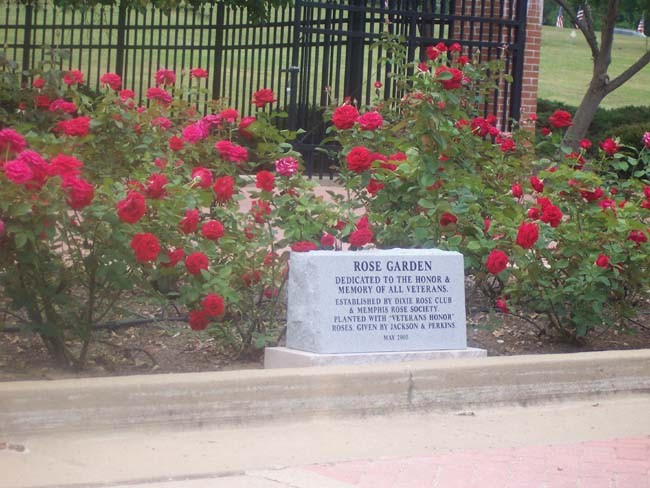
To those fallen warriors we've loved, we honor your lives this day and celebrate the memories that will never die.
To visit The Children of Fallen Soldiers Relief Fund, click above. This fund helps out the children of troops who died in Iraq or Afghanistan, as well as the children of troops who return with a disability.


86% turnover rate in home health care workforce every year....
and an average wage of $9 per hour - these are the issues addressed by two recent pieces of legislation.
Sen. Harkin has recently introduced legislation to make sure that health care workers get the same minimum wage and overtime protections as other workers. The Fair Home Health Care Act of 2007 extends the Fair Labor Standards Act protections to home health care workers. This bill is meant to address the critical shortage of home health care workers in the US.
It is co-sponsored by Sens. Ted Kennedy, Patty Murray, Barbara Boxer, Maria Cantwell, Bob Casey, Hillary Clinton, Chris Dodd, Barack Obama and Chuck Schumer. According to an article in Able newspaper (Nov 2007), Sen. Kennedy pointed out the need to end the exploitation of home care workers and to guarantee fair pay to "encourage them to provide the best possible home care that millions of Americans depend on."
According to the terms of the bill, all health care workers who are "employed by a home care agency, work more than 20 hours a week or perform home care on a regular basis" would be covered by it. There are more than 1 million home health care workers in the US who provide care to the elderly and disabled.
*
A recent rally in Washington DC by Direct Support Professionals (who provide services to those under Medicaid) and organized by ANCOR (American Network of Community Options and Resources) urged support for legislation by Reps. Lois Capps and Lee Terry to amend the Social Security Act to provide states with funds to increase wages paid to DSP's. This legislation is called the Direct Support Professionals Fairness and Security Act (HR 1279).
In a front page article in Able newspaper (Nov 2007), it states: "Nationwide, there are approximately 1.4 million individuals with intellectual and developmental disabilities who require professional support in order to live and work in their own communities rather than an institution. Unfortunately, there are only about 875,000 direct support workers serving just this one segment of the disabled population."
[the full edition of Able News is now available online at ablenews.com]
Sen. Harkin has recently introduced legislation to make sure that health care workers get the same minimum wage and overtime protections as other workers. The Fair Home Health Care Act of 2007 extends the Fair Labor Standards Act protections to home health care workers. This bill is meant to address the critical shortage of home health care workers in the US.
It is co-sponsored by Sens. Ted Kennedy, Patty Murray, Barbara Boxer, Maria Cantwell, Bob Casey, Hillary Clinton, Chris Dodd, Barack Obama and Chuck Schumer. According to an article in Able newspaper (Nov 2007), Sen. Kennedy pointed out the need to end the exploitation of home care workers and to guarantee fair pay to "encourage them to provide the best possible home care that millions of Americans depend on."
According to the terms of the bill, all health care workers who are "employed by a home care agency, work more than 20 hours a week or perform home care on a regular basis" would be covered by it. There are more than 1 million home health care workers in the US who provide care to the elderly and disabled.
*
A recent rally in Washington DC by Direct Support Professionals (who provide services to those under Medicaid) and organized by ANCOR (American Network of Community Options and Resources) urged support for legislation by Reps. Lois Capps and Lee Terry to amend the Social Security Act to provide states with funds to increase wages paid to DSP's. This legislation is called the Direct Support Professionals Fairness and Security Act (HR 1279).
In a front page article in Able newspaper (Nov 2007), it states: "Nationwide, there are approximately 1.4 million individuals with intellectual and developmental disabilities who require professional support in order to live and work in their own communities rather than an institution. Unfortunately, there are only about 875,000 direct support workers serving just this one segment of the disabled population."
[the full edition of Able News is now available online at ablenews.com]
Saturday, November 10, 2007
My fairy godmother rides a Harley
wishes rose
like cream to the top of my coffee
swirled
then the harley
pulled up. my fairy godmother
stepped off, her long gray hair
cascading down the back of her leather jacket
not what i pictured
she spat on the ground
and ambled into the diner
whisking out her wand
"you called?" she asked
i nodded eagerly
"well get on with it. tell me what you want."
her wand bent under the weight of my wishes
"world peace, the end of world hunger
a long vacation in Europe, a duplex by the sea
a better job and salary
a handsome prince just for me"
CRACK
"oh dear
have you got a spare wand?
can you grant my wishes
fairy godmother?" i asked
"give me a break honey"
she said
"i got a long ride and this is
the best i can do"
she stuffed four quarters into the jukebox
hit some buttons
then stumbled down the diner steps, waving
sighing i sipped my coffee
and listened to Springsteen
and don’t you know
i felt better
like cream to the top of my coffee
swirled
then the harley
pulled up. my fairy godmother
stepped off, her long gray hair
cascading down the back of her leather jacket
not what i pictured
she spat on the ground
and ambled into the diner
whisking out her wand
"you called?" she asked
i nodded eagerly
"well get on with it. tell me what you want."
her wand bent under the weight of my wishes
"world peace, the end of world hunger
a long vacation in Europe, a duplex by the sea
a better job and salary
a handsome prince just for me"
CRACK
"oh dear
have you got a spare wand?
can you grant my wishes
fairy godmother?" i asked
"give me a break honey"
she said
"i got a long ride and this is
the best i can do"
she stuffed four quarters into the jukebox
hit some buttons
then stumbled down the diner steps, waving
sighing i sipped my coffee
and listened to Springsteen
and don’t you know
i felt better
Wheelchair Cam: Got Stuck
Sometimes we all want to go on the road less traveled - and for those of us in wheelchairs - well - we can just get stuck. Here's one of many videos made by Gary in his Wheelchair Cam series... if you do wander off the beaten path by yourself, make sure you either have a cell phone with you or it's in a busy area...
In the next video, Gary films Salve Regina, the home of Shake A Leg organization from his wheelchair cam, showing how things look from his side of the camera (it's a beautiful campus so enjoy):
You can find more Wheelchair Cam videos by Gary over at AOL videos.
In the next video, Gary films Salve Regina, the home of Shake A Leg organization from his wheelchair cam, showing how things look from his side of the camera (it's a beautiful campus so enjoy):
You can find more Wheelchair Cam videos by Gary over at AOL videos.
Teaching Kids and Teens Fire Safety- Before College
I know this is off topic, but it's important.
An off campus fire at RIT took the lives of two students a day ago, following the recent fire at the beach house which took even more students' lives. Officials think the cause of the fire at RIT was lit candles or carelessness in cooking - in other words, possibly preventable with some fire safety knowledge.
One of my nephews attends RIT. I know before he left for college as a freshman, he was taught certain things: how to handle money, how to do laundry, how to study and drug and alcohol awareness. Some of these skills were taught by his parents and since he's a pretty sharp young guy, he'll take it from there. I have confidence in him. But I bet the next time he talks to his parents he'll be getting a talk about fire safety.
Fire safety is an important skill to learn. Once teens go off to college, you're not there to extinguish those candles left on or put out the bbq properly - etc. etc. Scouting groups help teach these skills, as do trips to a fire house - you can get creative in your approach in teaching awareness - but assuming kids know the dangers of carelessness around fire just isn't a good idea.
It's also important, particularly with off campus housing, to make sure your kids have a fire extinguisher in their apartment - and know how to use it. Some cities require this - but I wouldn't assume that one is there. Buy one, show your kid how to use it and leave it in the kitchen area. Fire extinguishers can work for small fires, but teens also need to know when to evacuate. Check to make sure the apartment has smoke detectors and carbon monoxide detectors - and that they're working. Put a few batteries in your pocket if you're visiting and change them to make sure the alarms are in working condition. Involve the college student in this - point out what maintenance needs to be done as you initially do it and monitor that it's being done.
If you click the heading, you'll be taken to a site prepared for college kids - fire safety 101. If you have kids or teens, check it out. If you're a teacher or administrator in high school or middle school, think about whether an assembly and some handouts on this would be a good idea. If your kids are already in college, email them the link.
College is meant to be a place where kids can further their education - not where kids go and don't return.
An off campus fire at RIT took the lives of two students a day ago, following the recent fire at the beach house which took even more students' lives. Officials think the cause of the fire at RIT was lit candles or carelessness in cooking - in other words, possibly preventable with some fire safety knowledge.
One of my nephews attends RIT. I know before he left for college as a freshman, he was taught certain things: how to handle money, how to do laundry, how to study and drug and alcohol awareness. Some of these skills were taught by his parents and since he's a pretty sharp young guy, he'll take it from there. I have confidence in him. But I bet the next time he talks to his parents he'll be getting a talk about fire safety.
Fire safety is an important skill to learn. Once teens go off to college, you're not there to extinguish those candles left on or put out the bbq properly - etc. etc. Scouting groups help teach these skills, as do trips to a fire house - you can get creative in your approach in teaching awareness - but assuming kids know the dangers of carelessness around fire just isn't a good idea.
It's also important, particularly with off campus housing, to make sure your kids have a fire extinguisher in their apartment - and know how to use it. Some cities require this - but I wouldn't assume that one is there. Buy one, show your kid how to use it and leave it in the kitchen area. Fire extinguishers can work for small fires, but teens also need to know when to evacuate. Check to make sure the apartment has smoke detectors and carbon monoxide detectors - and that they're working. Put a few batteries in your pocket if you're visiting and change them to make sure the alarms are in working condition. Involve the college student in this - point out what maintenance needs to be done as you initially do it and monitor that it's being done.
If you click the heading, you'll be taken to a site prepared for college kids - fire safety 101. If you have kids or teens, check it out. If you're a teacher or administrator in high school or middle school, think about whether an assembly and some handouts on this would be a good idea. If your kids are already in college, email them the link.
College is meant to be a place where kids can further their education - not where kids go and don't return.
Friday, November 9, 2007
Planet of the Blind - the film- wins an award
I just visited Planet of the Blind - the blog - named after the book.
And read over there that at the recent Superfest International Disability Film Festival, a film based on that book (also named Planet of the Blind) won the Pamela K. Walker Award. I'd like to extend my congratulations to Steve.
When I read Planet of the Blind I laughed, I wept, I chuckled, I learned a lot- but mostly I was in awe of its lyrical prose matched by a voice so strong that it resonated long after I put the book down. It's a book everyone should read - apparently the film producer agreed. Congratulations to Producer Sven Werner of Luxemburg for the award.
I invite you to visit the Planet of the Blind. Just click above to visit the blog. There's also information on the blog about Steve's other books and speaking engagements - not to mention posts by Steve and Connie about disability events, happenings, organizations, etc. !
And read over there that at the recent Superfest International Disability Film Festival, a film based on that book (also named Planet of the Blind) won the Pamela K. Walker Award. I'd like to extend my congratulations to Steve.
When I read Planet of the Blind I laughed, I wept, I chuckled, I learned a lot- but mostly I was in awe of its lyrical prose matched by a voice so strong that it resonated long after I put the book down. It's a book everyone should read - apparently the film producer agreed. Congratulations to Producer Sven Werner of Luxemburg for the award.
I invite you to visit the Planet of the Blind. Just click above to visit the blog. There's also information on the blog about Steve's other books and speaking engagements - not to mention posts by Steve and Connie about disability events, happenings, organizations, etc. !
A demo chair in my kitchen
Be still my heart.
I talked the DME into letting me borrow the demo power chair over the weekend. Until Sunday, possibly Monday. It's a thing of beauty.
I have legs again.
When I hit the joystick this chair moves - every time - unlike the old one I'm using that thinks about it first. And when I go over that extra high threshold into my bathroom this chair gently lifts me and drops me on suspension carefully designed to prevent spasms. I sat in it last night and it was comfortable. It passed the narrow hallway test. So all I need to find out is how it runs outside.
Yeah - outside.
Zoom zoom zoom.
I talked the DME into letting me borrow the demo power chair over the weekend. Until Sunday, possibly Monday. It's a thing of beauty.
I have legs again.
When I hit the joystick this chair moves - every time - unlike the old one I'm using that thinks about it first. And when I go over that extra high threshold into my bathroom this chair gently lifts me and drops me on suspension carefully designed to prevent spasms. I sat in it last night and it was comfortable. It passed the narrow hallway test. So all I need to find out is how it runs outside.
Yeah - outside.
Zoom zoom zoom.
Thursday, November 8, 2007
Disability Blog Carnival #26: How do you relax or unwind?
Greg over at Pitt Rehab, one of my favorite bloggers, hosts this carnival and he picked a great topic : how do you relax or unwind? Click above to see ways in which folks responded - and to add your own comment and ideas to the carnival!
Whether you're a carnival "regular" or this is your first time reading it, I hope you'll join in. Our carnivals are certainly a good way to get to know people better, but also introduce new bloggers and members of our community. So cozy up as winter approaches into our circle....where we all belong.
Whether you're a carnival "regular" or this is your first time reading it, I hope you'll join in. Our carnivals are certainly a good way to get to know people better, but also introduce new bloggers and members of our community. So cozy up as winter approaches into our circle....where we all belong.
Forward
I lean forward in my wheelchair
An abdominal rush
Push!
Maneuvering
As tennis balls fly by
I miss the rim
Again and again
Not moving
Forward
I touch the wheels of my manual chair
In remembrance
Gently releasing myself
I shift into a power chair
I lean toward the joystick and
Push!
An abdominal rush
Push!
Maneuvering
As tennis balls fly by
I miss the rim
Again and again
Not moving
Forward
I touch the wheels of my manual chair
In remembrance
Gently releasing myself
I shift into a power chair
I lean toward the joystick and
Push!
new Catholic site
...called ActiveParishioner.com, started by a former member of the USCCB staff in hopes of gathering resources for Catholics in one place. The site also lists Catholic books for sale.
Wednesday, November 7, 2007
Movie review: House of D

Last night I watched the movie House of D.
It featured Robin Williams and in this film he played a man with cognitive limitations or, as he said, "mentally challenged" who befriended a young 12 year old boy named Tommy - whose father had recently died and whose mom coped by taking copious amounts of sedatives. [There are numerous scenes with the "r" word if that offends anyone - so I'll put out a warning .]
There's no way to talk about this movie without giving away the plot - however things go downhill for Tommy rapidly and the friendship between the two characters is explored in the process. This film is worth seeing for its tender handling of numerous issues- substance abuse, disability, adolescent angst, friendship, loyalty.
The film, shown as a flashback to the boy's childhood from an adult narrator, was powerful. Tommy had mixed feelings toward his parent as a child: on one hand he felt as if she was giving up and got angry at her and on the other he loved her and tried to protect her - in some ways parent her to keep her from harming herself.
Of course in a child's egotistical world, it's all about them - and so kids can do this number on themselves where they blame themselves and feel they're the reason their parent uses. That means every time a kid 'screws up' in a normal child's way and their parent drinks or take pills, a child blames himself. And so it was with Tommy.
This movie captured these dynamics brilliantly.
This film also conveyed the secrecy surrounding Tommy's home situation and how he was on his own in dealing with his mother's substance abuse issues. It raises issues such as the stigma of addiction and the effect of addiction on family members.
The story is one that needs to be told. And this movie does it better than any other I've seen.
[visual description: A movie poster is shown. The background is gold and the images are black. The two characters- Robin Williams and the boy Tommy - are shown in the foreground. Tommy straddles a bicycle. The title of the film is above the image of the characters. In the background are illustrations of the buildings in a city.]
Followup to post below: Health care access issues
Here's an article at NPR which also discusses health care access issues...
Women's Access to Health Care - "The Uphill Push"
Kara Sheridan, one of the bloggers who recently hosted the Disability Carnival, has written a great article on the health care system and how women with disabilities fare in it. It's published in the November 2007 issue of New Mobility and I've provided a link , but you need a subscription to the magazine to read the entire article. You can get a subscription at their site if you'd like.
I highly recommend this article - Kara did interviews with women of all ages and occupations - including a female medical student named Bliss Temple who uses a wheelchair and "designed a curriculum on health and disability for medical professionals".
One of the women interviewed, Stacy Milbern, talks about how accessible exam tables, which she's heard about, seem to be a myth. Another woman discusses the assumption that she needs therapy because she uses a wheelchair. And she speaks of professionals whom she's consulted who tell her that their office doesn't need to be accessible because they don't have a specialty in treating people with disabilities.
Getting into the waiting room or examining room is still an issue for those of us in wheelchairs, not to mention dealing with the attitude of some staff members who expect us to bring someone along, Kara points out. And these barriers, attitudinal and those involving access, keep us from getting adequate health care.
Clearly a great deal of advocacy is still needed in this area.
I highly recommend this article - Kara did interviews with women of all ages and occupations - including a female medical student named Bliss Temple who uses a wheelchair and "designed a curriculum on health and disability for medical professionals".
One of the women interviewed, Stacy Milbern, talks about how accessible exam tables, which she's heard about, seem to be a myth. Another woman discusses the assumption that she needs therapy because she uses a wheelchair. And she speaks of professionals whom she's consulted who tell her that their office doesn't need to be accessible because they don't have a specialty in treating people with disabilities.
Getting into the waiting room or examining room is still an issue for those of us in wheelchairs, not to mention dealing with the attitude of some staff members who expect us to bring someone along, Kara points out. And these barriers, attitudinal and those involving access, keep us from getting adequate health care.
Clearly a great deal of advocacy is still needed in this area.
Tuesday, November 6, 2007
Mobility is a State of Mind
NBC's the Today Show has been doing something out of the ordinary this week. They've stationed reporters in various parts of the world - the Equator, Antarctic and South Pole - who report from and banter with those at the main studio. Besides seeing Matt Lauer with the frosted beginnings of a beard, this has also led to such lines as:
"I wish I could send them some of my soup" (from the person doing the cooking segment)
and questions such as:
"which way does the water in the toilet bowl swirl at the equator?"
yet again proving that despite spending thousands of dollars and having fantastic resources at hand, there is nothing good that happens when programing lacks creative talent. These tidbits crop up as I'm starting my day, drinking my coffee, blogging and setting my work up and I think to myself how sad it is that they've gone to such great lengths to infuse some variety into the show and still can't make it happen.
I know from recent experience that it's not necessary to travel one bit in order to either entertain oneself (or others) . My mobility issues this past year have taught me, like they did when I was waiting for a ramp to go up, that mobility is a state of mind, not a destination.
Don't get me wrong - this is not an experience I'd go through willingly, nor do I recommend it. I think it's appalling that things are set up in such a way that delays, lack of enough affordable solutions and funding issues result in loss of mobility for so many people. But I also know from observing others that what I learned back in grammar school from one of the nuns who taught me still holds true.
One day in class a student griped about how hard the work was in parochial school and how he would prefer to go to public school like his brother so he didn't have so much homework. Sr. Ellen looked him right in the eye and said "If you spend your life wishing you were somewhere else, you'll miss the experience of what you can gain from where you are."
And so it is. I don't think Sr. Ellen is still around, but I thank her for those words because I've thought of them often recently. I wish I was somewhere else - anywhere else - on days. But I know that the experiences I am having from being where I am are worthwhile. I act on that belief.
I've concluded that mobility is a state of mind.
"I wish I could send them some of my soup" (from the person doing the cooking segment)
and questions such as:
"which way does the water in the toilet bowl swirl at the equator?"
yet again proving that despite spending thousands of dollars and having fantastic resources at hand, there is nothing good that happens when programing lacks creative talent. These tidbits crop up as I'm starting my day, drinking my coffee, blogging and setting my work up and I think to myself how sad it is that they've gone to such great lengths to infuse some variety into the show and still can't make it happen.
I know from recent experience that it's not necessary to travel one bit in order to either entertain oneself (or others) . My mobility issues this past year have taught me, like they did when I was waiting for a ramp to go up, that mobility is a state of mind, not a destination.
Don't get me wrong - this is not an experience I'd go through willingly, nor do I recommend it. I think it's appalling that things are set up in such a way that delays, lack of enough affordable solutions and funding issues result in loss of mobility for so many people. But I also know from observing others that what I learned back in grammar school from one of the nuns who taught me still holds true.
One day in class a student griped about how hard the work was in parochial school and how he would prefer to go to public school like his brother so he didn't have so much homework. Sr. Ellen looked him right in the eye and said "If you spend your life wishing you were somewhere else, you'll miss the experience of what you can gain from where you are."
And so it is. I don't think Sr. Ellen is still around, but I thank her for those words because I've thought of them often recently. I wish I was somewhere else - anywhere else - on days. But I know that the experiences I am having from being where I am are worthwhile. I act on that belief.
I've concluded that mobility is a state of mind.
NY Times series on Chronic Pain
In this first of a three part weekly series, some of the myths and facts behind living with chronic pain are explored. The article discusses various types of chronic pain (some that are related to disabilities such as spinal cord injury and MS and disorders such as fibromyalgia).
"One, called nociceptive pain, “arises from injury to muscles, tendons and ligaments or in the internal organs,” she writes. Undamaged nerve cells responding to an injury outside themselves transmit pain signals to the spinal cord and then to the brain. The resulting pain is usually described as deep and throbbing. Examples include chronic low back pain, osteoarthritis, rheumatoid arthritis, fibromyalgia, headaches, interstitial cystitis and chronic pelvic pain.
The second type, neuropathic pain, “results from abnormal nerve function or direct damage to a nerve.” Among the causes are shingles, diabetic neuropathy, reflex sympathetic dystrophy, phantom limb pain, radiculopathy, spinal stenosis, multiple sclerosis, Parkinson’s disease, stroke and spinal cord injury."
...
The consequences of chronic pain typically extend well beyond the discomfort from the sensation of pain itself. Dr. Schneider lists these potential physical effects: poor wound healing, weakness and muscle breakdown, decreased movement that can lead to blood clots, shallow breathing and suppressed coughing that raise the risk of pneumonia, sodium and water retention in the kidneys, raised heart rate and blood pressure, weakened immune system, a slowing of gastrointestinal motility, difficulty sleeping, loss of appetite and weight, and fatigue.
But that is hardly the end of it. The psychological and social consequences of chronic pain can be enormous. Unremitting pain can rob a person of the ability to enjoy life, maintain important relationships, fulfill spousal and parental responsibilities, perform well at a job or work at all." via NY Times
This leads to economic consequences in addition to the others listed. The article points out that the common myth that such patients are malingering is not true. Next week's article deals with the topic of how families and friends can help those living with this sometimes complex disorder.
Click above to read the rest of the article.
"One, called nociceptive pain, “arises from injury to muscles, tendons and ligaments or in the internal organs,” she writes. Undamaged nerve cells responding to an injury outside themselves transmit pain signals to the spinal cord and then to the brain. The resulting pain is usually described as deep and throbbing. Examples include chronic low back pain, osteoarthritis, rheumatoid arthritis, fibromyalgia, headaches, interstitial cystitis and chronic pelvic pain.
The second type, neuropathic pain, “results from abnormal nerve function or direct damage to a nerve.” Among the causes are shingles, diabetic neuropathy, reflex sympathetic dystrophy, phantom limb pain, radiculopathy, spinal stenosis, multiple sclerosis, Parkinson’s disease, stroke and spinal cord injury."
...
The consequences of chronic pain typically extend well beyond the discomfort from the sensation of pain itself. Dr. Schneider lists these potential physical effects: poor wound healing, weakness and muscle breakdown, decreased movement that can lead to blood clots, shallow breathing and suppressed coughing that raise the risk of pneumonia, sodium and water retention in the kidneys, raised heart rate and blood pressure, weakened immune system, a slowing of gastrointestinal motility, difficulty sleeping, loss of appetite and weight, and fatigue.
But that is hardly the end of it. The psychological and social consequences of chronic pain can be enormous. Unremitting pain can rob a person of the ability to enjoy life, maintain important relationships, fulfill spousal and parental responsibilities, perform well at a job or work at all." via NY Times
This leads to economic consequences in addition to the others listed. The article points out that the common myth that such patients are malingering is not true. Next week's article deals with the topic of how families and friends can help those living with this sometimes complex disorder.
Click above to read the rest of the article.
Monday, November 5, 2007
Golf anyone?
This video talks about the No Handicap Golf Program held in Wexter, Pennsylvania. Golf pros donate their time to give lessons to children and young adults with disabilities - while the kids cheer each other on as they try out the sport. And it seems everyone learns something...
Suffering, Evil and the Existence of God
In this NY Times article, Dr. Stanley Fish discusses two very different books written by two authors whose spiritual journeys seem to criss-cross in some ways, particularly on these topics.
"Bart D. Ehrman is a professor of religious studies and his book is titled “God’s Problem: How the Bible Fails to Answer Our Most Important Question – Why We Suffer.” A graduate of Princeton Theological Seminary, Ehrman trained to be a scholar of New Testament Studies and a minister. Born-again as a teenager, devoted to the scriptures (he memorized entire books of the New Testament), strenuously devout, he nevertheless lost his faith because, he reports, “I could no longer reconcile the claims of faith with the fact of life . . . I came to the point where I simply could not believe that there is a good and kindly disposed Ruler who is in charge.” “The problem of suffering,” he recalls, “became for me the problem of faith.”
"What impels him is not the fascination of intellectual puzzles, but the anguish produced by what he sees when he opens his eyes. “If he could do miracles for his people throughout the Bible, where is he today when your son is killed in a car accident, or your husband gets multiple sclerosis? . . . I just don’t see anything redemptive when Ethiopian babies die of malnutrition.”
The horror of the pain and suffering he instances leads Ehrman to be scornful of those who respond to it with cool abstract analyses: “What I find morally repugnant about such books is that they are so far removed from the actual pain and suffering that takes place in our world.”
He might have been talking about Antony Flew’s “There Is a God: How the World’s Most Notorious Atheist Changed His Mind.” Flew, a noted professor of philosophy, announced in 2004 that after decades of writing essays and books from the vantage point of atheism, he now believes in God."
-via NY Times
I don't have the time or energy right now to write a lot about this although I found it quite interesting - and I have to get back to work -
The comments to this piece are as interesting as the piece itself...click above to read.
"Bart D. Ehrman is a professor of religious studies and his book is titled “God’s Problem: How the Bible Fails to Answer Our Most Important Question – Why We Suffer.” A graduate of Princeton Theological Seminary, Ehrman trained to be a scholar of New Testament Studies and a minister. Born-again as a teenager, devoted to the scriptures (he memorized entire books of the New Testament), strenuously devout, he nevertheless lost his faith because, he reports, “I could no longer reconcile the claims of faith with the fact of life . . . I came to the point where I simply could not believe that there is a good and kindly disposed Ruler who is in charge.” “The problem of suffering,” he recalls, “became for me the problem of faith.”
"What impels him is not the fascination of intellectual puzzles, but the anguish produced by what he sees when he opens his eyes. “If he could do miracles for his people throughout the Bible, where is he today when your son is killed in a car accident, or your husband gets multiple sclerosis? . . . I just don’t see anything redemptive when Ethiopian babies die of malnutrition.”
The horror of the pain and suffering he instances leads Ehrman to be scornful of those who respond to it with cool abstract analyses: “What I find morally repugnant about such books is that they are so far removed from the actual pain and suffering that takes place in our world.”
He might have been talking about Antony Flew’s “There Is a God: How the World’s Most Notorious Atheist Changed His Mind.” Flew, a noted professor of philosophy, announced in 2004 that after decades of writing essays and books from the vantage point of atheism, he now believes in God."
-via NY Times
I don't have the time or energy right now to write a lot about this although I found it quite interesting - and I have to get back to work -
The comments to this piece are as interesting as the piece itself...click above to read.
Don't get "stuck" when you buy disability-related products
"I don't think I will ever go in it again."
--Eva McCracken, who campaigned successfully for a wheelchair lift at her local railway station, after it malfunctioned
-via Inclusion News Daily
For anyone wondering how such a thing could happen, I suggest you talk to a person with a disability - or the parent or family member of one.
We've all been there. We research the technology or assistive devices we need. We consult with OT's, PT's, doctors, other people with disabilities, perhaps architects and others. We find various forms of funding, save our own money, and put in applications to insurance. In the end we receive a product that is supposed to help us do what we need and want to.
And sometimes, even after all of that planning, things go awry. We might get a lemon. The design might be wrong. The product may be sound, but won't work properly where it's placed. Or, worse yet, we got bad advice from experts who simply don't know enough about what they still consider a "niche" area - disability accommodations, access and technology.
After spending hundreds or even thousands of dollars, we may find ourselves owning a product that doesn't fit our needs despite careful planning. There isn't a 'second bite' at the apple with this. A custom made wheelchair that doesn't fit your needs or a computer that lacks the technology you need although it was designed for you is a disaster to those who need these devices. And, in the case of the example above, a loss of confidence in the reliability of the product purchased can result in its disuse. Getting "stuck" literally on a lift can translate to getting stuck with a product!
So what can we do? First, know your rights as a consumer. Check out the available warranties - and return policy, if any - of the products you order, especially online. If you purchase through a dealer, check out their reputation through your network. Has anyone else bought a product through them? Is their service reasonably fast and consistent? Are they knowledgeable about the products they sell?
The same is true of any experts you may hire or consult. Not all architects, contractors or even medical folks are equal. Those who are "in the know" about what to buy and how to set up and fit products earn a good reputation - and a well deserved one. Word of mouth is especially important here. Networking through organizations can be of help here.
If you're buying a custom product, make sure that your measurements are given to the dealer accurately. The same is true of the options you choose. Play an active, not passive, role in this process. Products that are custom built for you place an extra burden on you to be careful since you cannot return them if they are delivered to you with the specs you ordered. Mistakes on your part can leave you with a product that might be useless. If, however, a dealer makes an error in ordering with the specs you gave them, then you have rights. This means that examining the product upon delivery is crucial to make sure it's in accordance with the specs you provided.
Finally, research the product that is recommended to you. Before you buy it, consider its track record for other consumers by doing some reading on the internet and talking to others. You're not the only person buying the product (although it may feel like it). True, these products have a smaller market but it's a market nonetheless. The "buzz" is out there if you do enough footwork. This may not be the time to save money, as tempting as it is, on a product that has a shorter warranty. Remember that if the manufacturer lacks enough confidence to give a warranty on the product, chances are you should pay attention to that as a buying point - and put it in the negative column.
None of these suggestions can guarantee that you won't get "stuck" - but working with experienced people and purchasing reputable products with a good warranty go a long way toward preventing it.
[Have you purchased an item and learned something you'd like to share or would like to add to what I've posted? Leave a comment!]
--Eva McCracken, who campaigned successfully for a wheelchair lift at her local railway station, after it malfunctioned
-via Inclusion News Daily
For anyone wondering how such a thing could happen, I suggest you talk to a person with a disability - or the parent or family member of one.
We've all been there. We research the technology or assistive devices we need. We consult with OT's, PT's, doctors, other people with disabilities, perhaps architects and others. We find various forms of funding, save our own money, and put in applications to insurance. In the end we receive a product that is supposed to help us do what we need and want to.
And sometimes, even after all of that planning, things go awry. We might get a lemon. The design might be wrong. The product may be sound, but won't work properly where it's placed. Or, worse yet, we got bad advice from experts who simply don't know enough about what they still consider a "niche" area - disability accommodations, access and technology.
After spending hundreds or even thousands of dollars, we may find ourselves owning a product that doesn't fit our needs despite careful planning. There isn't a 'second bite' at the apple with this. A custom made wheelchair that doesn't fit your needs or a computer that lacks the technology you need although it was designed for you is a disaster to those who need these devices. And, in the case of the example above, a loss of confidence in the reliability of the product purchased can result in its disuse. Getting "stuck" literally on a lift can translate to getting stuck with a product!
So what can we do? First, know your rights as a consumer. Check out the available warranties - and return policy, if any - of the products you order, especially online. If you purchase through a dealer, check out their reputation through your network. Has anyone else bought a product through them? Is their service reasonably fast and consistent? Are they knowledgeable about the products they sell?
The same is true of any experts you may hire or consult. Not all architects, contractors or even medical folks are equal. Those who are "in the know" about what to buy and how to set up and fit products earn a good reputation - and a well deserved one. Word of mouth is especially important here. Networking through organizations can be of help here.
If you're buying a custom product, make sure that your measurements are given to the dealer accurately. The same is true of the options you choose. Play an active, not passive, role in this process. Products that are custom built for you place an extra burden on you to be careful since you cannot return them if they are delivered to you with the specs you ordered. Mistakes on your part can leave you with a product that might be useless. If, however, a dealer makes an error in ordering with the specs you gave them, then you have rights. This means that examining the product upon delivery is crucial to make sure it's in accordance with the specs you provided.
Finally, research the product that is recommended to you. Before you buy it, consider its track record for other consumers by doing some reading on the internet and talking to others. You're not the only person buying the product (although it may feel like it). True, these products have a smaller market but it's a market nonetheless. The "buzz" is out there if you do enough footwork. This may not be the time to save money, as tempting as it is, on a product that has a shorter warranty. Remember that if the manufacturer lacks enough confidence to give a warranty on the product, chances are you should pay attention to that as a buying point - and put it in the negative column.
None of these suggestions can guarantee that you won't get "stuck" - but working with experienced people and purchasing reputable products with a good warranty go a long way toward preventing it.
[Have you purchased an item and learned something you'd like to share or would like to add to what I've posted? Leave a comment!]
Sunday, November 4, 2007
Disability Employment Awareness...

Last month was Disability Employment Awareness Month. It's one of those issues that advocates need to work on every month - so even though it's November, I'm bringing it up again.
I received an email from another advocate in October asking permission for some of my poems from A Different Light to be read at a poetry reading to celebrate Disability Employment Awareness Month at North Carolina A&T and happily granted it. Once again, the internet becomes a way for us to speak to others and have a voice in ways we may not even imagine.
I put a link to the diversity store above where they offer posters for Disability Employment Awareness. I'm going to encourage friends to purchase and hang these posters where they can to spread the word about this important issue the other 11 months of the year. If you have a hallway where you work, a waiting room or even an interview room - perhaps a library reading room - please consider hanging one of these wonderful images up. Their prices are affordable ($6.25 for some of the posters) and there are many to choose from. In addition to posters, bookmarks and buttons are also available.
[visual description: Shown is a poster for sale at diversitystore.com entitled Employ Ability. A multicolored figure in a wheelchair near the bottom right reaches up toward a purple sun at the top of the poster. Multicolored round clouds in greens, orange and purple are between the sun and the figure. On the bottom left is a multicolored tree. The sky is an aqua blue.]
World Cinema online at Jaman
If you're looking for award winning foreign and independent films (some involving the subject of disability), check out Jaman. It's an online movie download site which offers newcomers 3 free rentals. After that rentals cost 1.99 each. Best of all you can watch the movies right at home - either on your computer or through Apple TV -if you have that.( I don't but the site indicates it works with that.)
The interface worked well for me. I didn't run into any accessibility issues with the equipment I use - DNS 9 and a head cursor. And, best of all, I found quite a few movies over there that I've been looking for!
The interface worked well for me. I didn't run into any accessibility issues with the equipment I use - DNS 9 and a head cursor. And, best of all, I found quite a few movies over there that I've been looking for!
Saturday, November 3, 2007
Prayer Marathon at ASU
Christian students at Arizona State University are holding a 24 hour a day, 21 day prayer marathon. Groups of students are praying - not for any particular topic or cause. They are finding that students who join in and intend to pray for ten minutes sometimes stay for hours in the quiet spiritual environment.
"The patch of lawn next to the Danforth Meditation Chapel has informal stations where poster board and pens allow students to write down what they are praying for, or who they are forgiving, or Bible verses that have resonance for them.
...
One afternoon, during the worst of the Southern California fires, Richie Romero stepped hesitantly toward a group of praying students. He was asked immediately if there was anything for which he needed prayer. Romero told the group that he had family in the area where the fires were burning houses.
The students asked God to spare Romero's family, for the winds to stop and for the safety of the firefighters. When the prayers were over, Romero thanked them and walked away.
"It always feels good to pray. Some people need that comfort sometimes," Romero said on his way to class. "I pray every day but by myself."
via USA Today
This is a great reminder, as the students point out, how often the "busyness" of life separates us from prayer - and each other.
"The patch of lawn next to the Danforth Meditation Chapel has informal stations where poster board and pens allow students to write down what they are praying for, or who they are forgiving, or Bible verses that have resonance for them.
...
One afternoon, during the worst of the Southern California fires, Richie Romero stepped hesitantly toward a group of praying students. He was asked immediately if there was anything for which he needed prayer. Romero told the group that he had family in the area where the fires were burning houses.
The students asked God to spare Romero's family, for the winds to stop and for the safety of the firefighters. When the prayers were over, Romero thanked them and walked away.
"It always feels good to pray. Some people need that comfort sometimes," Romero said on his way to class. "I pray every day but by myself."
via USA Today
This is a great reminder, as the students point out, how often the "busyness" of life separates us from prayer - and each other.
Friday, November 2, 2007
For those So What reactions ...
Try a little Jazz....Miles Davis and John Coltrane in 1958 playing So What...actually this noncommercial video moment was brought on by a particularly memorable moment of dealing with someone's "So What?" reaction on a Friday afternoon. TGIF!
Day of the Dead celebrations around the world
Controversial in some ways and aspects, Catholic communities in various cultures combine celebrating a mixture of All Saints and All Souls Day along with Halloween. In Mexico, there are even stronger roots from local culture and other religions that unite such celebrations.
This article discusses the celebrations around the world. In Europe, November 1 has become a national holiday. People flock to cemeteries to visit their lost loved ones. Latin countries celebrate with festivals.
"The November 2 "Dia de Muertos", "Dia de Difuntos" or All Souls' Day interweaves Spanish influences with indigenous ancestor worship in south America, especially in places with strong indigenous populations such as in Mexico, Guatemala, Peru, Bolivia and Ecuador.
-- Celebrations often begin November 1 with the "Dia de Muertos Chiquitos", The Day of the Little Dead, dedicated to departed children.
-- In Mexico, people build colorful Day of the Dead altars in their homes. Burning incense and candles they adorn the displays with sugar skulls, flowers, chocolate coffins, papier-mch skeletons and photographs of the deceased.
-- They also offer up their dead relative's favorite food and remember their vices -- sweet breads, cakes, tequila, rum and cigarettes -- to entice them to return home.
-- Cemetery visitors pay tribute to the dead by offering them bread, alcohol and flowers, especially marigolds, and often getting drunk "with" their beloved deceased." via Reuters
However the Catholic News Service reports that these celebrations are considered controversial by church officials and nationalists.
"In recent years, many Mexicans have merged their Day of the Dead festival, celebrated Nov. 1 and 2 on the feasts of All Saints and All Souls, with Halloween festivities like those of the United States.
The result is a festival that stretches from the night of Oct. 31 to Nov. 2 and includes elements from both traditions; children go "trick or treating" as in the U.S., but they do it on Nov. 1 and carry replica skulls, an image with deep roots in Mexican culture.
Church officials and nationalists are angered by what they say is the encroachment of foreign pagan festivities on one of Mexico's most sacred holidays. Families have observed Day of the Dead for centuries, visiting the graves of their ancestors and making them altars decorated with food, drink and flowers." via CNS
One sector of society that benefits from the festival is the tourism trade. Special tours are being offered that include Day of the Dead festival activities at sites like this: http://www.traditionsmexico.com/wr2_Seeds.html
This article discusses the celebrations around the world. In Europe, November 1 has become a national holiday. People flock to cemeteries to visit their lost loved ones. Latin countries celebrate with festivals.
"The November 2 "Dia de Muertos", "Dia de Difuntos" or All Souls' Day interweaves Spanish influences with indigenous ancestor worship in south America, especially in places with strong indigenous populations such as in Mexico, Guatemala, Peru, Bolivia and Ecuador.
-- Celebrations often begin November 1 with the "Dia de Muertos Chiquitos", The Day of the Little Dead, dedicated to departed children.
-- In Mexico, people build colorful Day of the Dead altars in their homes. Burning incense and candles they adorn the displays with sugar skulls, flowers, chocolate coffins, papier-mch skeletons and photographs of the deceased.
-- They also offer up their dead relative's favorite food and remember their vices -- sweet breads, cakes, tequila, rum and cigarettes -- to entice them to return home.
-- Cemetery visitors pay tribute to the dead by offering them bread, alcohol and flowers, especially marigolds, and often getting drunk "with" their beloved deceased." via Reuters
However the Catholic News Service reports that these celebrations are considered controversial by church officials and nationalists.
"In recent years, many Mexicans have merged their Day of the Dead festival, celebrated Nov. 1 and 2 on the feasts of All Saints and All Souls, with Halloween festivities like those of the United States.
The result is a festival that stretches from the night of Oct. 31 to Nov. 2 and includes elements from both traditions; children go "trick or treating" as in the U.S., but they do it on Nov. 1 and carry replica skulls, an image with deep roots in Mexican culture.
Church officials and nationalists are angered by what they say is the encroachment of foreign pagan festivities on one of Mexico's most sacred holidays. Families have observed Day of the Dead for centuries, visiting the graves of their ancestors and making them altars decorated with food, drink and flowers." via CNS
One sector of society that benefits from the festival is the tourism trade. Special tours are being offered that include Day of the Dead festival activities at sites like this: http://www.traditionsmexico.com/wr2_Seeds.html
Subscribe to:
Posts (Atom)