Pages

Tuesday, July 31, 2007

Gospel workshop for kids


Due to the drop in music training in many public schools ( California alone lost 27% of its music teachers between 1999 and 2004) -

"... the Washington Performing Arts Society, which brings internationally acclaimed artists to the city's top stages, stepped in, says president Neale Perl. It devotes $200,000 of its $1.2 million annual education budget to offer, free, the training that great singing requires.

For two weeks every July, the workshop offers vocal technique, musicality, gospel music history, songwriting and more. Many campers are members of the 110-voice Children of the Gospel choir, which is sponsored by the performing arts society. Others are newcomers who may audition for the choir this fall.
...
"We teach them that gospel music is theology and Scripture and an outcry of the soul. It connects the singer and the listener to what God can do, has done, will do, might do, in their lives," says gospel history teacher Emory Andrews.

Via USA Today

Click above to read the rest.

[visual description: Choir director Philip Carter leads the rehearsal of a group of young singers.]

Monday, July 30, 2007

"Running Out of His Lane"

I'd like to give a hat tip to Penny Richards over at DisStudies Temple U for the link to this article by Kenny Fries in the Washington Post about Oscar Pistorius, the double amputee runner who is trying to qualify for the Olympics. Fries' article is interesting. He writes:

"By contesting the notion that a disabled runner cannot, and should not, compete with nondisabled runners, Pistorius has challenged preconceived ideas not only of sport but of what it means to be human."

I've written about this story before. I've also written about Tatyana McFadden, the Paralympic high school track athlete who lost her court bid to compete in high school track and have her score count toward her team's score. (See label below). And, as some of my readers know, I've played competitive wheelchair tennis for the past decade, so I have a few thoughts to add to this debate -as a disabled athlete.

Controversy over these two athletes has run high. It strikes me, based on my experiences, that it is when athletes with disabilities not only try to " run out of their lane", as in compete against able bodied athletes, that there is a hot debate, but this heats up mostly when those athletes can and do win.

I saw this happen in my own experiences playing against able bodied tennis players. Because I am a quadriplegic, I have to attach my tennis racket to my hand with duct tape due to a lack of grip and dexterity. I don't look very imposing before I start playing - let's face it. I'm in a wheelchair and I have a tennis racket attached with duct tape.

So on a few occasions when I've been over at a local club practicing and I've had able bodied tennis players ask me to "play a few points", none of them really expected too much of me. One guy insisted he didn't even need shoes so he tried to play against me in flip flops. After he lost a few points, he said to me "Hey, you can really play! I didn't know that" as if I'd somehow fooled him and then said he was going to find his sneakers. I never saw him again. I've had other players wipe their brows after a few points and suddenly decide they have an appointment somewhere and have to leave. One woman looked over her shoulder at the parking lot and said to me "I hope no one is watching you beat me like this. I'll never live it down!"

And then there were the comments, like "Well I guess that wheelchair is faster than running for the ball" and "Maybe you don't get as heated up as we do when running" and (my personal favorite) "I could hit the ball better if I taped my racket on too." (I always tell folks they can borrow my duct tape. One woman took me up on this only to discover it limited her to one grip and she shook her head confused saying "I guess it isn't an advantage to tape it on.")

Having this happen over and over again leads me to think that none of these folks wanted to play tennis with a disabled person who, well, plays better than them.

So when I hear the pundits crying out that Pistorius' blades give him an advantage over the other runners, my ears go up. Ahh, a familiar tune. What's really going on here?

When Tatyana first ran track meets in her wheelchair, there were concerns about injuries. Then she won meets - and there were concerns about her score counting. She has an advantage, was the outcry.

You can't win. If you're not a good athlete, you might hurt someone. If you're too good, well, you have an advantage.

I've tried to just cover these stories without adding my experiences. But , in the end, I just can't help but compare. Some might say I just ran into a lot of poor sports over the years. But there you have it- that's what I think is going on.

Just pass me the duct tape.

Mobility without Barriers

This Vermont-based nonprofit organization aims at helping provide improved technology for children with disabilities in India and Ethiopia who cannot walk. Employing a specialized mobility device that combines bicycle and wheelchair technology, this organization is changing the lives of kids who otherwise cannot get an education or be included in the life of their village or town.

In Ethiopia:

"An estimated 5 million Ethiopian children and adults have disabilities, 7.6% of the population. Of this group, 1.2 million have lower limb disabilities; yet fewer than 500 wheelchairs are produced annually by Ethiopia's two largest domestic suppliers.

More than 98% of Ethiopian school aged children with disabilities are not attending school. These children suffer from a high incidence of isolation, illiteracy, chronic poverty and social exclusion."


To speed up the numbers of children they can help, the organization uses horse drawn carts to transport up to 18 children at a time, as shown in this photo from their site.

More information is available on their website, which can be reached by clicking above.

In Memoriam : (Robert) Bobby Curran Jr.


I met Bobby about a dozen years ago playing wheelchair tennis. I always enjoyed being around him with his infectious laugh and learned a great deal from him about living a full and gracious life from a wheelchair. He passed away last week and is with us now in our memories.

Bobby was a disabled vet - a Marine. He had a great sense of humor and was always the life of the party at the tennis tournaments. He was much loved and will be greatly missed by all of us. Bobby's family and friends are in my prayers.


[visual description: Marines salute the flag covered casket of a fallen comrade.]
[visual description: The back of an unknown wheelchair tennis player is shown facing the full length of a tennis court.]

Ingmar Bergman,"the poet with a camera", dies at 89


During my short stint as a film major in college, I studied the films of Ingmar Bergman- The Seventh Seal, Smiles of a Summer Night, and so many more- and pondered over his childhood as the son of a minister. Themes of religion were scattered throughout his films in a world where God was either seen as malevolent - and faith an elusive thing for men and women. Toward the end, his films took on a theme that showed love toward humanity.

"Once, when asked by the critic Andrew Sarris why he did what he did, Mr. Bergman told the story of the rebuilding of Chartres Cathedral in the Middle Ages by thousands of anonymous artisans.

“I want to be one of the artists of the cathedral that rises on the plain,” he said. “I want to occupy myself by carving out of stone the head of a dragon, an angel or a demon, or perhaps a saint; it doesn’t matter; I will find the same joy in any case. Whether I am a believer or an unbeliever, Christian or pagan, I work with all the world to build a cathedral because I am artist and artisan, and because I have learned to draw faces, limbs, and bodies out of stone. I will never worry about the judgment of posterity or of my contemporaries; my name is carved nowhere and will disappear with me. But a little part of myself will survive in the anonymous and triumphant totality. A dragon or a demon, or perhaps a saint, it doesn’t matter!”

Via NY Times

By the way, his film "Music In Darkness" depicts a soldier blinded (while trying to rescue a puppy on a shooting range ) who turns down a female suitor because of her lack of social standing. (I've linked to a review above.) Bergman doesn't give the film an inspirational twist. The soldier is turned down when applying to a music academy despite his talent while the female suitor, Ingrid, goes on to succeed. One of the things I like about this film is how it juxtaposes different issues of class - along with how disability, as a lesser social status, interplays with other class issues. The film is weakened, however, by its sentimental treatment of disability.

The Swedish film is from 1948 and alternate titles include Musik i mörker, Night Is My Future.

[visual description: Photo, via NY Times, shows Bergman in a director's chair in the 60's. He is holding a camera and is dressed in dark attire.]

Sunday, July 29, 2007

Raising Awareness of ALS


Bobby, who is featured in the article I've linked to above, emailed me and asked me to help raise awareness for a cure for ALS (Lou Gehrig's disease). ( He also is promoting legislation in the U.S. Congress to create a nationwide ALS (Amyotrophic Lateral Sclerosis) registry.)

According to the article:

"- ALS, a neuro-degenerative disease, usually strikes people between the ages of 40 and 70.

- Based on loose studies, a little over 5,600 people in the U.S. are diagnosed with the disease each year.

- Once thought rare, it is, in fact, quite common. There are nearly 120,000 cases diagnosed worldwide each year.

- Five to 10 percent of cases occur in families where the disease has already been detected, but the vast majority arises spontaneously among previously healthy adults.

- Most people who are in the late stages of ALS can see and hear but are unable to communicate or move.

- The disease eventually robs them of their ability to move their muscles, breathe on their own, speak or even wink and eye."
{Source: www.alscounts.com/livingpatients.html}

Bobby, who was diagnosed fourteen years ago, was told he had three to five years to live. And how is he spending his time- raising awareness for a cure . He also recently went skydiving and tried NASCAR racing out, spending time with his loved ones, friends and family and enjoying his life.


Click above to read more about Bobby.

[visual description: Bobby, who is sitting in a power chair, is shown in front of a red NASCAR race car near a track.]

{visual description: Bobby is shown in the air during a tandem skydive with an instructor who is giving a thumbs up.]

Guess what I was doing at 2 a.m.?

Fighting with a hospital bed. Or, rather, its plug.

It's true. Have you ever seen those scenes from a movie where someone visiting a patient gets into a hospital bed and plays with the controls, making the bed go up and down repeatedly? Looks like fun, doesn't it?

However, that assumes that the bed is plugged in. Mine wasn't last night. It wouldn't move at all. I can tell when my hospital bed is unplugged because the picture of the little nurse with the cap on isn't lit up. And I needed to adjust the angle of the bed because my neck was screaming in pain.

I remembered that I asked my aide to unplug the bed so there would be room to plug in my scooter charger the other day and, since I lack the dexterity to switch plugs, I decided it would be better to leave the scooter charger in. My big plan has been to find a way to get the bed plugged in simultaneously since, after all, we do live in the great technology age, but I haven't got around to it.

I know - I realized last night at 2 a.m. that it should have been on my priority list.

But getting back to my bed. Which I wanted to do. I was really tired - and hot. And, it being 2 a.m. and all, I turned to the little nurse in the cap and said "Help!" She didn't answer me. (OK, so a quad living alone can have fantasies).

So what to do ? If my neck wasn't screaming in pain, I would have just gone to sleep, but I decided that I'd try to plug in the bed. I transferred out of the bed and into my wheelchair. Then I got my quad reacher and got it to grip the scooter plug in the wall and tried to yank it out. It wouldn't work. I should know this because I've tried to do this movement many times. But I tried a few more. Apparently I don't have enhanced dexterity at 2 a.m. Surprise, surprise.

And then I heard them. Teens going home - walking past my window. Teens with hands that work. Slightly inebriated teens - from the sound of them, but teens who could plug in a hospital bed. I rolled out onto the porch and yelled over to them.

So it was that my bed got plugged in by a teen who, when I thanked him, replied "No, this is good. I can tell my mom I stopped and helped you plug your bed in when she's mad at me for breaking curfew."

A win-win. I gave them some coffee and they called his mom to pick them up. Meanwhile we played with the hospital bed.

Just like in the movies.

There's a guest blogger takeover over at BBC Ouch

...and you don't want to miss it! Lots of great posts over there to read - by wonderful bloggers like the Goldfish from Diary of a Goldfish, Dave Hingsburger, Zephyr of Arthritic Young Thing , Seahorse.......

Saturday, July 28, 2007

Friday, July 27, 2007

Disability Blog Carnival #19: Sex and Disability

Zephyr over at Arthritic Young Thing presents this disability carnival full of great posts. She writes:

"... there are specific issues and problems related to sex that we face as disabled people. There are also unique and wonderful experiences we get to have because of the disability. And of course, we do sex differently because of our disabilities. I wanted this carnival to give us a chance to share our sexual experiences and knowledge as disabled people.

We also had several entries on relationships, marriage, and disability activism."

Click above to go read the rest!

Accessible summer vacation: Get Around Guide


Darren and his family just returned from their trip to Monticello and has posted Part I over at his blog:

"Luckily for those visiting Jefferson's home on a wooded Virginia mountaintop, Monticello is much more easily accessible than the man -- even if you have physical disabilities.
You get up to the mountaintop two ways. Walk up a third of a mile walking path or take a shuttle bus up. (More about the path option later.) We chose the bus, since we knew one of the vehicles had a wheelchair lift. When they saw our party they trotted out the lift-equipped bus, loaded us on and took us up the mountain via a curvy road that might double as a mild amusement park experience for those who don't do roller coasters."

and he writes:

"Having done my research beforehand, I knew Monticello was accessible. But as we approached the house, I sure didn't see how. But soon our guide pointed out the ramp to the right that wheelchair users access to get into the house. Once inside, my son and I were able to enter every room that everyone else on our tour did, with the exception of one guest bedroom where the doorway was just too narrow. Our tour guide, and some other staff inside the house standing by apparently for just such an occasion, ushered me and my son in the slightly different paths we needed ..."

Click above to read the rest of his post - sounds like a great trip for this history buff, for families and those with disabilities looking for a destination.

[visual description: A photo of the main house at Monticello, colonial style, with the fish pond in the foreground.]

Thursday, July 26, 2007

"The Extra Portion"

A new short story over at A Different Light

Book review: The Wet Engine

Via Monastic Musings, a review of a book about a father with twin sons, one of whom was born with a heart condition.

Sr. Edith writes:

"The story of the book - it does not have a plot but it does have a story - centers on that little boy, Liam. Who were the doctors and what path of life brought them to deal with these difficult situations? Who invented these surgeries? Who figured out how the human heart worked? And - what does it all mean?

The overarching theme is wonder: that Liam is alive, that so many people have devoted so much of their lives in such surprising ways to uncovering the secrets of the working of the heart, the mystery of the heart itself. Philosopher Josef Pieper diagnoses the absence of wonder as one of the major ills of our society: we get so caught up in doing what works. We forget that it is a mystery that anything exists at all, and don't take the time to stand back in awe and wonder. Brian Doyle has done that, and shared the results with us."

This is not a book "just for" parents dealing with these issues (although I've put a 'parenting and disability' label below so any parents can find other resources), but a spiritual book for all of us, based on the review.

I've also added a link in my sidebar to the Congenital Heart Information Network, a wonderful site.

Click above to read the rest.

ADA celebrates its 17th anniversary today

Seven years ago I remember getting a sticker from a disability agency that celebrated the 10th anniversary of the Americans with Disabilities Act. I put it on my wheelchair and had a few people stop me when I was out and about and ask "What is the ADA?"

Those were teachable moments, times when I could explain to people what the ADA was and its purposes.

Seven years later, if I was asked that question, I'd be surprised. Most people know what the ADA is now. At least they know what the words stand for - or that it's "about people with disabilities". What I'm not sure some people understand is the purpose behind the ADA - which can be mistaken for a law that guarantees entitlement and sometimes engenders resentment. Sadly this biased view of the ADA has been touted in media coverage at times, one that ignores its purpose.

I think of the car dealer who admitted he gave a disabled customer a higher price and told me that he had to put a ramp in so someone had to make up the difference. Or the veterinarian who complained to me that she was sued by a wheelchair user like me when there was no access and, no , she didn't want to treat my pet. Countless people who have told me as an advocate how much they resent making accommodations for the disabled. Or, shockingly, my experiences with being told at times that churches are exempt from the ADA - and don't 'have to' do anything "for disabled people".

On some days as I advocate I encounter so much backlash from the progress we've made that I find myself reeling.How sad that none of these folks understand the true purpose behind the ADA. Inclusion. Having a society where everyone can participate, where people can freely come and go, socialize, work, drive, and enjoy a full and productive life. And, yes, worship freely and be included socially at the table too as a full member of a congregation.

Churches may be exempt from the ADA legally, but are not exempt from inclusion morally. I could write volumes about how sad it is when inclusion is ignored in a church setting or spiritual community and pushed to the back burner as if it can just wait. How sad. For them. Because in their denial that work toward inclusion needs to be done, they not only continue to miss out on true community where everyone can fully participate, but fail to adhere to the tenets of the very faith they gather to celebrate.

I'm mindful that, in all of these situations, what some people don't see is the full picture. Yes, they know seven years later that the ADA is a law for disabled people.

Maybe, given more time, more people will learn what its true purpose is.

Way to meet that ticket quota....


This BBC story has a bizarre twist to the usual handicap parking ticket story.

Able bodied Mr. Junk left his vehicle parked only to return to it to find a disabled parking area had been painted around it - and he was ticketed.

"The lady who owns the confectionery shop had remonstrated with the people who had painted it and also with the parking enforcement people who had come to put the ticket there, but, she said, neither would listen to her," he said.

"You can see clearly from the pictures that I took that the bay is incomplete."

A Department for Regional Development spokeswoman said on Tuesday it was not "normal practice for Roads Service to paint new parking restrictions around parked vehicles." Via BBC

In any event, they plan to issue an apology to Mr. Junk.


[visual description: Mr. Junk's car, a sedan, is shown parked in a - now- disabled spot. ]

Wednesday, July 25, 2007

The Trouble with Angels


I found this video of a movie from my Catholic childhood that will always be a favorite about two girls who are sent to a convent school - Hayley Mills and June Harding. It's an endearing film about how their antics try the patience of the Mother Superior - and about spiritual transformation. There are quite a few humorous scenes. In this scene, the girls have to face the music when they're about to take a swimming test after skipping gym for their entire high school career.

There was a sequel to this film called Where Angels Go, Trouble Follows - but I never liked it quite as much. However ,many of the main characters in the first film did appear in the second one so it's worth watching if you like the first. (Hayley Mills did not appear in the second film.)

Enjoy!

Franciscan Monastery of the Holy Land


"Since 1899, a Franciscan monastery in the Brookland neighborhood of Washington has been a popular stop for pilgrims who want a glimpse of the Holy Land.

The grounds of the monastery feature dozens of replicas of significant Christian sites from Europe and the Holy Land, including many surrounding the life, death and resurrection of Jesus Christ.

The friars of Mount St. Sepulcher Franciscan Monastery and Commissariat of the Holy Land represent the Christian interest in the Holy Land, and it shows in the beauty of their church and the surrounding gardens.

The church is the dominant structure on the grounds. It is not a replica of any one structure found in the Holy Land, but was designed with a number of architectural influences found in buildings there. Within, beneath and around the church are full-size reproductions of actual Holy Land sites, including churches, memorials, shrines, tombs and historical monuments." Via the Catholic News Service

For more information on this shrine in Washington, click above.

[visual description: A columned entrance to the monastery is shown. It is built in stone and there is a stone road leading toward the entrance.]

Traumatic brain injury recovery video


During a snowboarding accident, Cody hit a tree in early 2006. This video shows his progress during recovery from a traumatic brain injury.

Tuesday, July 24, 2007

Sen Kennedy, Brownback introduce bill for parents of disabled babies

"U.S. Senators Sam Brownback (R-KS) and Edward Kennedy (D-MA) today reintroduced the Pre-natally and Post-natally Diagnosed Conditions Awareness Act, legislation which would require that families who receive a diagnosis of Down syndrome or any other condition, pre-natally or up until a year after birth, will be given up-to-date information about the nature of the condition and connection with support services and networks that could offer assistance.
...
The Pre-natally and Post-natally Diagnosed Conditions Awareness Act would provide for the expansion and further development of a national clearinghouse on information for parents of children with disabilities, so that the clearinghouse would be better equipped to assist parents whose children have recently been pre- or post-natally diagnosed. The bill also provides for the expansion and further development of national and local peer-support programs. The bill also calls for the creation of a national registry of families willing to adopt children with pre- or post-natally diagnosed conditions."
Via Press release, Sen. Brownback's office

Children's Story: Grinchley Avenue School's Food Fight Fiasco

Over at A Different Light
The faith of those who live their faith is a serene faith. What you long for will be given you; what you love will be yours for ever.
– Pope St. Leo the Great

Monday, July 23, 2007

The doggie ramp goes to the dogs....

Well, I've tried for a few weeks now to get my transportable scooter into the back seat of my Ion (with the doors that open out) with a doggie ramp and so far no luck. (See above for prior post.) Although I did manage to reactivate my shoulder injury on the right side which is the side I transfer on so I'm back in pain. The pain it took me six weeks to get rid of. Hopefully this will heal quicker. However...

"Many people with disabilities have learned to substitute stronger muscles for weaker ones. Quads with forearm weakness often substitute and overuse their shoulder and upper back muscles to move their hands, which can cause chronic muscle spasms." Via New Mobility Magazine, Oct. 2002 "Oh Your Achin' Back...and Neck..and Head." by Richard Louis Bruno

Just wanted to update on this ramp in case anyone saw my idea. I'm guessing it'd work just fine if an AB friend stood behind the scooter and pushed it in - but not independently. Meanwhile, my use of the equipment - and my car - is going to be limited.

I just saw this in the news - most of western England is under water from flooding.....the worst flooding in 60 years. Apparently the month-long high rainfall is causing (now) repeated flooding so folks who just cleaned up from floods are getting flooded again. Thousands of people are being forced from their homes and power and water is cut off. Let's remember our UK friends in our thoughts and prayers.


[visual description: A man holds the hand of an elderly woman, guiding her through several feet of flood water out of her home.]

2 legislative alerts: Hate Crimes Bill/ADA Restoration Act

LLEHCPA: Hate Crimes Bill

Last week, Senators Edward M. Kennedy (D-MA) and Gordon Smith (R-
OR) filed S. 1105, the Matthew Shepard Local Law Enforcement Hate
Crime Prevention Act of 2007 (LLEHCPA) as an amendment to the
Department of Defense (DOD) reauthorization bill currently being
considered on the Senate floor.

ADA Restoration Act: "

AAPD has been working with a broad coalition of disability organizations who have helped Representative James Sensenbrenner (R-WI) draft the ADA Restoration Act of 2007, which would enable Americans with disabilities utilizing the ADA to focus on the discrimination that they have experienced rather than having to first prove that they fall within the scope of the ADA's protection.

With this bill, the ADA's clear and comprehensive national mandate for the elimination of discrimination on the basis of disability will be properly restored. Majority Leader Steny Hoyer (D-MD), who played a leading role in passage of the ADA in 1990, will be an original co-sponsor, but we need more Representatives to sign onto the bill when it is introduced to show the bipartisan support and importance of this measure." Via the American Assocation of People with Disabilities

Call your Representative at 202-224-3121 (http://www.congress.gov) and urge him/her to co-sponsor the ADA Restoration Act when it is introduced on Thursday, July 26 and to support both bills.

Via SDS list serv

Sunday, July 22, 2007

Curb cuts - safety tips


This list was provided by a teen reader - thank you electroDude!


1. When you see a wheelchair crossing a street, pedestrians on the other side need to get out of the curb cut so the wheelchair user can enter it to get out of the street. If you see a disabled person stuck in the street at a crowded curb cut, alert other pedestrians to clear the curb cut.

2. Drivers - remember when a light changes that wheelchair users may not be able to get up the curb cut right away because it's blocked. Sometimes drivers move their car while a wheelchair is still in the street which can cause an accident.

3. Wheelchair/scooter users - check over your shoulder for drivers turning the corner (even on red lights) on busy streets who may not see you and stop. If there's a newspaper stand on a corner, that may block a driver's view! Crossing with other pedestrians who are on foot and taller is safest if this happens.

4. Do not distract a guide dog who is assisting a visually impaired person from doing his job by petting or talking to the animal. Do not walk so close to a visually impaired person that you interfere with her cane movement.

Get out there - stay safe!

[visual description: A woman on a scooter crosses a street toward a curb cut in a group of pedestrians.]

D is for Discomfort

Yesterday I was reading something David (over at Growing Up with a DIsability) was writing about - how his aide noticed during his recent trip that David "put a lot of energy out making other people feel comfortable" around him and his disability. I can relate.

People express their discomfort in various ways. There are a range of reactions. Some people say they're afraid of saying/doing the wrong thing and refuse to take responsibility to learn how to be around people with disabilities. This places the burden on the person with a disability to 'handle' their discomfort. Others ask a lot of uninvited - even intrusive questions. Then there's the opposite extreme - a few who don't acknowledge disabled people when they speak, as if they are invisible. This can cause quite a few problems as well.

It does take energy to deal with these reactions. I've spoken to a number of people in the disability community who feel that it's not the responsibility of the disabled person to educate others. People with disabilities want to concentrate on living their lives, not being seen as a spokesperson. I'd also add that behavior which makes a disabled person feel as if he/she is a problem to have around is inappropriate. I see this far too often when I'm out, where a situation is exaggerated due to a slight inconvenience.

Because of the amount of discomfort some people show, I always encourage people to educate themselves about disability - learn about various disabilities. There are many resources available (I even have a tag which I'll include below) - books, videos, etc. In addition to learning about disabilities, it's important to educate oneself about disability etiquette. This includes how to act around those with various disabilities. Part of the learning process is being around people with disabilities, interacting with them and learning.

It's also important to examine your attitudes toward disability - both positive and negative ones. What were you taught as a child about disability? How do you perceive disabled people in general? Any fears or anger you have may be displaced onto disabled people you meet if those feelings remain unconscious, for example. If you've had a number of positive relationships with disabled people, this will impact your attitude.

Remaining teachable, using common sense, and keeping a sense of humor goes a long way toward resolving being uncomfortable around people with disabilities .

Saturday, July 21, 2007

Hey kids - bookshare and RFBD have the new Harry Potter!


If you have a disability and belong to bookshare and/or RFBD (or have a child who does), just a shout out that they have already scanned Harry Potter and the Deathly Hallows. (I know my nephews are straining at the bit to get this....)

[visual description: A photo of the front cover of the new Harry Potter Book, Harry Potter and the Deathly Hallows. Underneath the book title is a photo of Harry Potter in his wizard robes, with his left hand up in the air, palm extended, looking into the distance.]

"Dumb Dude of the Day"

Midlife and Treachery awards it to a guy she saw in -

"a fairly *empty* parking lot…lots of non-blue-non gimp parking spaces available and some of them right across from the doorway I was aiming for….but instead of taking advantage of the nearly empty lot. DumbDude was parked across *three* disabled parking spaces loading and unloading his car…also happened to be over the ramp that I would need when the paratransit van made its appearance…."

click above to read the rest....

CLASS Act introduced by Sen. Kennedy and Harkin

From Senator Kennedy's office Press Release

"Senators Edward Kennedy and Tom Harkin and Representatives John Dingell and Frank Pallone introduced the Community Living Assistance Services and Supports (CLASS) Act of 2007 that would create an insurance program for adults who become functionally disabled.

The measure would provide a cash benefit to help obtain services and supports, while providing those with disabilities more choices on community participation, education, and employment. ...

The CLASS Act is an important step in the evolution of public policy because it is a framework based on the principles of independence, choice, and empowerment. It is the framework needed to help individuals gain the access they need to live independently. The CLASS Act does this by establishing a national insurance program to be financed by voluntary payroll deductions to provide benefits to adults who become severely functionally impaired. To qualify for benefits, individuals must be 18 years old and have contributed to the program at least 5 years. All working adults will be automatically enrolled in the program, unless they choose not to be.

There are two benefit tiers: Tier 1 benefits ($50/day) will be payable to eligible individuals who have 2 or more impairments on Activities of Daily Living (ADLs) or the equivalent cognitive impairments.

Tier 2 benefits ($100/day) will be payable to individuals who have 4 or more ADLs or the equivalent cognitive impairment."

Friday, July 20, 2007

Totally Devoted to You

Shortly after I acquired my disability, my brother suggested I buy a computer so I could go online since my mobility was limited. I still remember setting up AOL, including the IM feature. I composed a profile in which I mentioned that I was female, what my hobbies were and that I used a wheelchair.

My IM's started going off within 20 minutes. I had, within the space of several hours, six men IM me asking me questions - not about me, but about my disability. By the time the sixth one did it, I wondered what was up so I asked him. He replied that he was a devotee - attracted to women in wheelchairs with disabilities.

"If you don't want IM's from people like me, you better take the wheelchair out of your profile," he told me.

I did delete the word wheelchair out, feeling kind of queasy and yucky at the same time. Attracted to me simply because I used a wheelchair? What was that about? So, one of my first searches of the web was of devotees.

Not all, but several of the devotees were unpleasantly persistent even in the face of me asking them to leave me alone once I caught on. One night I was online with a good friend and she said she was being IM'd by this really nice guy in Cleveland and I checked her profile. Sure enough, it said wheelchair user, female. I mentioned his cybername and she asked "How do you know?" I told her. Like me, she wasn't particularly interested either.

I found it just as unsettling to be chosen because I have a disability and use a wheelchair (or whatever the particular devotee attraction is, since it varies) as it was in everyday life to be eliminated from the running because of my disability. Both situations make me feel as if I'm not being treated like a person.

At that time, I began dating offline as I regained my mobility and went through the usual "blind dates" (although I insisted the guy know I was disabled - I'm just not sure any of them understood what a 'quad' is until they watched me try to eat) and dating scene. I never went through a dating service although one of my friends met her husband there. I dated through groups I belonged to with common interests, dated business acquaintances and friends of friends.

And, yes, I found someone. We had a wonderful first date and when he dropped me off at home, he asked to come inside. I watched as he lifted his pant leg and showed me a prosthetic leg. "Still interested?" he asked.

Over time we were engaged. We worked through what became our mutual fears about the relationshp working, fears that were being fed by some friends and family. He lost his leg at 19 years old and his mom still treated him, her only child, as if he was about that age at times. And many thought marrying a quad was too much for him to "take on". He was an extremely active person, so this didn't seem to make much sense to either of us after we calmed each other down. Perhaps the most amusing part of this was that his conservative mom , a Southern debutante in her day, kept inviting me to tea parties where I couldn't even hold a tea cup! You should have seen the look on her face when he marched into the "tea room" and plunked a straw into the tea cup one day and said "Let it go, Mom."

Logistical issues like how to be intimate when a disability requires adaptations was much easier for us than working out day to day living on more mundane subjects, such as him letting the aide do his/her job and knowing that didn't make me feel unloved. Many times people assumed he had no disability because they couldn't see his prosthetic leg. This created some very interesting scenarios for us behind closed doors, believe me. But we weathered it and both learned from it.

Perhaps because of the groundwork we laid, when he passed away unexpectedly I can truly say we were totally devoted to each other. It was a hard blow. Love songs still bring tears to my eyes, movies we saw together bring a lump to my throat. But I look at it this way: I went from six anonymous devotees to one totally devoted amputee who loved me.

Thursday, July 19, 2007

Survey: Discrimination at the Job

"Last year, the U.S. Equal Employment Opportunity Commission (EEOC) received 75,768 discrimination charges against private sector employers. The most frequent charges were race (27,238), followed by sex (23,247) and retaliation against reporting discrimination (22,555). Other frequently cited charge bases were age (16,548), disability (15,575), national origin (8,327) and religion (2,541). The joint study, conducted by Harris Interactive, surveyed diverse and non-diverse workers across the country and segmented them into seven major groups, including African American, Hispanic, Asian, Female, Gay/Lesbian/Bisexual/Transgender (GLBT), Individuals with disabilities and Mature workers age 50 or older.

The study's goals were to:

Gauge the frequency, severity and occasion for the perception of discrimination or unfair treatment in the workplace,

Learn whether employee diversity is valued, and

Measure how diversity affects hiring decisions, compensation and career advancement." via CareerBuilder.com

Half of those surveyed indicated they did not report unfair treatment or discrimination.

" Of those who did report, in 73 percent of the cases the offender was not held accountable. When asked why those being discriminated against stay with their current employer, more than half (64 percent) said they could not afford to quit. "

Polio researcher Vogt dies


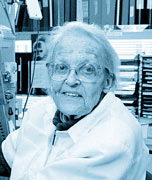
Marguerite Vogt, age 94, contributed to Nobel pirze winning research on cancer cells and contributed toward discovering the polio vaccine. Her work was never fully recognized, according to other scientists, yet she devoted her entire life to her profession. At 14 her first work was published and in 2001 at the age of 88 she was still spending long days in the laboratory.

"At the Salk Institute, Dr. Vogt was a senior scientist and professor of molecular and cell biology. She became an American citizen in 1958. She never married and left no immediate survivors.

Dr. Vogt continued to conduct research into her 90s, aided by her close friend Dr. Martin Haas, a biologist and former student of hers. She was never known to have complained about her lack of formal recognition.

“I’m happy not to have been bothered,” she recalled in an interview with The New York Times in 2001. “When you get too famous, you stop being able to work.”

Via NY Times

[visual description: A photo of Vogt at the age of 88 at work in her lab wearing a lab coat, smiling.]

Where is our protection as consumers of products for disabled?

One of my friends who uses a wheelchair and has for most of her life is being denied a wheelchair through her work health insurance. It's in appeal.

Her doctor, to date, has written three letters indicating that she requires an ultralightweight wheelchair due to her inability to push a 30 pound wheelchair but the insurance company will not honor that. Instead, they are holding up her claim with paperwork, have demanded letter after letter and now are using letter number 1 against letter number 2 against letter number 3 despite the fact that in each letter they asked for different information. They appear to be saying that it's more of a matter that there isn't one letter (despite the fact that all the letters came from the same doctor) that is written properly.

In the meantime the accessible car she bought has glitches. For example, the windows go up and down erratically when the ramp is deployed. Due to the way they installed things, safety features were disabled and she doesn't feel safe. Passengers cannot embark and disembark except by using the ramp because of the placement of certain items - on which she wasn't consulted or informed. The total cost of this car: approximately $45,000. She waited over six months to get this car. She is now looking at another vehicle because she doesn't feel safe in this one.

Where is our protection as consumers with products that we need for our disabilities? Where are our lobbyists? Because, folks, that's how this country works. The answer is that we lack sufficient representation. We are rapidly losing our right to wheelchairs in this country, which in my opinion was a tenuous one. The poor among us know that getting a new wheelchair is a thing of the past and are using used and, in some cases, broken equipment daily. Insurance companies are denying more claims for the equipment we need. People wait months for accessible vans despite the high costs and then, upon delivery, discover glitch after glitch - ramps that don't deploy or deploy without warning, doors that won't open, etc.

Where is our protection? There isn't any. From having insurance pay for a wheelchair, to getting products replaced swiftly when we depend on them - we don't have the protection we need to meet these situations. Check this out. One woman spent over a year getting a replacement for a used wheelchair van which was a lemon that a dealer sold her. She hired a lawyer and spent that year without a car. How can that be sufficient protection when you're buying a product you need because you require wheelchair access? It's not as if she can use any car in the meantime .

We need specific laws and mediation processes so that issues with essential DME and other items can be swiftly resolved in light of the unique purposes of this equipment. Why is it okay to charge us these inordinately high prices (we're told it's special equipment so they have to charge more) but then we're relegated to usual consumer laws that are inadequate to cover our needs? Makes no sense but believe me we're the only ones who will be motivated to change it - not anyone else.

We need programs to help afford the often inflated prices - or laws to reduce and control the prices. We need to reconsider alternatives to denial of insurer payments toward equipment - perhaps negotiate a middle ground where they issue a check toward partial payment of an ultralightweight wheelchair in lieu of buying one like they used to rather than offering a useless heavyweight wheelchair as a take it or leave it deal. Again, no one else will be motivated to work toward these changes.

We need to speak up. We need to address inequities for those on Medicare and Medicaid and other programs who are curtailed by unreasonable rules. Our system is no longer humane.

Where is our protection?

Demand for ranger rosaries exceeds supply


There is a tremendous burden on troops and their families right now with the surge and multiple deployments. The Army and Marines are carrying the bulk of this burden with no increase in troop numbers. As Catholics, there are ways we can provide comfort to the troops.

Chaplains are receiving more requests for ranger rosaries, combat tough rosaries suitable for servicemen and women to carry in war. Fashioned out of parachute string, these rosaries are popular for those in battle.

"The Ranger Rosary is very, very popular among our young soldiers because they look and feel so Army-like especially since they are made from the 550 cord and are subdued colors similar to the Army uniform. I know first hand how much the Ranger Rosary is loved by the American Soldiers. Once they get it in their hands, it is a powerful reminder of their Catholic faith and the love that our Lord and His Blessed Mother had for each of us no matter where harms way may take us."

--Anonymous
Via the Ranger Rosary website

If you can help by donating or would like to learn to make ranger rosaries to send overseas, please click above.
[visual description: An unidentified U.S. soldier kneels down holding a ranger rosary, a rugged rosary made of parachute string with a cross affixed to it.]

Wednesday, July 18, 2007

Can you help make Katie happy?


Seahorse sent me this link from over at Talj's Photo a Day blog:

"Katie was diagnosed with an intrinsic brain stem Glioma in October 2006 and in a couple of weeks she will be celebrating a special birthday. Katie will be 13 on 28th July 2007.

Her birthday wish is to receive a card from EVERY state in the US. To date the only states she is missing are:

Maine, NH, VT, SC, RI, ND, SD, KS,IN,KY,MA ..."


My dear friends, if any of you live in one of those states, please click above and email for the address in the UK to send a card...thanks!

[visual description: A photo of Katie and her mom at the Relay to Life in the UK.]

"Escaping from Peter Pan's Prison"

hat tip on this BOTH to Title Varies Slightly and the Curt Jester

I linked directly to this article by Anne McDonald over at MercatorNet who writes about Ashley X. It's a must read.

She writes:

"Like Ashley, I, too, have a static encephalopathy. Mine was caused by brain damage at the time of my breech birth. Like Ashley, I can't walk, talk, feed or care for myself. My motor skills are those of a 3-month-old. When I was 3, a doctor assessed me as severely retarded (that is, as having an IQ of less than 35) and I was admitted to a state institution called St Nicholas Hospital in Melbourne, Australia. As the hospital didn't provide me with a wheelchair, I lay in bed or on the floor for most of the next 14 years. At the age of 12, I was relabelled as profoundly retarded (IQ less than 20) because I still hadn't learned to walk or talk.

Like Ashley, I have experienced growth attenuation. I may be the only person on Earth who can say, "Been there. Done that. Didn't like it. Preferred to grow."

Unlike Ashley, my growth was "attenuated" not by medical intervention but by medical neglect. My growth stopped because I was starved. ...."

She questions Peter Singer's assessment of Ashley X and the assessment of children with like disabilities:

"When Singer wrote that, "Ashley is 9, but her mental age has never progressed beyond that of a 3-month-old. She cannot walk, talk, hold a toy or change her position in bed. Her parents are not sure she recognises them. She is expected to have a normal lifespan, but her mental condition will never improve," he has accepted the doctors' eyeball assessment of Ashley without asking the obvious questions.

What was their assessment based on? Has Ashley ever been offered a way of showing that she knows more than a 3-month-old baby? .....Any assessment of intelligence that relies on speech and motor skills cannot conceivably be accurate because the child doesn't have any of the skills required to undertake testing. To equate intelligence with motor skills is as absurd as equating it with height." Via MercatorNet.com

She states it is unethical not to provide Ashley with a way to communicate and urges those around her to do so.

She writes:

"Only someone like me who has lain in a cot year after year hoping that someone would give her a chance can know the horror of being treated as if you were totally without conscious thought."

Words from Anne, assessed as having an IQ of less than 20 based on methods used before Anne was provided with a way to communicate.....

Hooked on Home Decor : Tips for Wheelchair Users


For folks who have been in wheelchairs for years, none of this is probably news, but if you're a new wheelchair user, why re-invent the wheel? I'd like to share some simple tips here that might help out.

Over the years, my aide has come up with some great decor tips that combine practical, inexpensive solutions for me to reach things along with an open and appealing look in my place. One of the best devices she's used is, quite simply, a hook.

You can buy single or double hooks, a series of hooks on boards , double hooks (small and big combined). You can get all kinds of looks from chrome to wood to themed hooks with decorations like ivy, horses, etc. Basically you can spend as little or as much as you want and match any style with hooks.

My aide, Meredith Gould, (who is also the author of numerous books, once of which is Tips for Your Home Office ) first used hooks near where I sit in my living room area. We put headphones, my head pointer, a dressing stick and reacher on those hooks. These are items I use in that area and it saves me from hunting around for them. I also have more independence with them right at hand.

Yesterday she replaced a single hook in the hallway with a board of ten hooks, five up, five down. Another reacher, a few jackets, a backpack and my only quad expensive reacher are on there for easy access in the center of my place or on the way out. I really like this board of hooks since it offers a lot of different "hanging angles" and I can place things on there in a way that's easier to grasp with very little dexterity.

We also have used hooks on the frig door (although they didn't work out too well for me), and in the kitchen for more reachers, towels, and eating utensils.

Hooks get rid of clutter that gathers on the floor making it non-accessible and a wheelchair hazard. They clear up space in drawers, closets and counters. Because they are easily moved, hooks are a great way to increase your independence, add to your decor and give your place a new look.

Another tip: Hang up surge protectors with multiple plugs on the wall for easier access to switch cords in/out. This reduces the likelihood of dust getting into them as well as accidentally rolling into their edges or the cords attached if they are loose on the floor .

Martha Stewart would be proud!

[visual description: A photo of a double chrome hook is shown. There are four hooks, two up and two down.]

Eight random facts about moi ...."the Meme"

oooh I've been tagged - at least twice that I know about - by Disabled Soapbox and Pitt Rehab - thanks guys! This is a fun way to get to know other bloggers - and vice versa. So here goes:

1. I went to college early - actually before I was able to drive. There were just two other early admission students back then in the University and I think the Dean called us the Evil Triplets behind our backs! When we were all put in the same class once, appropriately a Religion and Literature class at Rutgers College (it never happened again!) the English prof used to let us walk her dog in the middle of class to give us (her?) a break. bwa haha

2. My favorite restaurant is an A&W drive through. (If you're unlucky enough never to have been to one, they feature A&W root beer floats, hamburgers, hot dogs, fries, chili dogs, health food like that.) Seriously on a date I ask to go there and it's a big hit usually. (Enough left over for a good movie!)

3. My main hobby before I became a quad was music. I played classical and rock and blues guitar, keyboard, drums, a lute, a violin and a harmonica. (Yes, at the same time - I was ABLE bodied LOL). I was in a band and also performed solo for a bit before I decided to go get a career. And I do still sing. Watch out.

4. I like watching women's college basketball and my favorite team is the Lady Vols. Go Pat Summitt!

5.I've been engaged twice and both fiancees passed away before the wedding day. However I figure it couldn't happen three times. Right?

6. I was a camp counselor for two summers for city kids when I was in college. I taught drama and boating. I was either yanking kids off the stage with a hook or pulling them out of the water with a pole all summer. It was great fun.

7. I have no arts and crafts talent although many in my family excel in this. I was banned from the arts and crafts room at camp because my attempts at making projects were so bad the kids thought I was fooling around. (One mobile I made not only fell apart but the pieces fell on the camp director- ouch!- she was not amused. It was my best attempt but I should not have used juice cans.) Yes that was before I was a quad grr...

8. I read science fiction/fantasy and love stories about dragons, elves and - more dragons and elves.

OK now I get to tag eight folks, so here we go:

Dream Mom, Wheelchair Dancer, Growing up with a Disability, Screw Bronze!, Hop Bloody Hop, Jus' Me Blogging, Title Varies Slightly and last but not least Kara's Place to Breathe and Believe.


For those who've been tagged, here are the rules:

1. Let others know who tagged you.

2. Players start with 8 random facts about themselves.

3. Those who are tagged should post these rules and their 8 random facts.

4. Players should tag 8 other people and notify them they have been tagged.

Have fun!

Tuesday, July 17, 2007

The bellied up thingamajig

Uncle Bill was my favorite relative. He was a Navy diver back in the days of WWI and helped build many tunnels and bridges in the NY area. He also did some demolition work and other kinds of high risk diving. I guess doing that kind of work over 30 years gives you either a sense of humor or a grim demeanor - and he cultivated a sense of humor. (He announced when Armstrong was about to walk on the moon and the TV accidentally showed a simluation of the trap opening, then closing on the space capsule, that they "was throwing the garbage out of the galley".)

Uncle Bill was indeed colorful. He managed to whisper things to us, words we'd never heard and phrases that joined together like two flavors of your favorite bubblegum to kids looking for a way to secretly swear just a little so we wouldn't get into trouble. He used words like "cod face", "sonofagun", "squid neck", "whale belly", "dead bottom" and " high falutin brass" all the time, even in the same sentence in his stories. Once he called an ice cream salesman who cheated me a "dirty lowdown bum" so fast that no one could decipher what he was saying. It sounded more like "Did you buy it?" to anyone listening and then he would wink at us secretively.

Of course my Uncle Bill muttered, grunted and otherwise spit the words out in different intonations to hide their meaning. Maybe he learned to do this in the service so he could insult officers without them knowing it. It certainly worked on my parents.

When I have a day like today where I'm learning to use new equipment, my scooter is in pieces on the ground and my frustration level mounts, I think of Uncle Bill and find myself wanting to put together some phrases myself. The difficulty is that my voice is clear as a bell, so everyone can hear what I'm saying. If I spout out "You cod face bellied up thingamajig" I can never get away with saying "Oh I said Cape Cod's whales are jumping." I don't have the intonation down right.

It's really a lost art, I'm afraid. I've been trying for years to learn. However, the good news is I'm getting lots of practice these days.

Oh you're a genius...

Actually there are quite a few of them and in this article in CNN, their inventions, theories and breakthroughs are highlighted - things that can change our world in significant ways.

Like the genius who's working on inventing human-like robots to use in scientific experiments so variables can be controlled more accurately. Working on a cure for malaria? Revolutionizing air travel?

Check it out.

Monday, July 16, 2007

You be Samson, I'll be the lion....

Walmart is going to carry a line of faith-enriching toys, including the action figures genre and talking dolls depicting biblical figures and stories.

"The toys are based on biblical stories. For example, there's a set of 3-inch figures based on Daniel in the lion's den for about $7. A 12-inch talking Jesus doll is about $15. And 14-inch Samson or Goliath action figures are about $20.

The toys target kids from pre-school to age 12, he says, and also are sold online at one2believe.com."

via USA Today

"

One year old, this blog....


....has been an enjoyable and worthwhile endeavor. I'd like to take a moment to thank everyone in my communities online who have been so welcoming, supportive and serve as my "roll" models:

Penny Richards DisStudiesTempleU
Kay Olson The Gimp Parade
Wheelchair Dancer
Connie and Steve Kuusisto Planet of the Blind
David Growing Up with a Disability
...and Janet
Sr. Edith Monastic Musings
Karen Marie From the Anchor Hold
Adoro Te Devote
Scott Rains Rolling Rains Report
Katya Broken Clay
Goldfish Diary of a Goldfish
Fr. Ben The Good News
Dream Mom
Title Varies Slightly


.....and to all who read and share here, thank you.

[visual description: A single lit candle is on a dark background. In white letters it reads Happy Birthday.]

Sunday, July 15, 2007

Email question on resilience

A reader who is newly disabled writes asking for tips on developing resilience. He says he needs more resilience because he's feeling frustrated a lot. I link above to some tips over at the Mayo Clinic website along with a quiz to take.

But I'd like to mention that some folks mix up resilience with stoicism. Adapting when it comes to your disability, whether it's a newly acquired one or you're taking on a new task or have a change in your disability or your life circumstances, can involve a temporary set of "challenges" that can take varying times to deal with. While you're going through this, it's normal to have feelings - maybe grief, frustration, anger, joy, excitement - it can vary. The important thing is to hang in there.

Let's take the example of learning to use adaptive equipment. Realistically, some equipment takes awhile to get fitted and/or to fund and find. Then you need to learn to use it and the learning curve may be at a pace that tries your patience. Sometimes you need to arrange for the help of an occupational therapist or another expert.

It can be easy to get down on yourself while you're going through all of this and if folks around you don't understand they may inadvertently add to it rather than support you at each step of the process. One young guy I met never got his driver's license because his dad had trouble dealing with the frustrations of waiting at each step and kept complaining to his son "It's taking too long!" I pointed out that if his son gave up, he'd never get it and boy that was going to be a long wait. Nevertheless, his dad missed seeing the big picture.

I wouldn't worry though. Not only is it a waste of energy, but many problems get ironed out with time, effort and patience. What can look insurmountable when you're just starting a process looks much easier when you reach the middle and later stages.

Feel free to leave comments of how you dealt with adapting - or if you need some support as you go through a change. Often the best advice/suggestions I get are from other members of the disability community.

Australian Christian Woman magazine piece


I received my copy of the July August 2007 Australian Christian Woman magazine, which features an article entitled Tapestry of Disability. Its author, Melinda Tognini, interviewed me for the article and I spoke about spiritual inclusion in churches. Also included in the article are interviews with a 12 year old, Ella Witham, who was born with Cornelia de Lange Syndrome (which includes a cleft palate, hearing and vision impairments and an intellectual disability) and Tanya Alexander who has an intellectual disability and a hearing impairment.

The article discusses social and attitudinal barriers, some of which originate from the Bible, and how perceptions are changing.

Since the article includes a link to Wheelie Catholic, let me extend a big welcome to readers of the magazine!

[visual description: The cover of the magazine Christian Woman is shown. There is a photo of Australian singer Michelle Tumes on the left. To the right is a list of article covers.]

Lives of the Disabled Saints


Bio: St. Germaine Cousin (my favorite disabled saint) is the patron of child abuse
Germaine was born with a right hand that was deformed and paralyzed . Her cruel stepmother severely abused her as her father looked the other way. Germaine was fed so little she learned to crawl to get to the dog's food bowl. Boiling water was poured on her legs by her stepmother. Germaine developed scrofula, a form of TB and became even more vulnerable to mistreatment. Her siblings, who watched her cruel treatment, joined in the abuse.

Her stepmother forced Germaine to sleep out in the barn with the sheep so the other children wouldn't catch her illness. She wasn't allowed to eat at meals but was given scraps of food. Germaine, who was entrusted with the care of the sheep, responded by becoming closer to God. She attended daily Mass. She fashioned a rosary out of knots in string and prayed:

"Dear God, please don't let me be too hungry or too thirsty. Help me to please my mother. And help me to please you."

Germaine shared what little she had with others, giving her scraps of food to beggars. Stories of her holiness spread and her stepmother, angry at this, tried to catch her in doing wrong. After throwing a beggar out from the barn that Germaine let sleep over to stay out of the cold, her stepmother chased and beat Germaine when she saw a bundle in her apron, thinking she stole bread. Beautiful flowers fell out of the apron - flowers not due to bloom for months. Germaine handed one to her mother and said

"Please accept this flower, Mother. God sends it to you in sign of his forgiveness."

Her stepmother softened toward Germaine and invited her back inside the home but Germaine was used to her straw bed in the barn. She died at the age of 22 in 1601.

Her body was found incorrupt when exhumed in 1644. The remains were desecrated in 1793by an anti-Catholic tinsmith named Toulza who threw quick-lime and water on them. Yet her body was found to be still intact except where the quick-lime had done its work afte the French Revolution. She is credited with hundreds of miracles.

[Biography content derived solely from Catholic online and Catholic forum websites]

+

The Catholic Forum has a list of saints with disabilities and stories on each one. If you're interested, click above.


[visual description: St. Germaine Cousin is shown seated on a rock with a lamb in front of her. She is dressed in a peasant dress and a halo is drawn around her head. ]
When we pray, the voice of the heart must be heard more than that proceeding from the mouth.
– St. Bonaventure

Saturday, July 14, 2007

A Musical Treat


I recently saw this group - the Meg Hanson Group featuring Benny Barksdale on the sax -check it out!

"Recoveries at burn units bring stresses, strong bonds"

Via USA Today. This article discusses the journeys of disabled vets going through recovery from burn injuries.

"Brooke's burn center also treats civilians. But these days there is a steady flow of wounded from Iraq and Afghanistan — more than 570 thus far, of which only about 6% have died. Many survivors, however, are permanently scarred. Some also suffer from blast-related wounds, such as head injuries or fractures. Others can't walk, cut their food or tie their shoes.

"We now have an entirely new population of burn survivors ... with oftentimes lifelong and life-changing injuries," says Dr. Evan Renz, a Brooke surgeon.

Some will recover. Others will learn new ways to become independent."

The article discusses some of the struggles with survival, suicidal feelings and conflicts the staff and patients deal with on a daily basis. However, its message is clear for those who do survive numerous surgeries, some as many as 30 or 40 (or more):

Get back out there.

Pistorius racing toward Olympics


This video recaps the story of Oscar Pistorius, a double amputee who is racing to qualify for the Olympics. He discusses the controversy he faces and the situation with officials from the IAAF, who taped him last night in a 400 meter race in Rome at the Golden Leagues where he came in second to determine whether his prosthetic legs give him an advantage over able bodied runners.

According to the BBC:

"He hopes to qualify for the World Athletics Championships next month and run in the 2008 Olympics in Beijing.
He came from last place on the final bend to overtake the field and finish in 46.90 seconds, 0.18 seconds behind the winner Stefano Braciola.
Pistorius needs a time of 45.95 to qualify for the World Athletics Championships in Osaka, Japan, in August.
He will get another chance on Sunday in Sheffield against a field that includes Olympic champion Jeremy Wariner and several other leading runners." Via BBC

Update on July 16, 2007

"The double amputee sprinter competed in the 400m in Sunday's Norwich Union British Grand Prix in Sheffield.

But he trailed in last behind American Angelo Taylor and was disqualified for running out of his lane." Via BBC

Controversy exists in the Paralympic community as well about the effects of the best runners choosing to compete in able bodied events. Polls show that as many as 87% of the public feel that his "blades" give him an advantage. (See The Science of Sport blog, e.g.) However, unless Pistorius reaches a qualifying time, the controversy may die out - until the next time this comes up.

Looking at Disfigurement from Burns

In this NPR piece, the writer covers a subject not often discussed - veterans returning from war with disfiguring injuries caused by burns and the treatment they receive in an Army hospital.

Please follow the label burn survivors for more information. If you are the parent of a burn survivor, you can find links to summer camp programs here. Also Support groups are available.


I found a piece over at belief.net under a column called Daily Inspiration. (I'm sure there are others but I was struck at how little coverage there's been of this despite the folks I've heard from online who are out there. However note the USA Today article in the post above.)

It's about burn survivor and disabled vet Aaron Mankin. He poses with his daughter in a photo over there. He speaks of his concerns for her about his disfigurement as she grows older due to society's reaction.

Mankin shares about waking up in the hospital:

"Then, my girlfriend Diana's face popped into my head...The first time I saw Diana three months later, I asked her to marry me. I didn't know what I was capable of as a husband or as a dad. I didn't know what I could bring to the table besides a burned face and scarred arms. My ears, nose, and mouth were gone, as were the thumb and index finger of my right hand. When she said yes, it was a turning point for me. Even though I had a right to be bitter and curse the world, it wasn't what Diana deserved. It wasn't the man she fell in love with.

It was a month and a half before I was ready to look at myself in the mirror. Then one day, I got out of my hospital bed to go to physical therapy and I saw the mirror I'd passed countless times, refusing to see the truth about how hurt I was. I looked over my left shoulder, and there I was—this torn up, frail, thin individual with open wounds on his face that I barely recognized, and my worst imagination became my reality. I cried.

Being a Marine, you want to tell yourself you're fine, just walk it off. But I couldn't walk this one off. I covered the bottom half of my face with my elbow, and looking at my eyes and my forehead, I didn't look any different. I knew inside I was still the same man. But not everyone would see that, and I was very concerned when Jake and Maggie, my little brother and sister, then 8 and 7, came to see me in the hospital. I was their big brother. I was in the Marine Corps. I was invincible. That's how they saw me, but I didn't know if they would see me that way anymore. So I asked Jake, "Do you still think Bubba (that's what they call me) is as strong and fast and tough as you used to?" Jake didn't think about it at all. He just said, "Yeah, I think so." And I looked at myself, and I was bandaged up and breathing hard, and I said, "What makes you think that?" And he said back to me, "Well, they tried to blow you up, and they couldn't."

Via belief.net

"The Wright Stuff"

Over at Disability Culture Watch, Simi Linton has yet another great post. (Click above).

This time, it's about a subject close to my heart - disabled veterans who need help as they navigate the system toward getting a college degree. Enter Dartmouth President James Wright. He wrote in a Community Letter to Dartmouth in February of this year that:

"Many of you know that I served three years in the Marine Corps. Since 2005, I have been visiting wounded Marines at Bethesda Naval Hospital. I have also gone to Walter Reed Hospital. I go bed to bed talking to these young men and women, all of them seriously wounded, and I always urge them to consider returning to school. I have not sought to recruit students for Dartmouth, but a week before Christmas when I visited I gave out twenty-five Dartmouth caps! I am always moved by their stories and inspired by their courage and sacrifice."

In her post, Simi Linton wrote:

"Wright started looking for a way meet these veterans’ needs. He contacted David Ward at the American Council on Education, who agreed to help develop the program. Wright helped raise $300,000 and this spring, educational counselors are working at Bethesda, Walter Reed and Brooke Army Medical Center. In the program’s first week, more than fifty veterans asked for appointments with the counselors and now about one hundred wounded veterans are being served."

Dr. Linton also writes about suggestions for educators to prepare the way for disabled vets - and improve conditions in general for pwd attending academia.

"The Mentally Ill - Jailed and Desperate for Help"

In this CNN article, the plight of those on the ninth floor of the Miami-Dade county jail - the mentally ill who await their court dates -is discussed. Most of them face drug charges or charges that result from a run in with police. Judge Leifman speaks about why the situation has become so desperate for so many.

"Leifman says 200 years ago people were considered "lunatics" and they were locked up in jails even if they had no charges against them. They were just considered unfit to be in society. Over the years, he says, there was some public outcry, and the mentally ill were moved out of jails and into hospitals. But Leifman says many of these mental hospitals were so horrible they were shut down.
Where did the patients go? Nowhere. The streets. They became, in many cases, the homeless, he says. They never got treatment.
Leifman says in 1955 there were more than half a million people in state mental hospitals, and today that number has been reduced 90 percent, and 40,000 to 50,000 people are in mental hospitals.
The judge says he's working to change this. Starting in 2008, many inmates who would otherwise have been brought to the "forgotten floor" will instead be sent to a new mental health facility -- the first step on a journey toward long-term treatment, not just punishment."

Via CNN

Friday, July 13, 2007

Addiction: A Devil of a Disease

As part of my coverage of addiction issues on this blog, I'd like to point you toward this MSNBC piece written by a female alcoholic who writes:

"I was in Amsterdam, unpacking my clothes in my hotel room, and I could actually feel my liver underneath my rib cage. Feel it from within, and actually feel it with my fingers through my skin. I had been noticing my urine color change for several weeks by this point, but I just kept making excuses for it. It's not really tea-colored ... I lay on the bed, feeling below my ribs with my fingers, saying over and over again in my head, "Oh God, please don't let my liver be enlarged. Please let me be OK. Please don't let me have done this to myself."

She talks about her journey toward recovery and how others helped her find a new life without alcohol.

If you are interested in other information, please check my links and click on the label addiction below.

How to get equipment in your car: one idea

I've been writing on here about my adventures in getting mobilized due to a bilateral shoulder injury. One of the issues I've run into is that I cannot push a manual chair when I go out and the power equpment just won't fit in my compact car, which I usually use with a manual wheelchair.

I recently got a travel scooter I can take with me . Although they are made to be taken apart, due to my poor dexterity that won't work well for me.

Since I have a Saturn Ion which has doors that open up like a cockpit, I wanted a way to get the scooter in my back seat, instead of using a lift in my trunk.


I looked at scooter ramps but then a friend of mine suggested I get a dog/pet ramp. Since I won't be riding up on the scooter, this is a feasible idea. I discovered that they would hold the weight of the scooter and many sizes were available and the best part is that they cost much less than a medical ramp.


The scooter I bought has a seat that comes off and it can go into freewheel so I'm hoping to break it down a bit and then back it into the car on the ramp.(Also I want to point out that I had to work with my OT to develop a safe technique to get the seat off without causing injury so please check with your health care provider before you attempt any of this yourself. Everyone's injury is different and I strap myself in.)

If so, I can use my car for more than drive throughs! Wish me luck....

[visual description: A woman is shown sitting in a Saturn Ion with both doors open revealing the passenger compartment. She is pulling her disassembled wheelchair into the car. Her tires are already on the back seat.]
[visual description: A photo shows a portable dog ramp going down the side of a van. A dog is seated at the top of it.]

Sorry we don't serve your kind here

Recently I posted a story about a woman who was refused service at a few drive through McDonald's because of her disability. I received a few emails from folks who felt that the press this story received was overdone and that it was an isolated incident.

I suggest you scan the contents of any disability news reader. (Check out Disapedia's news.) You'll see stories about people with disabilities being refused service almost daily. Some involve refusal of service due to a service dog, such as a recent case where a bus company would not sell a ticket to a blind couple who had service dogs. This is still happening and I've personally witnessed it on a number of occasions when I've been out with blind friends, even at nationally known restaurants.

My other experience with this has been when I've traveled with other disabled people and more than one of us tries to get service at a restaurant. This has happened enough times that I see a pattern in it. On one occasion, another friend who uses a wheelchair and I went to a local diner where we were told they were "crowded" and asked us to use take out. We told them we wanted a table and we were put at a six foot long table, my friend at one end and me at the other, making conversation impossible. When I refused this arrangement, I was told we would be in the way if we sat anywhere else. I explained that we wished to be seated like other customers. The owner came over and once again asked us to get take out as the other patrons did not want to look at us because we were 'too disabled and it upset them'. I mentioned the ADA and he said he was not going to deal with such things and he did not vote for that. So I called the police.

Touching story, eh?

It's interesting on these occasions how calling the police can straighten out a restaurant owner's attitude. There's nothing like enforcing the ADA (if you have a stomach for it) in such a direct manner. It is illegal for them to refuse you service due to your disability - period. Basically, the police arrive, they talk to the manager/owner and explain the law (which you've already done) and you are seated and served. In my experience, the police, who have better things to do with their time, often say to the person breaking the law that this better not happen again.

It's very sad that in 2007 we're still dealing with this type of issue but burying our head in the sand about such things doesn't help solve it. I hear stories from people who say they don't go to certain places because they're not welcome and my response is that I go where I want to go. Just like everyone else. Sometimes we all wind up having to be our own advocate.

I don't enjoy such scenes nor do I seek them out but if I am refused service I enforce my rights.

3 Perks to Using a Ventilator

Via The Gimp Parade, Kay writes about 3 things that are perks and my favorite is the third......go on over and while you're there check out the latest slumgullion, full of interesting bits and pieces.

Thursday, July 12, 2007

Disability Blog Carnival #18: aka The Disabled - We're just like YOU!

Over at Retired Waif, the 18th disability blog carnival is up - and she's counting down her labor pains so a baby might be coming soon too. She is in my thoughts and prayers.

She introduces the carnival by writing:

"Based on some of the early posts I received, it seemed something like “normality” or “everyday life” might be a common theme. I was looking at the ways that, dis-ablism or practical issues aside, disability really does integrate itself into one’s everyday world and become part of the simplest, most banal actions. I was contrasting this idea, in my mind, with the common able-bodied assumption that the disability dominates every aspect of one’s life.

And my mother has a bit of a thing for glossy celebrity magazines.

No, bear with me, it’s relevant! You see, most of these magazines feature a section in which they show celebs and quasi-celebs snapped in usually-unflattering poses trying to pay their parking meters or buy a quart of milk, with awed captions about just! how! normal! these people are. I think the most famous of these is US Magazine’s Celebrities–they’re just like us! feature, which captions the paparazzi shots with things like They buy cat litter! They scream at their children in the street! They get tattoos on their butts! and other such… ummmm… universal experiences.

So, that said, this edition of the Disability Blog Carnival is designed to explain the the untutored able-bodied type that there’s nothing abnormal about us… we’re just like them!"

Heck yeah I buy cat litter too...

Go on over and check it out by clicking above.

Coming soon: Disaboom

A new site started by Dr. Glen House will be launched in fall 2007. There's a great video over there explaining the content (if you click above). (And here's why we need [with]tv - I was so happy to see someone in a wheelchair in a video!

Anyway, here's a description from the site:

"Scheduled to launch in Autumn 2007, Disaboom.com will be the first online resource to offer comprehensive medical information and education, classifieds, social networking and commerce together in one area targeted to meet the needs of hundreds of millions of people currently living with a disability or functional limitation as well as family members, friends, caregivers, recreation and rehabilitation providers and employers."

There's more - go on over.

Misfits welcome here

Years ago when we were picking a name for our wheelchair tennis team, my friend Cory suggested we call ourselves "the Misfits". Janet and I laughed, but the name was chucked in the end. I think people were afraid of what it would look like on team jackets. (Although this would be a cute logo.)

Cory hasn't been able to play wheelchair tennis for a number of years due to injuries and this year I'm sidelined too. As quads, neither of us can play without finding a way to attach a tennis racket. He went through a series of braces and devices that worked and broke, worked and broke while I've chosen to tape it on. This results in some pretty funny situations at times, such as forgetting it's taped on and reaching up only to knock over objects - or conk people in the head. I really don't think it would be much fun to be around a quad who doesn't have a sense of humor.

My attitude toward wheelchair tennis has always been that I'm grateful when I can play it. I enjoy the sport and admire the folks who play it the best. Although I've worked very hard over the years , I know that when I beat a paraplegic player that might be the only victory I get because I can't afford to travel nationally to tournaments to play other quads nor does my day job allow me to train the way some players do. Keeping a sense of perspective about all of it has been a lesson to me over the years.

I couldn't possibly write in a small space like this what I've learned from playing wheelchair tennis. It's taught me about hanging in there, being a team member, confidence, and at times has forced me to confront a few character flaws, all to my improvement. I've rolled across Arthur Ashe stadium, received trophies that range from spectacular tall ones to a beautiful glass engraved mug done by Wilson Pipkins' hand during his alleged "free time" (when is that, Wilson? and which do you think I preferred?) , taught kids a few tennis tips, watched friends win, lose, tie and even saw one match called because someone wanted to go to a Phillies game instead.

I've also met wonderful folks over the years, some of whom have left us. George and Barbara McFadden, Anita, Cindy Burchfield, Scott, Howie, and others made the tournaments and the fellowship I found there a place of grace in a world that can be tough to navigate. Thinking about them still makes me smile. I miss them greatly.

Wheelchair tennis has changed over the years. After the USTA came in, our sport became more organized. For a taped up quad it can be hard to follow some of the rules which provide seconds to get ready or recuperate in a body that overheats easily. But that doesn't matter because there are special quad exceptions - and the best and better players rise to the top. The sport is much more professional for it.

However, I'll admit, I miss the days where no official yelled at me when I took too long taping up or when I had time to laugh on a cross over between plays rather than watching a clock to make sure I stayed within a 20 second rule. Heck, I know I'm a quad even though I couldn't afford to fly where I needed to go to get certified as one - a new requirement because some folks wanted to win so much that they feigned "quaddiness". I know a cheap way to figure out who is really a quad - watch them try to follow the timing rules imposed by USTA officials, some of whom don't even know what a "quad" is and impose the same requirements on quads as paraplegics.

Now if I only had a misfit jacket....

[visual description: A wall hanging shows the 'misfit toys' from Santa's land with a sign that reads 'All Misfit Toys Welcome Here']

Chan Tung Mui, artist with a disability


Chan Tung Mui paints with her left foot. She has cerebral palsy. This video shows her painting and also includes in the narrative some interesting thoughts and perspectives she shares through an interpreter.

Sister Maryanne Pierre: keeping doors to Baghdad hospital open

In the CNN series heroes, this Dominican nun is featured. (Click above to read her story).

"The maternity ward at St. Raphael's Hospital in central Baghdad is crammed with wailing newborns. The abundance of premature babies is a little-known consequence of war, explained Sister Maryanne Pierre, the hospital's director.

"The fear caused many women to have premature births," she told Catholic news service ZENIT. "Three-hundred fifty babies were born in two weeks."

The flood of pregnant women came along with the constant stream of sick and injured who sought treatment at the four-story hospital, one of the few to remain open in the Iraqi capital during the war.

Sister Pierre, 58, a raspy-voiced Dominican nun, kept treating patients even as bombs fell around her and looters ransacked nearby buildings.

"This is my job to stay here to help people," she said in an interview with CBS News. "Even during the first Gulf War we stayed. It's our duty to stay here for all the people."

Her colleagues say Sister Pierre, who was born in Iraq and studied nursing in the United States, has kept the hospital open through every conflict over two decades." Via CNN

Her previously unknown efforts to keep the doors of a hospital open in the face of looting and violence are now known- and here at Wheelie Catholic , I wanted to mention this.

Why? Because, although we don't talk much or read much about it, there are religious clergy and nuns in danger in various parts of the world every day. It's too easy to forget how their lives are in danger and the sacrifices they make and how much they need our prayers.

Wednesday, July 11, 2007

Operation Gratitude

"Want to know what really grabbed me when I got your package? It was addressed to me. My name was on the box. It wasn't just a box. It was my box. I wasn't just any soldier, I was somebody, I am somebody. B.W."

This is a true testimonial from the website Operation Gratitude, an organization that sends gift boxes* to US soldiers at war. There were a number of responses from the military over there, but this one grabbed me.

Gratitude is a funny thing. It can't be forced on anyone. As this quote so aptly describes, gratitude flows more freely when a person feels like a "somebody" as a result of a gift.

I've been in the position of being both a giver and a receiver in my life. And when I freely give of my services, time or other resources, I appreciate when people say thank you, but I've learned not to expect it. After all, don't they say that it's a gift to be in the position to give?


*(Operation Gratitude also collect items for recycling, including cell phones, ink cartridges, old ipods, old video games, etc. so if anyone's kids are sitting around bored, collecting those items and forwarding them would be a great project!)

[visual description: A Marine private poses with the contents of a gift box sent by Operation Gratitude, including DVD's and a player.]

Tuesday, July 10, 2007

Too darn hot


From the AIDS benefit concert , Erasure performs Cole Porter's song.

We're having a heat wave here which will break after tomorrow. I'm going to get some ice now. Enjoy.

Sipping soup through a straw and other vulnerable moments

Even superheroes, no matter how powerful they are, have a vulnerable side. Superman had Kryptonite while the Hulk had major control issues, morphing into his green self at inopportune moments. It seems that we like to keep the most powerful characters we invent just a bit vulnerable to preserve their humanity. (I'm still waiting for a superhero who has to catheterize, but I bet he/she would really have to muster up some wild superpowers.)

We still have a love/hate affair with vulnerability. I see it a lot in my work with disabled people. We use fancy words like "socially inappropriate" when a young man with Down syndrome hugs someone. Why? Because we shy away from seeing vulnerability, whether it's physical, emotional or social.

It seems to embarrass us sometimes. When I sip soup through a straw because holding a spoon isn't a happening thing for me physically, eyes avert except for a five year old who announces that I'm "eating my soup wrong because I'm slurping and tapping the straw". We have an engaging conversation about how his grandfather taps his cigar and he tells me "Well he has just one lung" before his father whisks him away. Inappropriate. Too vulnerable.

And I picture, for a moment, a superhero whose hands won't hold a spoon. He could sip his soup through a straw by day as long as by night he donned his cape and flew over tall buildings. He'd have to compensate by having a dual nature that made up for his vulnerable side. Like Clark Kent is acceptable because we all know he can turn into Superman, the soup sipping superhero needs an alter ego.

I'm rather weary of buying into this scenario. There have been times over the years when I'd exit a soup sipping scenario only to find myself trying to do some superhuman feat. Usually things would not bode well, being a quad. There were private tumbles to earth as I alternated between the love/hate flip sides of the physical vulnerability my disability carries.

And I'm tired of doing that. I think my love/hate affair with vulnerability has ended. It's run its course. I can accept that I'm human and vulnerable. It's okay. I don't expect everyone else to be on board with me because we're surrounded by this sort of thing.

Human. DIsabled. Vulnerable. Perfectly acceptable in my imperfection.

How's that for a concept?