Wheelie Catholic is changing its liturgical color to purple in celebration of Advent which begins this Sunday. (If you knew how long it takes to do HTML code with voice recognition, you'd appreciate that I started on Thursday! I was going to change it back to green but - at the risk of jumping the gun, I'm feeling fortunate it went through and am leaving it alone.)
Mea culpa
Click above for an Advent FAQ

Thursday, November 30, 2006


International Day of Disabled Persons 2006
..is December 3rd.
"The annual observance of the International Day of Disabled Persons, 3 December, aims to promote an understanding of disability issues and mobilize support for the dignity, rights and well-being of persons with disabilities. It also seeks to increase awareness of gains to be derived from the integration of persons with disabilities in every aspect of political, social, economic and cultural life. The theme of the Day is based on the goal of full and equal enjoyment of human rights and participation in society by persons with disabilities, established by the World Programme of Action concerning Disabled Persons, adopted by the General Assembly in 1982."
Via United Nations website
Visit their site by clicking above for ways to observe this special day.
"The annual observance of the International Day of Disabled Persons, 3 December, aims to promote an understanding of disability issues and mobilize support for the dignity, rights and well-being of persons with disabilities. It also seeks to increase awareness of gains to be derived from the integration of persons with disabilities in every aspect of political, social, economic and cultural life. The theme of the Day is based on the goal of full and equal enjoyment of human rights and participation in society by persons with disabilities, established by the World Programme of Action concerning Disabled Persons, adopted by the General Assembly in 1982."
Via United Nations website
Visit their site by clicking above for ways to observe this special day.
Introduction to Sign Language and Deaf Culture -
An excellent post over at DIsability Studies, Temple U on resources
The life of a disability advocate - or the rubber duck in the room syndrome

Ever feel that you're surrounded by obvious issues that others must see, but refuse to acknowledge?
Ever have the urge to laugh at them because they adamantly insist there is no problem when it screams out that it's there?
Let's call this the rubber duck syndrome. It happens when you're a disability advocate. I have days where , like this gal, I have the equivalent of a rubber duck on my back (a rather large and bright yellow one) and one on a stick and people are looking over my head saying
"What rubber duck? I don't see an issue/problem here."
At that point, if I had a real rubber duck, I would squeeze it and say "Hear that?" It wouldn't do any good though. The rubber duck syndrome causes others not to be able to see or hear the issues of the disabled.
In its truest form, that of bottom line denial, those suffering from this disorder make comments like these:
"We've never had to put up a ramp before. Why do it now?"
"Can't you just use an absentee ballot to vote? Why do you insist on being able to get inside to vote?"
"If we spend money on an accessible playground for kids with disabilities, we're taking money away from normal kids."
You get the idea. We've all run into people suffering from the rubber duck in the room syndrome. There are several cures. Don't try pouring a bucket of cold water over their heads - it doesn't work. Trying to reason with someone suffering from this disorder is usually hopeless. There appears to be some type of internal dissonance that makes rationalizing with them difficult.
Lawsuits usually help since third parties get involved. It is a rude awakening for people suffering from this disorder to discover that there are laws covering access for disabled people. When confronted with a lawsuit, they sometimes shout garbled phrases such as "I have a Grandfather clause!" or "You people have a sense of entitlement". But never fear. Their initial outbursts subside when they realize that they have no choice but to face your issues and deal with the problem.
I have seen cases where folks turn around and actually say "Gee, that rubber duck on your back is really big!" Their eyes are opened and solutions begin to appear.
It does an advocate's heart good to watch this transformation.
So as I trudge along with my rubber ducks, remember that you must never give up on people suffering from rubber duck syndrome. It is a malady that has a cure in some cases. It simply just doesn't get better by catering to the sufferer.
Photos courtesy of Rubber Duck Land at http://www.getodd.com/duck/gallery.html for non commercial use only(Click above)
Wednesday, November 29, 2006
Reasonable accommodation in the midst of unreasonably one-sided commentary
I was watching the news tonight and they were covering the story about the court decision to require that currency in the United States be changed to accommodate blind users. There was a discussion of sorts in which able-bodied commentators began to make comments about how much it would cost to make this change. Someone suggested that it might not be reasonable to make this accommodation. (There was another comment made about how it would affect equipment such as ATM machines and how that would add to the cost). The topic was then changed.
The United States is apparently the only country whose currency is the same size and color in all denominations. Despite the fact that concrete suggestions have been made by the blind community as to ways to make currency accessible to the blind, the focus has quickly shifted to the subject of cost, without even breaking down different suggestions .
We have clearly identified the problem and the court has ruled that there is a violation of the law. So I find it interesting that the mainstream news focus is solely on the topic of cost. This is typical, sadly, when the subject of accommodation comes up.
How often do those of us with disabilities hear the phrase "that's too expensive"? Maybe it's a piece of equipment or medical tests that we need. Our insurer doesn't want to pay and we may not have the resources to afford it. I have friends who can't shower in their own homes because their wheelchairs won't fit into their bathrooms. I know people who can't get in and out of their homes because they have no ramp. And, yes, I have blind friends who have been ripped off when using currency because they can't tell the difference between the bills.
Many of us have had to swallow the fact that accommodations are "too expensive". We must start to become more vocal when that reason continues to be used every time accommodation is spoken about. Negotiating ways of making accommodations is possible, but when some people dismiss an accommodation out of hand due to cost without even having a dialogue , that is unreasonable. Giving air time to this one-sided point of view is ableist.
We all know about that American Express commercial where people quote the prices of a baseball game ticket and the cost of a hot dog and end by saying something like time with your child-priceless! The reality is that, for those of us with disabilities, accommodations are priceless because they change a situation where we are dependent into one where we can be independent.
Until we blindfold someone and ask them to do their holiday shopping with a wallet full of currency, it may be difficult for them to justify the cost of changing the currency. I certainly can't make an argument that changing currency for blind users has a cost justification that a capitalist will understand- except to point out that, as we make an inaccessible world more accessible to people with disabilities, we open up a myriad of possibilities for them to be productive.
We also give people a sense of dignity when we accommodate their disability. We provide them with opportunities and choices.
The price of changing currency? The cost of a ramp? If we dismiss such accommodations as unreasonable, we lose out on the priceless reward that inclusion brings.
The United States is apparently the only country whose currency is the same size and color in all denominations. Despite the fact that concrete suggestions have been made by the blind community as to ways to make currency accessible to the blind, the focus has quickly shifted to the subject of cost, without even breaking down different suggestions .
We have clearly identified the problem and the court has ruled that there is a violation of the law. So I find it interesting that the mainstream news focus is solely on the topic of cost. This is typical, sadly, when the subject of accommodation comes up.
How often do those of us with disabilities hear the phrase "that's too expensive"? Maybe it's a piece of equipment or medical tests that we need. Our insurer doesn't want to pay and we may not have the resources to afford it. I have friends who can't shower in their own homes because their wheelchairs won't fit into their bathrooms. I know people who can't get in and out of their homes because they have no ramp. And, yes, I have blind friends who have been ripped off when using currency because they can't tell the difference between the bills.
Many of us have had to swallow the fact that accommodations are "too expensive". We must start to become more vocal when that reason continues to be used every time accommodation is spoken about. Negotiating ways of making accommodations is possible, but when some people dismiss an accommodation out of hand due to cost without even having a dialogue , that is unreasonable. Giving air time to this one-sided point of view is ableist.
We all know about that American Express commercial where people quote the prices of a baseball game ticket and the cost of a hot dog and end by saying something like time with your child-priceless! The reality is that, for those of us with disabilities, accommodations are priceless because they change a situation where we are dependent into one where we can be independent.
Until we blindfold someone and ask them to do their holiday shopping with a wallet full of currency, it may be difficult for them to justify the cost of changing the currency. I certainly can't make an argument that changing currency for blind users has a cost justification that a capitalist will understand- except to point out that, as we make an inaccessible world more accessible to people with disabilities, we open up a myriad of possibilities for them to be productive.
We also give people a sense of dignity when we accommodate their disability. We provide them with opportunities and choices.
The price of changing currency? The cost of a ramp? If we dismiss such accommodations as unreasonable, we lose out on the priceless reward that inclusion brings.
A very dear friend of mine who was disabled from birth taught me an important lesson when encountering the situation where someone asks a person with a disability to do something he or she physically cannot - she said "Just say no." She emphasized it wouldn't work to add explanations, because they might be heard as excuses. This advice has worked well for me because it gets me out of the realm of the other person's assumptions - and into the reality that what is - is. As she put it, it's not necessary to go into a big explanation with everyone about the details of your disability. That is your choice.
What counts as help?
I was just reading the article "What Counts as Help"by Maryann Cusimano Love in the magazine America (November 20, 2006 issue). The article talks about the importance of of affirming the fundamental human dignity of those we help and not dividing the world into victims and helpers. She emphasizes that we need to move "beyond ignorance and apathy concerning others' needs". Therefore, the help we give needs to be tailored to the help needed by the person or group.
As a person with a disability, I am touched by these insightful words. When I ask for help, it can get complicated. Some people simply do not know how to separate out the fact that I can be independent and yet , bottom line, require help with certain physical tasks. Some assume the minute I ask for help with a task that I am a type - the type that is dependent. Without any knowledge of what a quadriplegic is, they assume that I go around (as well as other people with disabilities) and demand help when I don't need it. This is insulting and degrading .
When I try to delineate the kind of help I need in order to accomplish my daily tasks, including working, I am sometimes greeted with the response that the person knows better than I do what I need. Some people don't say this out loud, but they act in kind. I find myself in a position where the person is doing tasks that I can do or, worse yet, refusing to do things I can't and lecturing me as to the importance of self reliance. As well meaning as a person might be, being called lazy when you are paralyzed just doesn't cut it.
I am blessed with an aide who knows the importance of tailoring the help I need and efficiently streamlining during the allotted time we have. However, I can't emphasize enough how rare these traits are in a helper.
I believe it is part of our spiritual journey to learn to call each other by name and recognize each others' real needs. Offering empty gestures does not suffice when we wish to live in true community with each other.
As a person with a disability, I am touched by these insightful words. When I ask for help, it can get complicated. Some people simply do not know how to separate out the fact that I can be independent and yet , bottom line, require help with certain physical tasks. Some assume the minute I ask for help with a task that I am a type - the type that is dependent. Without any knowledge of what a quadriplegic is, they assume that I go around (as well as other people with disabilities) and demand help when I don't need it. This is insulting and degrading .
When I try to delineate the kind of help I need in order to accomplish my daily tasks, including working, I am sometimes greeted with the response that the person knows better than I do what I need. Some people don't say this out loud, but they act in kind. I find myself in a position where the person is doing tasks that I can do or, worse yet, refusing to do things I can't and lecturing me as to the importance of self reliance. As well meaning as a person might be, being called lazy when you are paralyzed just doesn't cut it.
I am blessed with an aide who knows the importance of tailoring the help I need and efficiently streamlining during the allotted time we have. However, I can't emphasize enough how rare these traits are in a helper.
I believe it is part of our spiritual journey to learn to call each other by name and recognize each others' real needs. Offering empty gestures does not suffice when we wish to live in true community with each other.
Tuesday, November 28, 2006
Did you know...
...Held once every four year, the FESPIC Games is the biggest multi-sports and multi-disability events for athletes with disabilities in Asia and Oceania and the second largest Games for the disabled after the Paralympic Games.
The FESPIC games are currently being held.
The FESPIC games are currently being held.
Court finds that US discriminates against blind due to currency
....which is not distinguishable by size or other feature to blind.
Celebrating the end of institutionalization of people with disabilities...
..in New Zealand. After forty years, folks celebrated the last closure with song and cake.
Via SDS
Via SDS
Decision making - thinking outside the box
David at Growing Up with a Disability, recently wrote about his decision to take an additional two years to complete high school in order to meet all of his goals and needs. He writes:
"I am grateful to my parents for thinking “outside the box” and for teaching me how to make decisions. My parents have shown me some steps in how to make a decision: identify my values, priorities, and goals, then think of possible ways to make the goals happen. There are many tools in the toolbox to help make goals happen - brainstorming, seeing what others in a similar situation have done, and listening to what "experts" advise. It seems to me that in our society, many decisions are made for people with disabilities by simply doing what has always been done. Each of us needs to think for ourselves about our own individual goals, and then use our toolbox of tools to make the best decisions."
There is much wisdom in these words and they are very worth repeating in the blogosphere. Thanks, David, for writing about this since I'm sure it will help others and teach many more about how to define true success : being true to oneself.
(Click above to read his entire post.)
"I am grateful to my parents for thinking “outside the box” and for teaching me how to make decisions. My parents have shown me some steps in how to make a decision: identify my values, priorities, and goals, then think of possible ways to make the goals happen. There are many tools in the toolbox to help make goals happen - brainstorming, seeing what others in a similar situation have done, and listening to what "experts" advise. It seems to me that in our society, many decisions are made for people with disabilities by simply doing what has always been done. Each of us needs to think for ourselves about our own individual goals, and then use our toolbox of tools to make the best decisions."
There is much wisdom in these words and they are very worth repeating in the blogosphere. Thanks, David, for writing about this since I'm sure it will help others and teach many more about how to define true success : being true to oneself.
(Click above to read his entire post.)
Monday, November 27, 2006
Visitability resources...
Visitability resources, provided by Katja from broken clay , are included in the comments* below the Universal Design post from yesterday. She includes not only links to definitions of visitability, but a chart showing the law in different states.
Sunday, November 26, 2006
Dear Santa: Can I have Universal Design please?
Ever heard of Universal Design? (If not, click above to read about it). Basically, however, Universal Design promotes creating objects, housing, etc for use by all people. This includes barrier free housing, showers and other items.
Every holiday, I receive invitations to go to parties at friends and families' homes. The bottom line is that I can't get into these events because no one's home is accessible. It isn't a matter of just getting in the front door, although that can be daunting in itself - I'm getting flashbacks here of using pieces of plywood to roll up eight concrete steps - but once inside, the hallways may not be passable and of course, the bathroom may not be accessible.
My friends with disabilities have accessible housing by necessity so I can always be with them, but they live many miles away. It is discouraging as a person who works toward inclusion to discover that the friends I have who are not disabled might as well be living in a castle with a moat with alligators in it!
The last time I attempted to get into my sister's townhouse, the scene looked something like this: Picture a parking lot full of tightly parked cars and potholes. You roll through those only to arrive at a curbcut that is in complete disrepair which leads to a sidewalk that is also in pieces of chopped up concrete.
The fun has just begun. You look up and shudder. There's a cement staircase of 8 to 10 large steps which lead to a concrete "porch". Then you have another high step into the townhouse.
There is no handicapped parking near their townhouse. In fact, I have to park the equivalent of two or three blocks away when I visit. Which I can't. Because I can't get inside.
So as I sit here with my cat during the holiday season, pondering the invitations that I have to turn down, I ask that we revisit this question of Universal design, one that I have been told is "frivolous", "too expensive" and makes me sound as if I have a sense of entitlement.
I beg to differ. There is no inclusion without , for starters, physical access.
Every holiday, I receive invitations to go to parties at friends and families' homes. The bottom line is that I can't get into these events because no one's home is accessible. It isn't a matter of just getting in the front door, although that can be daunting in itself - I'm getting flashbacks here of using pieces of plywood to roll up eight concrete steps - but once inside, the hallways may not be passable and of course, the bathroom may not be accessible.
My friends with disabilities have accessible housing by necessity so I can always be with them, but they live many miles away. It is discouraging as a person who works toward inclusion to discover that the friends I have who are not disabled might as well be living in a castle with a moat with alligators in it!
The last time I attempted to get into my sister's townhouse, the scene looked something like this: Picture a parking lot full of tightly parked cars and potholes. You roll through those only to arrive at a curbcut that is in complete disrepair which leads to a sidewalk that is also in pieces of chopped up concrete.
The fun has just begun. You look up and shudder. There's a cement staircase of 8 to 10 large steps which lead to a concrete "porch". Then you have another high step into the townhouse.
There is no handicapped parking near their townhouse. In fact, I have to park the equivalent of two or three blocks away when I visit. Which I can't. Because I can't get inside.
So as I sit here with my cat during the holiday season, pondering the invitations that I have to turn down, I ask that we revisit this question of Universal design, one that I have been told is "frivolous", "too expensive" and makes me sound as if I have a sense of entitlement.
I beg to differ. There is no inclusion without , for starters, physical access.
DIsability blog carnival #4 is up...
...and covers the topic of how those of us with disability find resourceful ways to do things. Goldfish describes it as:
"Different Ways of Going about Things
Disabled people are regularly attributed with various qualities which we may or may not have; bravery, pluckiness and so on. However the one quality which I have most consistantly noted among my fellow crips has been adaptibility; the ability to seek out and adjust to a different way of going about things, a different way of looking at a task or indeed life itself.
Our remarkable ability to innovate and adapt is what makes humans such fantastic and successful animals - this is not a talent exclusive to disabled people..."
Via Diary of a Goldfish
It's a great carnival - check it out!
"Different Ways of Going about Things
Disabled people are regularly attributed with various qualities which we may or may not have; bravery, pluckiness and so on. However the one quality which I have most consistantly noted among my fellow crips has been adaptibility; the ability to seek out and adjust to a different way of going about things, a different way of looking at a task or indeed life itself.
Our remarkable ability to innovate and adapt is what makes humans such fantastic and successful animals - this is not a talent exclusive to disabled people..."
Via Diary of a Goldfish
It's a great carnival - check it out!
Stories from a Soup Kitchen
At this time of year, as we celebrate the holidays with bountiful feasts, it's a great time to consider donating or helping out at a local soup kitchen.
If you think your help does not matter, please take a moment to read the stories of some soup kitchen beneficiaries at a Roman Catholic parish in Newark, NJ - St. John's. One recipient calls the meals "a blessing" in otherwise harsh lives.
If you think your help does not matter, please take a moment to read the stories of some soup kitchen beneficiaries at a Roman Catholic parish in Newark, NJ - St. John's. One recipient calls the meals "a blessing" in otherwise harsh lives.
Saturday, November 25, 2006
Adjusting to a Disability....
"There are many new feelings to confront in your early forays into public. What may seem overwhelming at first--potentially to the point of making you not want to go out--becomes familiar. You will learn how to let people have their beliefs and find you don't need to care how they see you. You can demonstrate through your attitude that they don't need to pity you--or make a hero of you."
- from Chapter 5 of Life on Wheels: For the Active Wheelchair User, by Gary Karp, copyright 1999, published by O'Reilly & Associates, Inc.
One of my friends who is a quadriplegic told me a story about how he became trapped on the Turnpike after he dropped his toll money onto the ground rather than into the basket. He didn't have any more change with him and he couldn't get out of his van to get the money he dropped. A policeman pulled up behind him when he didn't move his van and began to yell at him, not understanding the situation. My friend told me he is reluctant now to travel alone.
I can picture this scenario because things like this have happened to me over the years. Not only do my legs not work but my hands don't either. So when I struggle to do things like handle money, eat, put on a coat, use a phone or an ATM machine, people sometimes become impatient and angry with me. I drop things and have to make numerous attempts. Getting into my wallet is like a James Bond mission.
However, even though I am aware of these issues, my attitude is that I need to live my life and not limit it . Don't get me wrong - I certainly plan ahead as much as I can to avoid a problem. But because I go out alone, I know that issues will arise - and I still choose to go out alone.
Sometimes I look up after struggling for a while and someone will look at me with pity. I absolutely detest that. My immediate reaction is to smile at them. Some people smile back. Others quickly look away. But it doesn't matter. I am smiling for myself as well.
It is a good reminder to me that, being human, we all need to remember not to take ourselves or each other so seriously.
Believe me - and I say this as a Catholic - being a quadriplegic without a sense of humor - now that would be hell.
- from Chapter 5 of Life on Wheels: For the Active Wheelchair User, by Gary Karp, copyright 1999, published by O'Reilly & Associates, Inc.
One of my friends who is a quadriplegic told me a story about how he became trapped on the Turnpike after he dropped his toll money onto the ground rather than into the basket. He didn't have any more change with him and he couldn't get out of his van to get the money he dropped. A policeman pulled up behind him when he didn't move his van and began to yell at him, not understanding the situation. My friend told me he is reluctant now to travel alone.
I can picture this scenario because things like this have happened to me over the years. Not only do my legs not work but my hands don't either. So when I struggle to do things like handle money, eat, put on a coat, use a phone or an ATM machine, people sometimes become impatient and angry with me. I drop things and have to make numerous attempts. Getting into my wallet is like a James Bond mission.
However, even though I am aware of these issues, my attitude is that I need to live my life and not limit it . Don't get me wrong - I certainly plan ahead as much as I can to avoid a problem. But because I go out alone, I know that issues will arise - and I still choose to go out alone.
Sometimes I look up after struggling for a while and someone will look at me with pity. I absolutely detest that. My immediate reaction is to smile at them. Some people smile back. Others quickly look away. But it doesn't matter. I am smiling for myself as well.
It is a good reminder to me that, being human, we all need to remember not to take ourselves or each other so seriously.
Believe me - and I say this as a Catholic - being a quadriplegic without a sense of humor - now that would be hell.
"Many people with disabilities continue to feel that the rest of the population treats them as if they are different, and to have a strong sense of common identity with other people with disabilities. Fewer than half (45%) of adults with disabilities say that people generally treat them as an equal after they learn they have a disability."
1998 National Organization on Disability, Harris survey
1998 National Organization on Disability, Harris survey
Friday, November 24, 2006
Thursday, November 23, 2006
A Wheelie Catholic Thanksgiving Greeting

As a child I would sit transfixed at the mystery of Communion. I remember trembling when I made my First Communion. I was thrilled to finally be able to have Communion. I still sit transfixed even after many years of being in the Presence of God at Mass. The reminder of Christ's suffering, His sacrifice and model of how to follow God's will sustains me throughout the vagaries of life.
On this Thanksgiving , I wish everyone a happy and blessed day.
A Thanksgiving Prayer
by Samuel F. Pugh
"O God, when I have food,
help me to remember the hungry;
When I have work,
help me to remember the jobless;
When I have a home,
help me to remember those who have no home at all;
When I am without pain,
help me to remember those who suffer,
And remembering,
help me to destroy my complacency;
bestir my compassion,
and be concerned enough to help;
By word and deed,
those who cry out for what we take for granted.
Amen."
"O God, when I have food,
help me to remember the hungry;
When I have work,
help me to remember the jobless;
When I have a home,
help me to remember those who have no home at all;
When I am without pain,
help me to remember those who suffer,
And remembering,
help me to destroy my complacency;
bestir my compassion,
and be concerned enough to help;
By word and deed,
those who cry out for what we take for granted.
Amen."
I've terminated the life of my autistic child....
....yet another...chilling words.
As our society continues to ignore caregiver issues for people with disabilities and parents of children with disabilities, yet another tragedy happens.
As our society buys into the myth that those with disabilities are "better off dead", another parent takes the life of his child.
As our society continues to ignore caregiver issues for people with disabilities and parents of children with disabilities, yet another tragedy happens.
As our society buys into the myth that those with disabilities are "better off dead", another parent takes the life of his child.
Wednesday, November 22, 2006
Thanksgiving - American holiday
For an interesting article about the interplay between religion and the government's establishment of Thanksgiving as a national holiday, check out this article. in Newsweek.
Disparity disparity
Yesterday I went into the local supermarket to get a few items for Thanksgiving. I use Peapod for grocery delivery, but I occasionally enjoy going to the store and picking things out myself.
With assistance, I put a basket in my lap, roll around and use gravity to get food items into the basket using my elbow. It's like a video game. The idea is to put things like pies that can squish on top and heavier things on the bottom. I have pretty good aim. I once had a befuddled store manager wander over. Apparently someone told him a customer in aisle eight was throwing food around. That would be me. However, I deny that claim since not one item hits the floor and I buy everything I elbow.
Anyway, I went up front to check out.
The staring began. It was very crowded because of the holiday. The lines were all open and were packed. As I sat there, I literally felt eyes upon me. I turned around and saw several people avert their eyes and remembered.
I am "other" to them.
It's such a disparity. I leave my office where I work at the same level as able bodied people and set forth into society and am suddenly treated as the "other". The only person who spoke to me in line was an elderly woman in one of those scooters who wanted to know why I don't use one of them.
But no one else talked to me. Not even when a friendly banter started up on the line and I joined in. My comnents were met with a stony silence.
I can accept that because I live in a busy area of the country people don't offer assistance. I'll adapt to that. But what's the reasoning behind "equal treatment" in that area and then treating me as the "other"?
My life is more similar to everyone else than different. This disparity appears to me to be a rationalization simply not to deal with someone who looks different.
I left the store and wandered back to my office. Different hat, different treatment.
Disparity , disparity.
With assistance, I put a basket in my lap, roll around and use gravity to get food items into the basket using my elbow. It's like a video game. The idea is to put things like pies that can squish on top and heavier things on the bottom. I have pretty good aim. I once had a befuddled store manager wander over. Apparently someone told him a customer in aisle eight was throwing food around. That would be me. However, I deny that claim since not one item hits the floor and I buy everything I elbow.
Anyway, I went up front to check out.
The staring began. It was very crowded because of the holiday. The lines were all open and were packed. As I sat there, I literally felt eyes upon me. I turned around and saw several people avert their eyes and remembered.
I am "other" to them.
It's such a disparity. I leave my office where I work at the same level as able bodied people and set forth into society and am suddenly treated as the "other". The only person who spoke to me in line was an elderly woman in one of those scooters who wanted to know why I don't use one of them.
But no one else talked to me. Not even when a friendly banter started up on the line and I joined in. My comnents were met with a stony silence.
I can accept that because I live in a busy area of the country people don't offer assistance. I'll adapt to that. But what's the reasoning behind "equal treatment" in that area and then treating me as the "other"?
My life is more similar to everyone else than different. This disparity appears to me to be a rationalization simply not to deal with someone who looks different.
I left the store and wandered back to my office. Different hat, different treatment.
Disparity , disparity.
Tuesday, November 21, 2006
Euthanasia blues at YouTube
Check out this video. - my least favorite line in the world "If I was disabled as you I'd rather be dead"
Thanks for the tip from SDS
Thanks for the tip from SDS
Monday, November 20, 2006
Food banks struggling and need help

Due to the fact that there is greater need and the private contributions and government contribution of USDA commodities are down (milk, cheese, etc.) , food banks are struggling to meet the holiday demand.
There is a link to an article above.
If you can help, please do.
If you have a blog or website, please spread the word. Thank you.
Sunday, November 19, 2006
Pope Benedict XVI -the cover of Time magazine
Time Magazine is featuring an article on Pope Benedict XVI called the passion of the Pope this week. It discusses his influence on relations with Muslims and the West.
Alleluia!
Whenever the cantor at Mass is about to sing alleluia, my ten year old nephew turns to me and smiles. It's his favorite part of the Mass. He gives me a conspiratorial smile as if to say "here we go!"
I always feel grateful when this happens because now he can sit through Mass -all the way through-unlike last year, when he would become sick and be in and out several times. It's gratifying to see his progress and to watch him enjoy things.
Around this time last year, the doctors were telling us that he probably had muscular dystrophy and the news looked really bad. Although he still faces many challenges, as we enter the Thanksgiving holiday, there are many things to be grateful about. As he continues to be evaluated, we are able to pinpoint the areas in which he needs extra help and we understand his needs better.
I feel as if he spends more time with a smile on his face and less time feeling frustrated and angry as the months go by. This is a little boy who knows how to celebrate life.
What better way indeed than to sing alleluia?
I always feel grateful when this happens because now he can sit through Mass -all the way through-unlike last year, when he would become sick and be in and out several times. It's gratifying to see his progress and to watch him enjoy things.
Around this time last year, the doctors were telling us that he probably had muscular dystrophy and the news looked really bad. Although he still faces many challenges, as we enter the Thanksgiving holiday, there are many things to be grateful about. As he continues to be evaluated, we are able to pinpoint the areas in which he needs extra help and we understand his needs better.
I feel as if he spends more time with a smile on his face and less time feeling frustrated and angry as the months go by. This is a little boy who knows how to celebrate life.
What better way indeed than to sing alleluia?
Saturday, November 18, 2006
"It is only if human life is respected from conception to death that the ethics of peace is also possible and credible.It is only then that non-violence can express itself in every direction; only then that we truly welcome creation, and only then that we can arrive at true justice."
Pope Benedict XVI
Pope Benedict XVI
Friday, November 17, 2006
Duchess of York visits children in Texas hospital
Sarah Ferguson visited sick children in an American hospital, bringing smiles to their faces.
We were talking in bible study the other night about the pop tab collection program for Ronald McDonald houses. One of the women's daughters is raising money and visited one of their houses and was extremely impressed and touched by their work.
If you would like to donate to the Ronald McDonald house fund or read about the Duchess' visit, please click here.
We were talking in bible study the other night about the pop tab collection program for Ronald McDonald houses. One of the women's daughters is raising money and visited one of their houses and was extremely impressed and touched by their work.
If you would like to donate to the Ronald McDonald house fund or read about the Duchess' visit, please click here.
Break Out: Finding Freedom When You Don't Quite Fit the Mold
James Hasse has written the above book, which is a collection of 51 stories by people with disabilities. Hasse has CP and the book is written not to describe so much the struggles of dealing with a disability, but to raise thoughtful issues and insights that arise and that many can relate to.
It is an excellent tool to help raise disability awareness in your parish or group.
It is available on amazon.
It is an excellent tool to help raise disability awareness in your parish or group.
It is available on amazon.
Fear is useless in ministry...
Adele Gonzalez, keynote presenter at the Diocese of Joliet Church Ministry Convocation 25 held Nov. 7 at St. Charles Borromeo Pastoral Center in Romeoville
urged those ministering to others to be hopeful Gonzalez noted that the United States, after the events of September 11, is facing difficult times, but that fear is useless.
urged those ministering to others to be hopeful Gonzalez noted that the United States, after the events of September 11, is facing difficult times, but that fear is useless.
In UK - taxi driver awareness
TAxi drivers are being asked to increase their awareness
of the needs of disabled passengers in Perth after a survey of riders .
Let's add all metropolitan areas to that list for now...and then aim globally for improvement...
of the needs of disabled passengers in Perth after a survey of riders .
Let's add all metropolitan areas to that list for now...and then aim globally for improvement...
Robot, heel! (I mean heal....)
Scientists at Cornell University say they have invented a robot that can heal itself by compensating for its injuries. A robot with an injury was able to figure out that by shortening one of its legs it could compensate.
The calm after the storm...
The dangerous storm systems that traveled up the East Coast today were certainly a great deal more than an interference with our lives - they took some lives on their way.
We had high winds and rains for hours, but were spared the worst of it.
My older nephew put out numerous cans and bags of garbage for pickup tomorrow. As the winds hit, we watched everything go flying down the street . He went back out and moved it all back. It happened again.
My younger nephew was blown over by the wind when he got off his bus. He was more amused than hurt.
When a friend called to see how I was, I explained that all was well except for the cow that flew by my window.
And now it seems so quiet. There's no wind howling, no rain pounding down and no objects hitting the side of the house. Just an occasional gale of wind, followed by the sound of the plastic moving on my wall air conditioner which earlier was rattling in and out of its casing.
It reminded me of when the apostles became frightened after a storm blew up at sea and Jesus reminded them not to be afraid. It became a lesson in faith for them. Imagine how frightening a storm on the water would be when one on land can be so fierce!
How sweet the calm after the storm is.
We had high winds and rains for hours, but were spared the worst of it.
My older nephew put out numerous cans and bags of garbage for pickup tomorrow. As the winds hit, we watched everything go flying down the street . He went back out and moved it all back. It happened again.
My younger nephew was blown over by the wind when he got off his bus. He was more amused than hurt.
When a friend called to see how I was, I explained that all was well except for the cow that flew by my window.
And now it seems so quiet. There's no wind howling, no rain pounding down and no objects hitting the side of the house. Just an occasional gale of wind, followed by the sound of the plastic moving on my wall air conditioner which earlier was rattling in and out of its casing.
It reminded me of when the apostles became frightened after a storm blew up at sea and Jesus reminded them not to be afraid. It became a lesson in faith for them. Imagine how frightening a storm on the water would be when one on land can be so fierce!
How sweet the calm after the storm is.
Wednesday, November 15, 2006
Finger pointer...

A friend of mine, after reading my posts about head pointers, sent me this photo of a finger pointer. It's used instead of a laser pointer by speakers and is sold online.
He "pointed" out that this could come in handy if I ever wanted to point a finger.
Maybe but my hand does not look like that. I never wear black gloves.
Homes for Our Troops
An article about how one soldier, paralyzed in Iraq, has benefitted from having an accessible home built for him.
pkblogs.com
Is your blog or a blog you want to see blocked in China , India, Iran or Pakistan?
You can view blogs through pkblogs.com from anywhere. If you wish to support them, please visit their website and add their logo to your blog or site.
You can view blogs through pkblogs.com from anywhere. If you wish to support them, please visit their website and add their logo to your blog or site.
GEWA Page Turner

"Used for social, business, and educational reading, the unit works with books, magazines, catalogs, brochures, incoming mail, etc. It can be operated with a variety of multiple-switch assemblies or optionally with a visual scanner and any single switch. And, it can be run by most environmental control units. "
Via enablemart
If you are in the market for an electronic page turner, this appears to be one that is most versatile. However it costs almost four thousand dollars (gulp) without the attachments you'll need, such as switches, a joystick, etc.
Thought I'd pass this information on in case anyone is checking these out.
The Power of the Powerless....
For an amazing article about the author of the book The Power of the Powerless: A Brother's Legacy of Love, click above. It deals with a brother's experience of living with a sibling with severe disability and how it transformed them all spiritually.
Tuesday, November 14, 2006
A real page turner...

After pricing electronic page turners and discovering that the only effective one cost almost four thousand dollars without the attachments I need, I've decided for now to use a head pointer to turn pages on books, magazines and other printed material.
So I've been practicing with the head pointer. I'm not too thrilled with the idea . The first night I woke up and saw it on the wall in the dark, I had visions of Hannibal Lecter and the Man in the Iron Mask. I shuddered and went back to sleep.
I must admit, despite my lousy attitude toward the head pointer, it really does work. I read about 100 pages of a paperback novel tonight and could see my speed increasing. I do need more practice with it but am developing a pretty solid style.
When I became stuck on one page that simply would not turn for me, my cat jumped up on the arm of my chair and decided to try to help me turn the page. I think.
Anyway, he placed his big paw on the book but when the tip of the head pointer moved, his feline instincts overcame him and he decided to attack the tip of the headpointer. I moved my head to tell him to get away and the head pointer knocked him off of the arm of the chair.
I'm sure we will all adjust to the head pointer. Eventually.
Play date sessions help parents of kids with disabilities - as well as their kids...
In Illinois, play date programs have been developed which provide an opportunity for parents of children with disabilities and their kids to get together to - play. It also gives parents a chance to socialize with other adults who are raising kids with disabilities.
Monday, November 13, 2006
Who invented buttons anyway?
I rolled into church today, wheeled next to the row where I like to sit and realized that I have developed a habit of putting my elbow up on the back of the chair next to me.
That's where my nephew sits when he goes to Mass with me.
We don't go together every week because, quite frankly, we both have fatigue issues and it doesn't work out that way. But when we do go to Mass, it's very special for both of us. He turns the pages on the hymnal so I can actually get the words right (although I think I do fairly well guessing MOST of the time ).
Sometimes he asks me for help with something due to his CP and I say that I can't do it either so we go looking for someone who has good hands and/or legs . For example, trying to put money into the collection basket became a circus one week . After we both attempted to get money out of my wallet and couldn't, we asked a kind looking woman sitting near us in church to help us out but by then the basket was long gone. The woman started yelling to the usher "Bring that back here- do you know how hard they tried?"
And we looked at each other and laughed. We must have been quite a sight as we both unsuccessfully attempted to get at that money. We don't find it tragic or horrible. It's just the way it is.
We've replayed that kind of scene over and over - when neither of us can get food containers open or buttons or silly objects made for people who have dexterity. Our attitude is to find a way around it, get resourceful and if all else fails - ask for help. Sometimes, however, by the time we've both tried to do things we're laughing so hard at ourselves that it just doesn't matter.
He'll say "I didn't really want that catsup " if we can't get it open or I'll say "Who invented buttons anyway?" and both of us crack up. There's something very healing in our laughter as we share our frustration. It's because we aren't dealing with that frustration alone.
So, my dear nephew, when I sit in Mass without you, you are indeed with me, in my heart.
That's where my nephew sits when he goes to Mass with me.
We don't go together every week because, quite frankly, we both have fatigue issues and it doesn't work out that way. But when we do go to Mass, it's very special for both of us. He turns the pages on the hymnal so I can actually get the words right (although I think I do fairly well guessing MOST of the time ).
Sometimes he asks me for help with something due to his CP and I say that I can't do it either so we go looking for someone who has good hands and/or legs . For example, trying to put money into the collection basket became a circus one week . After we both attempted to get money out of my wallet and couldn't, we asked a kind looking woman sitting near us in church to help us out but by then the basket was long gone. The woman started yelling to the usher "Bring that back here- do you know how hard they tried?"
And we looked at each other and laughed. We must have been quite a sight as we both unsuccessfully attempted to get at that money. We don't find it tragic or horrible. It's just the way it is.
We've replayed that kind of scene over and over - when neither of us can get food containers open or buttons or silly objects made for people who have dexterity. Our attitude is to find a way around it, get resourceful and if all else fails - ask for help. Sometimes, however, by the time we've both tried to do things we're laughing so hard at ourselves that it just doesn't matter.
He'll say "I didn't really want that catsup " if we can't get it open or I'll say "Who invented buttons anyway?" and both of us crack up. There's something very healing in our laughter as we share our frustration. It's because we aren't dealing with that frustration alone.
So, my dear nephew, when I sit in Mass without you, you are indeed with me, in my heart.
Saturday, November 11, 2006
Lomak keyboard-light operated
In my quest for adaptive technology that allows me to input data into computers without pain and the accompanying fatigue, I've been led down many different roads. I use voice recognition and the new version of Dragon 9.0 is much better.
However, there are times when I need to input data in other ways. So I've tried onscreen keyboard software, word prediction software and, more recently, a headpointer.
The headpointer I bought cost a few hundred dollars and extends from my chin down to the keyboard.

It was a "no brainer" investment since it can be used to turn the pages on the few magazines I really really want to read, like the daily readings in Magnificat. (If magazines and books are available, scanned, online like bookshare, I read them on my computer but some-alas- are not.)
While I was training with the headpointer (truly a last resort I thought but hey it works) , I came across another idea. They now have electronic headpointers. So while I was talking about those with my OT, I did some googling and found -
the Lomak keyboard.

This is fairly new and can be operated either with an electronic mouse via hand or - voila- through an electronic headpointer which is included. (It ought to be!) Basically, you point the device (mouse or headpointer) at a key and then you confirm the proper key before it inputs to avoid inaccuracy. This may sound slow, but after using the headpointer, I realize I spend more time correcting errors than inputting - so the confirm function made sense to me. More importantly it's portable and can be moved to any PC or Mac desktop or laptop. It also works in all software programs and is not limited as some devices are to certain programs on your computer.
It's pricey - found one for 1800 dollars at infogrip (if you need one that's the best deal I found - again I have no connection to any sellers- click above for link).
It goes on the wish list.
Meanwhile, I have to practice with the headpointer anyhow.
However, there are times when I need to input data in other ways. So I've tried onscreen keyboard software, word prediction software and, more recently, a headpointer.
The headpointer I bought cost a few hundred dollars and extends from my chin down to the keyboard.
It was a "no brainer" investment since it can be used to turn the pages on the few magazines I really really want to read, like the daily readings in Magnificat. (If magazines and books are available, scanned, online like bookshare, I read them on my computer but some-alas- are not.)
While I was training with the headpointer (truly a last resort I thought but hey it works) , I came across another idea. They now have electronic headpointers. So while I was talking about those with my OT, I did some googling and found -
the Lomak keyboard.
This is fairly new and can be operated either with an electronic mouse via hand or - voila- through an electronic headpointer which is included. (It ought to be!) Basically, you point the device (mouse or headpointer) at a key and then you confirm the proper key before it inputs to avoid inaccuracy. This may sound slow, but after using the headpointer, I realize I spend more time correcting errors than inputting - so the confirm function made sense to me. More importantly it's portable and can be moved to any PC or Mac desktop or laptop. It also works in all software programs and is not limited as some devices are to certain programs on your computer.
It's pricey - found one for 1800 dollars at infogrip (if you need one that's the best deal I found - again I have no connection to any sellers- click above for link).
It goes on the wish list.
Meanwhile, I have to practice with the headpointer anyhow.
Easy bake oven inducted into Toy Hall of Fame...
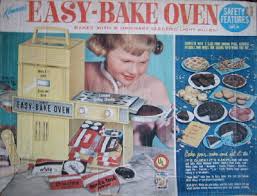
...as Christmas approaches, I recall doing a marketing survey as part of my undergrad degree around Christmastime as to which toy would be the most popular for boys and girls.
I was quite surprised at the time at how many moms were buying the Easy bake oven for their daughters (and one for her son who liked to help her bake).
Here is the new version of it:

Friday, November 10, 2006
It isn't suicide...says the Oregon DHS
The wording under the Oregon law allowing physician assisted suicide has been rephrased by the Oregon DHS. They have removed the word suicide and now refer to people choosing physician assisted suicide as those choosing to use the Oregon Death with Dignity Act....
Many in the disabled community (Not Dead Yet, e.g.) now are concerned that this creates an opening to encourage people with disabilities to choose this avenue in light of high medical costs and difficulty obtaining resources to live in the community.
Compassion & Choices writes:
"Eliminating the emotionally-laden and inaccurate word “suicide” from state references to the DWDA is a major leap forward in clarifying the public’s perception of the distinction between suicide and a terminally ill patient’s choice for a peaceful and dignified death. "
Yours truly believes this is yet another way to use semantics to denigrate the sanctity of life in those most marginalized.
Many of us feel that if we had to live in a Nursing home we would rather die...so that's not suicide? .... (let's eliminate that emotionally-laden and inaccurate word) we would just be choosing the Death with Dignity Act.
We're increasing access to choosing death.
I want to see a Life with Dignity Act. To me that's compassion and true choice.
Many in the disabled community (Not Dead Yet, e.g.) now are concerned that this creates an opening to encourage people with disabilities to choose this avenue in light of high medical costs and difficulty obtaining resources to live in the community.
Compassion & Choices writes:
"Eliminating the emotionally-laden and inaccurate word “suicide” from state references to the DWDA is a major leap forward in clarifying the public’s perception of the distinction between suicide and a terminally ill patient’s choice for a peaceful and dignified death. "
Yours truly believes this is yet another way to use semantics to denigrate the sanctity of life in those most marginalized.
Many of us feel that if we had to live in a Nursing home we would rather die...so that's not suicide? .... (let's eliminate that emotionally-laden and inaccurate word) we would just be choosing the Death with Dignity Act.
We're increasing access to choosing death.
I want to see a Life with Dignity Act. To me that's compassion and true choice.
Disability Blog Carnival #3
Again, a great job of putting together posts from various disability blogs. Via Growing Up With a DIsability -which btw
I added a link to in my Disability Links- it's an excellent and interesting blog by David, a 20 year old with CP, who has taken
time off from college to interview PWD and write about their experiences.
We'll be looking forward to seeing more of his posts on interviews over on his blog and perhaps a book? Good luck David.
I added a link to in my Disability Links- it's an excellent and interesting blog by David, a 20 year old with CP, who has taken
time off from college to interview PWD and write about their experiences.
We'll be looking forward to seeing more of his posts on interviews over on his blog and perhaps a book? Good luck David.
From BBC: What's Your Problem?
A series about people with disabilities.
If anyone has access to this programming, please leave us a comment -thanks.
Via BBC Ouch
If anyone has access to this programming, please leave us a comment -thanks.
Via BBC Ouch
Thursday, November 9, 2006
Marching band in a wheelchair...
Arizona teen in high school who uses a wheelchair marches in band - his dad helps propel his wheelchair. Look for him in the Macy's Thanksgiving Day Parade this year!
What about college kids? Check out this University of Louisville student who is blind and uses a wheelchair and also is in a marching band with the help of his dad.
What about college kids? Check out this University of Louisville student who is blind and uses a wheelchair and also is in a marching band with the help of his dad.
Call to Action Conference
How fortunate we are that one of my blog's readers, Janet Prior Gayes and her son David, attended the conference in Milwaukee and took the time to write me about their experiences. I thoroughly enjoyed her email and hope that you will too:
"The theme of this year's conference was I AM: Rise Up People of God. It is 30 years since the U.S. Catholic Bishops convened the first Call to Action conference in Detroit. From the program: "1,351 lay, religious and clergy delegates, appointed by their local bishops, voted for an inclusive church, open to women and married priests, with shared deciosion-making and greater social justice. That Call to Action was the culmination of a two-year national consultation involving over 800,00 Catiholics in 125 dioceses. Cardinal Dearden hailed this collaboration as 'a new way of doing the work of the church in America.'"
Sr. Joan Chittister, Jeannette Rodriguez, and Diana Hayes gave thought-provoking, challenging talks to the entire group. I especially enjoyed Joan's talk - she looked at the 6 times in the Bible that people were called to "Rise Up!" and gave connections to our world today. On Friday and Saturday there were many smaller workshops addressing issues of social justice, liturgy, crises within the church, and prayer sessions in addition to informal get-togethers of people with common interests or from the same state. David and I heard Fr. John Dear speak powerfully of the Beatitudes of Peace; we attended a photojournalist's presentation about illegal immigrants, watched a riveting one woman play about the life of Dorothy Day and had fun with a rousing Gospel Choir performance. Sunday's Eucharistic liturgy was prayerful, moving, and fulfilling, and challenged us to go forth and follow what Jesus said were the most important commandments."
She also wrote that :
"There are scholarships to help offset some of the costs that are available to those with limited financial means.
Next year's conference will have anti-racism as it's theme.
Call to Action website: http://www.cta-usa.org"
Janet pointed out that the facilities were very accessible except for the lack of a family bathroom in the hotel and added the staff was very helpful regarding information.
"The theme of this year's conference was I AM: Rise Up People of God. It is 30 years since the U.S. Catholic Bishops convened the first Call to Action conference in Detroit. From the program: "1,351 lay, religious and clergy delegates, appointed by their local bishops, voted for an inclusive church, open to women and married priests, with shared deciosion-making and greater social justice. That Call to Action was the culmination of a two-year national consultation involving over 800,00 Catiholics in 125 dioceses. Cardinal Dearden hailed this collaboration as 'a new way of doing the work of the church in America.'"
Sr. Joan Chittister, Jeannette Rodriguez, and Diana Hayes gave thought-provoking, challenging talks to the entire group. I especially enjoyed Joan's talk - she looked at the 6 times in the Bible that people were called to "Rise Up!" and gave connections to our world today. On Friday and Saturday there were many smaller workshops addressing issues of social justice, liturgy, crises within the church, and prayer sessions in addition to informal get-togethers of people with common interests or from the same state. David and I heard Fr. John Dear speak powerfully of the Beatitudes of Peace; we attended a photojournalist's presentation about illegal immigrants, watched a riveting one woman play about the life of Dorothy Day and had fun with a rousing Gospel Choir performance. Sunday's Eucharistic liturgy was prayerful, moving, and fulfilling, and challenged us to go forth and follow what Jesus said were the most important commandments."
She also wrote that :
"There are scholarships to help offset some of the costs that are available to those with limited financial means.
Next year's conference will have anti-racism as it's theme.
Call to Action website: http://www.cta-usa.org"
Janet pointed out that the facilities were very accessible except for the lack of a family bathroom in the hotel and added the staff was very helpful regarding information.
Tuesday, November 7, 2006
I get emails...
Question:
What does Wheelie Catholic mean?
Answer: Let me begin with a definition - and several answers.
1.Wheelie: A wheelie is performed by delivering excessive torque to the rear wheels
as in popping a wheelie (in a wheelchair)
2. Wheelie (as in Really) Catholic
That's about how deep it is - not too deep eh?
I am "Wheelie Weady for Election Day" so all of those unsolicited taped phone calls will stop! I even got one tailored for senior citizens (harrumph) because I was on that list - seniors and disabled - ugh. Hate that. We are NOT the same (I love seniors but please....let me finish my junior life first...)
What does Wheelie Catholic mean?
Answer: Let me begin with a definition - and several answers.
1.Wheelie: A wheelie is performed by delivering excessive torque to the rear wheels
as in popping a wheelie (in a wheelchair)
2. Wheelie (as in Really) Catholic
That's about how deep it is - not too deep eh?
I am "Wheelie Weady for Election Day" so all of those unsolicited taped phone calls will stop! I even got one tailored for senior citizens (harrumph) because I was on that list - seniors and disabled - ugh. Hate that. We are NOT the same (I love seniors but please....let me finish my junior life first...)
and here's....the Catholic Carnival!!
Check it out - there are alot of wonderful, interesting posts this week (as usual - the subjects range all over the place and make for very enjoyable - and spiritually enriching- reads.)
Monday, November 6, 2006
Spiritual rest
Psalm 116:7 Return unto thy rest, O my soul; for the LORD hath dealt bountifully with thee.
I've grappled with the concept of physical rest at times in my life. When I was in college, I befriended a student from Holland who used to nap every day around lunchtime. This baffled me, but she told me that she awoke refreshed and had a much more productive day afterwards.
Maybe that's why it's taken me so long to understand the concept of spiritual rest. I don't think there are many books of the bible that talk about spiritual rest more than the Psalms.
When I read these passages, I am always reminded that God's grace provides me with the spiritual rest I need and crave no matter what my life circumstances may be. When I'm doing HIs will, the balance is there in my life. When I'm not doing God's will, I am completely out of balance and therefore do not achieve spiritual rest.
I've tested this out many times - although not consciously setting out to do so. Usually I just take a wrong turn somewhere and do not make a choice based on sound spiritual judgment and I am thrown back onto my own resources - which do not include spiritual rest, physical rest or any type of rest! I am quickly out of sorts, tired and all kinds of frustrated.
But at least I'm getting better at spotting when this happens and trying to align myself back into God's will. I can tell within a short time when this happens because I feel an inner sense of peace and rest that is missing when I am not so aligned.
It is true that God is bountiful with me when I simply listen and try to discern what to do next and put God first. All my needs are taken care of and, at those times, my soul is at rest.
I've grappled with the concept of physical rest at times in my life. When I was in college, I befriended a student from Holland who used to nap every day around lunchtime. This baffled me, but she told me that she awoke refreshed and had a much more productive day afterwards.
Maybe that's why it's taken me so long to understand the concept of spiritual rest. I don't think there are many books of the bible that talk about spiritual rest more than the Psalms.
When I read these passages, I am always reminded that God's grace provides me with the spiritual rest I need and crave no matter what my life circumstances may be. When I'm doing HIs will, the balance is there in my life. When I'm not doing God's will, I am completely out of balance and therefore do not achieve spiritual rest.
I've tested this out many times - although not consciously setting out to do so. Usually I just take a wrong turn somewhere and do not make a choice based on sound spiritual judgment and I am thrown back onto my own resources - which do not include spiritual rest, physical rest or any type of rest! I am quickly out of sorts, tired and all kinds of frustrated.
But at least I'm getting better at spotting when this happens and trying to align myself back into God's will. I can tell within a short time when this happens because I feel an inner sense of peace and rest that is missing when I am not so aligned.
It is true that God is bountiful with me when I simply listen and try to discern what to do next and put God first. All my needs are taken care of and, at those times, my soul is at rest.
Saturday, November 4, 2006
What playing tennis as a quadriplegic has taught me
If you're a quadriplegic and you want to play wheelchair tennis, you tape your racquet onto your hand.
This gives you one grip for backhand, forehand and serving. You find your zone so that you can hit each shot to the best of your ability. This can mean making some compromises, but so be it.
It works surprisingly well using sports tape. However, there is one issue that comes up whenever I tape my racquet on: dealing with the reality that, because it is difficult for me to tape myself, the racquet is not on at the angle I want when I'm done taping. It moves and shifts around as I'm trying to tape it because I do not have the grip and the hand movement to hold it in position.
If you're not an avid tennis player, this probably seems like a minor problem. After all, you just go out there, hit the ball and be done with it, right? Not really. I spent years playing with a glove on my racket hand and a racquet duct taped onto it. The good thing with that arrangement was I could tweak it a bit ; however, I don't have enough grip to make that really work. But I know where I "like" and "want" the racquet to be.
So there I sat yesterday with a half roll to three quarters of a roll of sports tape on my hand and the racquet taped on - but not where I wanted it. It happened not once, but twice. My coach was helping me and we both miscalculated where the racquet should be. It was frustrating. It reminded me that I depend on adaptations to play the sport.
I know what the reality is. I realize that I'm lucky to be playing tennis at all. And I realized , after I simmered down yesterday, that I am very grateful I can play.
As frustrated as I might get by the adaptations, I have those times when I get it right - the racquet is taped on decently and I can play tennis in the zone. Everything comes together and I reach for the ball and it sails off my racquet the same way it does for any other tennis player.
Those are the moments, I've learned, that I need to remind myself about when the taping goes wrong. Those are the times I need to savor.
The rest simply doesn't matter.
Thursday, November 2, 2006
Periventricular Leukomalasia
"...aka PVL is a type of brain injury involving an ischemic infarction (inadequate blood circulation) of the white matter of the brain adjacent to the lateral ventricles. Peri means near; ventricular refers to the ventricles or fluid spaces of the brain, leukomalasia is softening of the white matter of the brain. The softening occurs because brain tissue in this area has died. Since PVL results in the loss of vital areas of neural tissue, particularly motor fibers that control muscle movements, cerebral palsy (CP) develops in most cases. It is likely to be of a moderate to severe degree and either spastic diplegia or spastic quadriplegia, with the legs more involved than the upper extremities. Mild to severe mental retardation may occur, but some children with PVL and spastic CP have normal intelligence. However, they will have learning disabilities secondary to their motor delays, because children learn by doing. Visual impairment is also possible if the injury involves the occipital region. Seizure disorders may occur but are not commonly associated with PVL."
via CP Parent Resource Center
This is what my nephew has. A few of the professionals at his school were not familiar with PVL and its connection to CP so I decided to post this information just in case anyone could use it or it helps them to understand how CP can develop in some kids.
via CP Parent Resource Center
This is what my nephew has. A few of the professionals at his school were not familiar with PVL and its connection to CP so I decided to post this information just in case anyone could use it or it helps them to understand how CP can develop in some kids.
Film about Carthusian monastery wins award
The film, Into Great Silence, has won a film award from the European Film Academy.
I saw the movie Click today
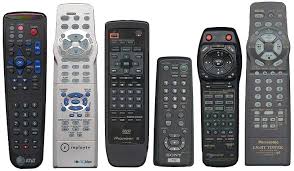 ...and I was intrigued by the plot.
Imagine a world where you can use a remote control to fast
forward or rewind your life at any given moment. How tempting
that would be!
Of course, without giving away the whole story, let's just say that
the main character went ahead and, like many people would, used the remote control whenever he felt it would make things "easier." You can imagine the possibilities - skipping over difficult moments, boring social events and even being sick with a cold!
I think we all fantasize about doing this sometimes. I had a teacher once who used to say to us "You're wishing your life away" when we said on Monday that we wished it was Friday. It's the same idea to want to just skip over things.
I started to think about whether or not I would "click" over certain times and events of my life. I realized that I probably wouldn't choose to do that. There's something about being present in each moment that is richer for me than the temptation of "cheating fate" and fast forwarding. I might yawn and get bored at times. I might even find myself fantasizing that the "chat room ignore button" could somehow be installed at a family dinner.
But our time on earth is short enough without skipping over any of it.
The controversy goes on..
In this article from the NY Times, the controversy in the disabled
sports community about including handcycles along with racing wheelchairs in "foot races", is covered. Opponents argue that handcycles belong in bicycle races, not in marathons for runners.
sports community about including handcycles along with racing wheelchairs in "foot races", is covered. Opponents argue that handcycles belong in bicycle races, not in marathons for runners.
Wednesday, November 1, 2006
Disability Culture: Commonality of our Existence
You may have heard me refer to disability culture on this blog. While discussing the situation at Gallaudet University, there has been mention of a Deaf culture and the need to maintain one.
What is disability culture , you may ask? It has been described as a group identity formed from our history of oppression and a common bond of resilience. *
People with disabilities are a diverse group. As noted over on The Gimp Parade in a post yesterday, some would say there is a ranking and hierarchical system that exists, placing those with certain disabilities over others. There are those who spend time discussing whether one is "disabled enough" to be considered disabled.
The reality is that within each type of disability, there are degrees. For example, with a spinal cord injury, you have paraplegics and quadriplegics. The less paralyzed you are, the better, some would say. So for years I've applied the phrase "para-wannabe" to myself when I tried to "pass" as a paraplegic instead of a quadriplegic.
Yet, despite these differences among us and between us, there is a group identity based on what we live. I don't believe anyone can fake being disabled for long among those of us with disabilities. Living with a disability requires resilience, resourcefulness and a survivor type mentality often reserved for reality TV shows.
Living as a quadriplegic on some days is not unlike being in one of the Survivor shows. You try waking up alone, paralyzed in both your arms and legs, trying to accomplish the tasks of feeding yourself, preparing food, keeping food in the house, dressing and cleaning yourself - and working full time - when no other human being is around to help. I don't count a cat who has no opposable thumbs as a useful partner.
Those of us with disabilities understand the truths of the commonality of our existence and, hopefully, will not be way laid by creating more barriers between us. I believe we need to work on the issues facing us that still put barriers in front of us from society in general, rather than focus on individual differences that can serve to divide us and distract us.
This is not to preach to anyone about how they feel, but simply to state that my position is to work for unity among those of us with disabilities. We do not need to be divided and conquered - we need to tap into the commonality of our experiences and work for the common good.
We need to be proud of our ability to survive and thrive in this world that is created and maintained by and for those without disabilities. And, when we are able to get a leg up, we need to look around and see where our brother and sister are to find what kind of helping hand we can extend or create to make those possibilities come true for them.
*definition from Steven E. Brown, MAINSTREAM MAGAZINE, 1996
What is disability culture , you may ask? It has been described as a group identity formed from our history of oppression and a common bond of resilience. *
People with disabilities are a diverse group. As noted over on The Gimp Parade in a post yesterday, some would say there is a ranking and hierarchical system that exists, placing those with certain disabilities over others. There are those who spend time discussing whether one is "disabled enough" to be considered disabled.
The reality is that within each type of disability, there are degrees. For example, with a spinal cord injury, you have paraplegics and quadriplegics. The less paralyzed you are, the better, some would say. So for years I've applied the phrase "para-wannabe" to myself when I tried to "pass" as a paraplegic instead of a quadriplegic.
Yet, despite these differences among us and between us, there is a group identity based on what we live. I don't believe anyone can fake being disabled for long among those of us with disabilities. Living with a disability requires resilience, resourcefulness and a survivor type mentality often reserved for reality TV shows.
Living as a quadriplegic on some days is not unlike being in one of the Survivor shows. You try waking up alone, paralyzed in both your arms and legs, trying to accomplish the tasks of feeding yourself, preparing food, keeping food in the house, dressing and cleaning yourself - and working full time - when no other human being is around to help. I don't count a cat who has no opposable thumbs as a useful partner.
Those of us with disabilities understand the truths of the commonality of our existence and, hopefully, will not be way laid by creating more barriers between us. I believe we need to work on the issues facing us that still put barriers in front of us from society in general, rather than focus on individual differences that can serve to divide us and distract us.
This is not to preach to anyone about how they feel, but simply to state that my position is to work for unity among those of us with disabilities. We do not need to be divided and conquered - we need to tap into the commonality of our experiences and work for the common good.
We need to be proud of our ability to survive and thrive in this world that is created and maintained by and for those without disabilities. And, when we are able to get a leg up, we need to look around and see where our brother and sister are to find what kind of helping hand we can extend or create to make those possibilities come true for them.
*definition from Steven E. Brown, MAINSTREAM MAGAZINE, 1996
Subscribe to:
Posts (Atom)